Linagpang na Bangus
Freshly grilled milkfish in a light tomato-and-onion broth in our Iloilo-style home version.
Prep and deboning: 25 minutes · Cook: 25–35 minutes · Total: about 50–60 minutes. Grill preheating overlaps vegetable preparation.
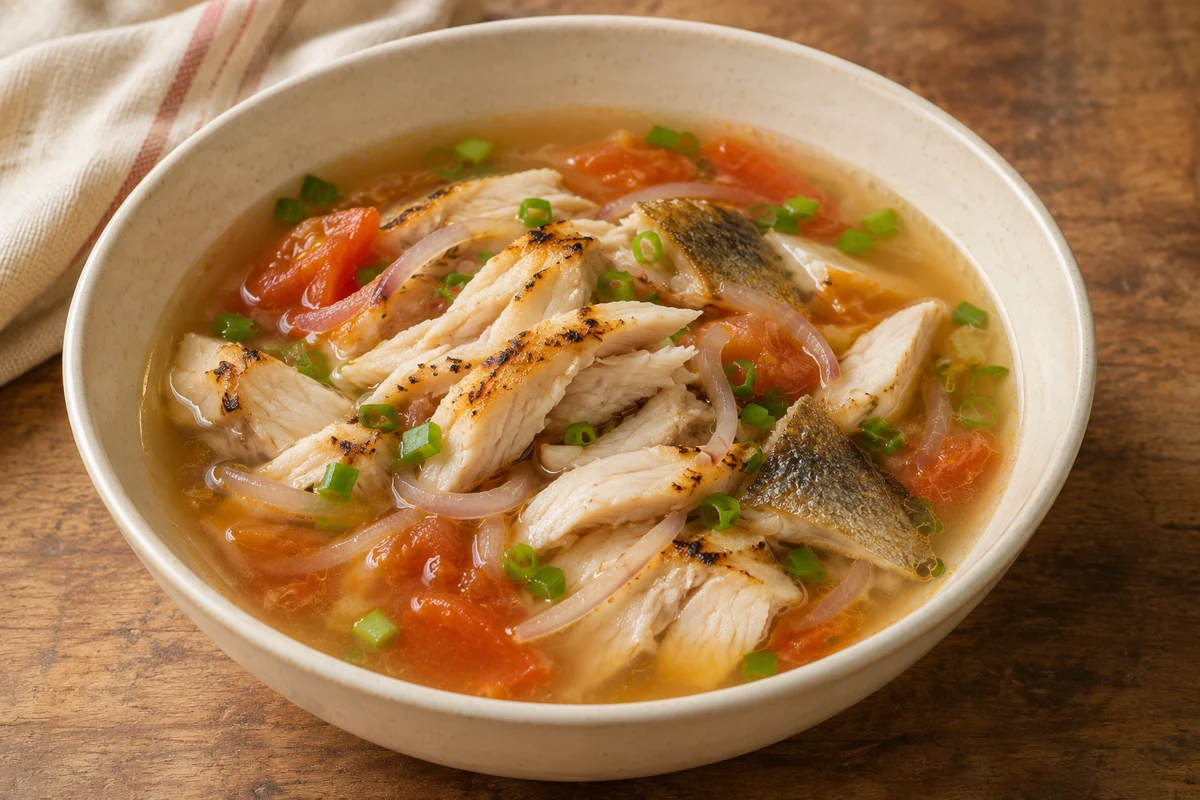
AI-generated serving illustration.
Equipment
You need an oven grill/broiler, a lightly oiled metal grill tray, a saucepan and good light for deboning. Do not put ordinary baking paper close to an exposed grill element.
Ingredients
Measure and prepare everything before you begin cooking.
- 900 g cleaned, butterflied bangus, weighed before cooking; preferably sold deboned, with skin on
- 10 ml neutral cooking oil
- 4 g fine salt, divided: 2 g for fish and up to 2 g for broth
- 300 g ripe tomatoes, cored and cut into 1 cm pieces
- 100 g onion, halved and very thinly sliced
- 900 ml water
- 1 long green chilli, left whole, optional
- 1/4 teaspoon ground black pepper
- 20 g spring onion, thinly sliced
- Cooked rice, to serve separately
Instructions
- 1
Prepare the grill. Keep fish chilled until preparation. Heat the oven grill to high, about 220–240°C if it has a temperature setting. Place the rack about 15 cm from the element, adjusting for your appliance. Lightly oil the metal tray. Pat fish dry, brush with the remaining oil from the measured 10 ml and season with 2 g salt.
- 2
Grill the bangus. Lay the fish skin-side down and opened flat. Grill for about 15–22 minutes, depending on thickness and the appliance. Watch closely near the end. The flesh should be opaque and flake readily; check the thickest part reaches at least 63°C. If browning too quickly, move it farther from the element and continue cooking. Do not assume browning alone means it is done.
- 3
Debone carefully. Rest for about 5 minutes until safe to handle. Lift away the backbone if present. Flake the flesh into large pieces on a clean plate, checking each piece for fine bones, even if the fish was sold as boneless. Discard fins, remaining bones and any heavily burnt skin. Keep a little lightly browned skin if you enjoy it. Depending on trimming, expect roughly 450–550 g usable flesh; this is an estimate, not an additional ingredient.
- 4
Make the light broth. While the fish cools, bring the measured water, tomatoes, onion, optional whole chilli and black pepper to a boil in the saucepan. Reduce heat and simmer for 4–5 minutes, until the onion softens slightly and the tomatoes release their juice. Gently press a few tomato pieces against the side of the pot.
- 5
Warm the fish through. Add all the deboned grilled flesh. Return to a gentle simmer for about 2 minutes, folding carefully so the pieces hold together. Taste and add the reserved salt a little at a time, using only what is needed.
- 6
Finish and serve. Remove from the heat and scatter with spring onion. Serve immediately with rice. Check for bones as you eat; no deboning process can promise their complete absence.
About Linagpang na Bangus
Linagpang gives grilled fish a second setting: a bowl of light, hot broth with tomatoes and onion. Iloilo household versions vary, including whether the vegetables are grilled or added fresh. Here, freshly grilled bangus is carefully deboned, then warmed in a briefly simmered tomato-and-onion broth. That short simmer is our practical home adaptation; the grilled fish remains the heart of the dish.
Ingredient swaps wherever you cook
- Frozen deboned bangus is useful: thaw it in the refrigerator and pat dry before grilling.
- Skin-on snapper or sea bream can be used for a differently flavoured grilled-fish linagpang. Keep the same cleaned starting weight, adjust grilling to thickness and change the page's displayed fish name if publishing that variation.
- An oven grill will brown the fish, but it will not reproduce charcoal smoke. Do not add a charcoal-flavour claim to the description.
- This method begins with freshly cooked fish. It does not rely on an unspecified age or storage history of leftovers.
How to know it is ready
- Grilled fish is opaque, flakes readily and reaches at least 63°C in its thickest part.
- The finished soup is gently simmering; large fish flakes remain intact. Check carefully for bones.
Common mistakes and fixes
- Weak broth: use ripe tomatoes, press some into the liquid and taste for salt before adding more ingredients.
- Fish breaks apart: keep the simmer gentle and fold only as needed.
- Too many fine bones: buy professionally deboned bangus and still inspect the cooked flakes carefully.
- Fish burns before cooking through: lower the rack and continue until the centre is done.
Family and regional variations
- This home adaptation briefly simmers the vegetables. Household versions vary, including grilled or fresh vegetables.
Storage and reheating
This soup is best freshly served. Refrigerate leftovers promptly in shallow containers, within 2 hours, and use within 2 days. Reheat once to above 75°C throughout. Contains fish. Inspect packaged alternatives and seasonings for additional allergens.
What to serve with it
Makes 4 light main-dish servings with separately cooked rice. Remove bones carefully. Spoon measures: 1 tablespoon = 15 ml; 1 teaspoon = 5 ml.
Linagpang na Bangus FAQs
How do I know it is ready?
Grilled fish is opaque, flakes readily and reaches at least 63°C in its thickest part. The finished soup is gently simmering; large fish flakes remain intact. Check carefully for bones.
What should I check when buying ingredients overseas?
Frozen deboned bangus is useful: thaw it in the refrigerator and pat dry before grilling. Skin-on snapper or sea bream can be used for a differently flavoured grilled-fish linagpang. Keep the same cleaned starting weight, adjust grilling to thickness and change the page's displayed fish name if publishing that variation.
Cooking guidance: Follow current food-safety advice and the instructions for your equipment.