Inun-unan
Gently simmered fish with vinegar, ginger, garlic and green chillies in our Visayan-style home version.
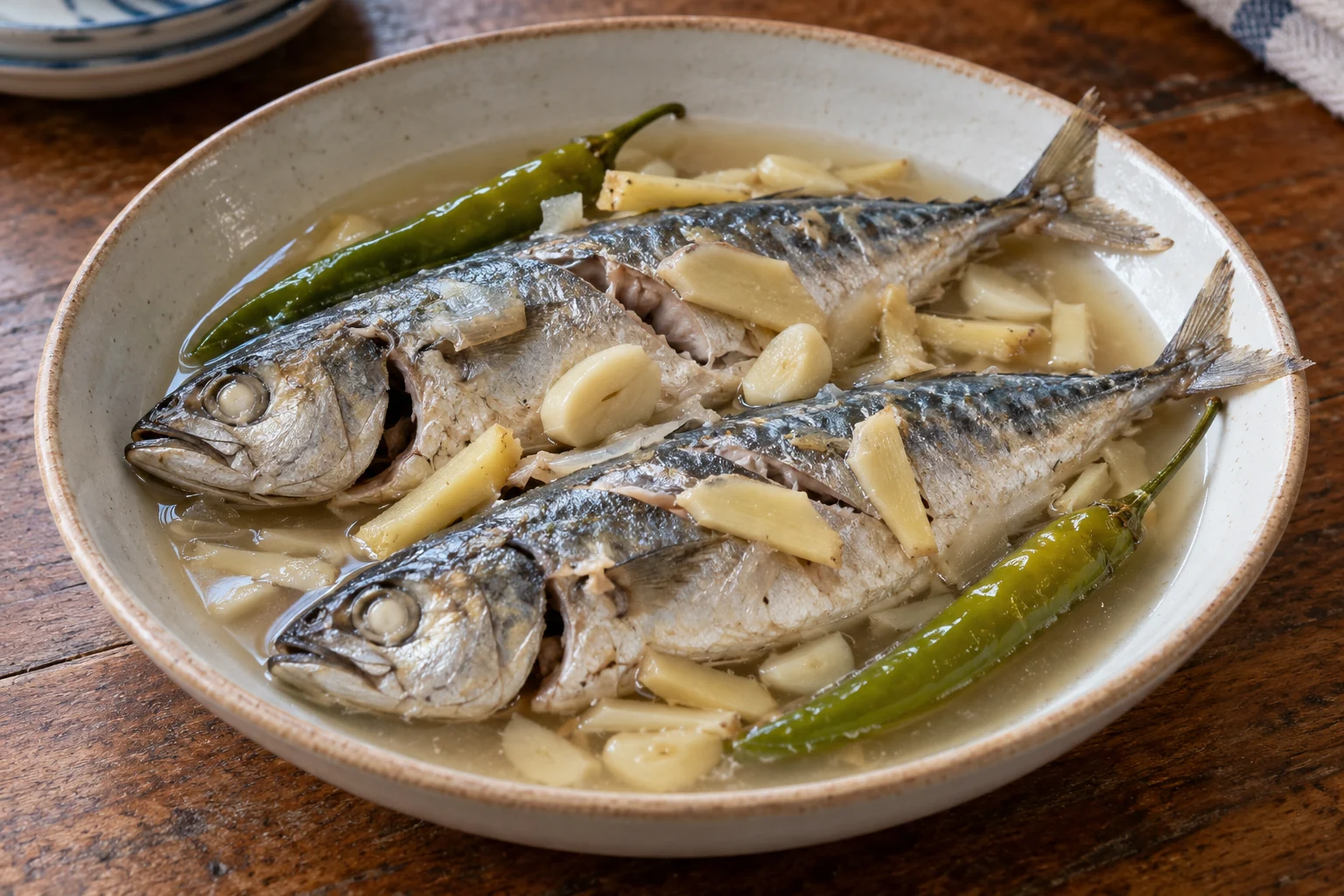
AI-generated serving illustration.
Ingredients
Measure and prepare everything before you begin cooking.
- 900 g small whole mackerel or scad, cleaned, gutted and scaled as appropriate; about 4 fish
- 120 ml cane or coconut vinegar labelled about 5% acidity
- 240 ml water, plus up to 60 ml hot water only if needed
- 30 g fresh ginger, thinly sliced
- 20 g garlic cloves, lightly crushed
- 100 g onion, sliced
- 2 long green chillies, left whole
- 1/2 tsp whole black peppercorns
- 4 g fine salt, divided
- 15 ml neutral cooking oil
- Cooked rice, to serve separately
Instructions
- 1
Buy fish from a reliable supplier and keep it refrigerated until needed. Thaw frozen fish in the refrigerator. Check that gills and innards have been removed, then pat dry. Larger fish should be cut into portions no more than about 3 cm thick; thicker portions need a longer cooking check.
- 2
Choose a wide nonreactive lidded pan that holds the fish in one layer. Arrange ginger, garlic and onion over the base, then lay fish above them. Tuck in the whole chillies and add peppercorns and 3 g of the salt.
- 3
Pour in the measured vinegar, 240 ml water and oil. Bring to a gentle boil uncovered over medium heat, about 5–7 minutes. Spoon a little liquid over any exposed fish rather than stirring or turning it roughly.
- 4
Lower the heat, partly cover and simmer gently for about 12–18 minutes, depending on fish thickness. Keep a shallow layer of liquid in the pan; if it threatens to dry before the fish is ready, add reserved hot water in 15 ml amounts.
- 5
Check the thickest fish near the backbone reaches at least 63°C and the flesh is opaque and flakes readily. Continue gently if needed. Do not cook the pan dry or use a rolling boil that breaks the fish.
- 6
Taste a spoonful of the hot cooking liquid and add any of the reserved 1 g salt only if needed. Rest off the heat for 3 minutes, then lift fish carefully with a broad spatula. Serve with a little of its cooking liquid and rice, taking care with bones.
About Inun-unan
Inun-unan is part of Visayan fish cooking, with versions differing in aromatics, sourness and vegetables. This version keeps the pan simple: fish, ginger, garlic and whole green chillies in a measured vinegar mixture. Its light cooking liquid is distinct from the coconut sauces in other regional fish dishes.
Ingredient swaps wherever you cook
- Choose fish of similar size so the portions cook together. The recipe is timed for small whole fish or pieces about 3 cm thick.
- Cane and coconut vinegars differ in flavour. Use food-grade vinegar around 5% acidity, not cleaning vinegar or an unmeasured concentrated product.
How to know it is ready
- Fish is opaque and flakes near the backbone, with its thickest part at least 63°C.
- A small amount of sour cooking liquid remains; the base is not scorched.
Common mistakes and fixes
- Vinegar is not a substitute for proper chilling or cooking. Mackerel needs careful cold handling before it reaches the pan.
- Do not leave this dish unrefrigerated because it contains vinegar; use the same prompt cooling practice as other fish dishes.
Family and regional variations
- Serve extra cooked vegetables separately rather than changing the measured pan liquid or crowding the fish.
Storage and reheating
Refrigerate in shallow covered containers within 2 hours. Use within 2 days. Reheat only the portion needed once to above 75°C throughout.
What to serve with it
Makes 4 servings with rice. Contains fish; watch for bones. Total time assumes fish is already cleaned and thawed. Spoon measures: 1 tbsp = 15 ml; 1 tsp = 5 ml.
Inun-unan FAQs
What shows it is ready?
Fish is opaque and flakes near the backbone, with its thickest part at least 63°C. A small amount of sour cooking liquid remains; the base is not scorched.
What should I check when substituting?
Choose fish of similar size so the portions cook together. The recipe is timed for small whole fish or pieces about 3 cm thick. Cane and coconut vinegars differ in flavour. Use food-grade vinegar around 5% acidity, not cleaning vinegar or an unmeasured concentrated product.
Cooking guidance: Follow current food-safety advice and the instructions for your equipment.