Pancit Pusit
Black squid-ink bihon with tender squid, garlic and kinchay, finished with citrus in our Cavite-style home version.
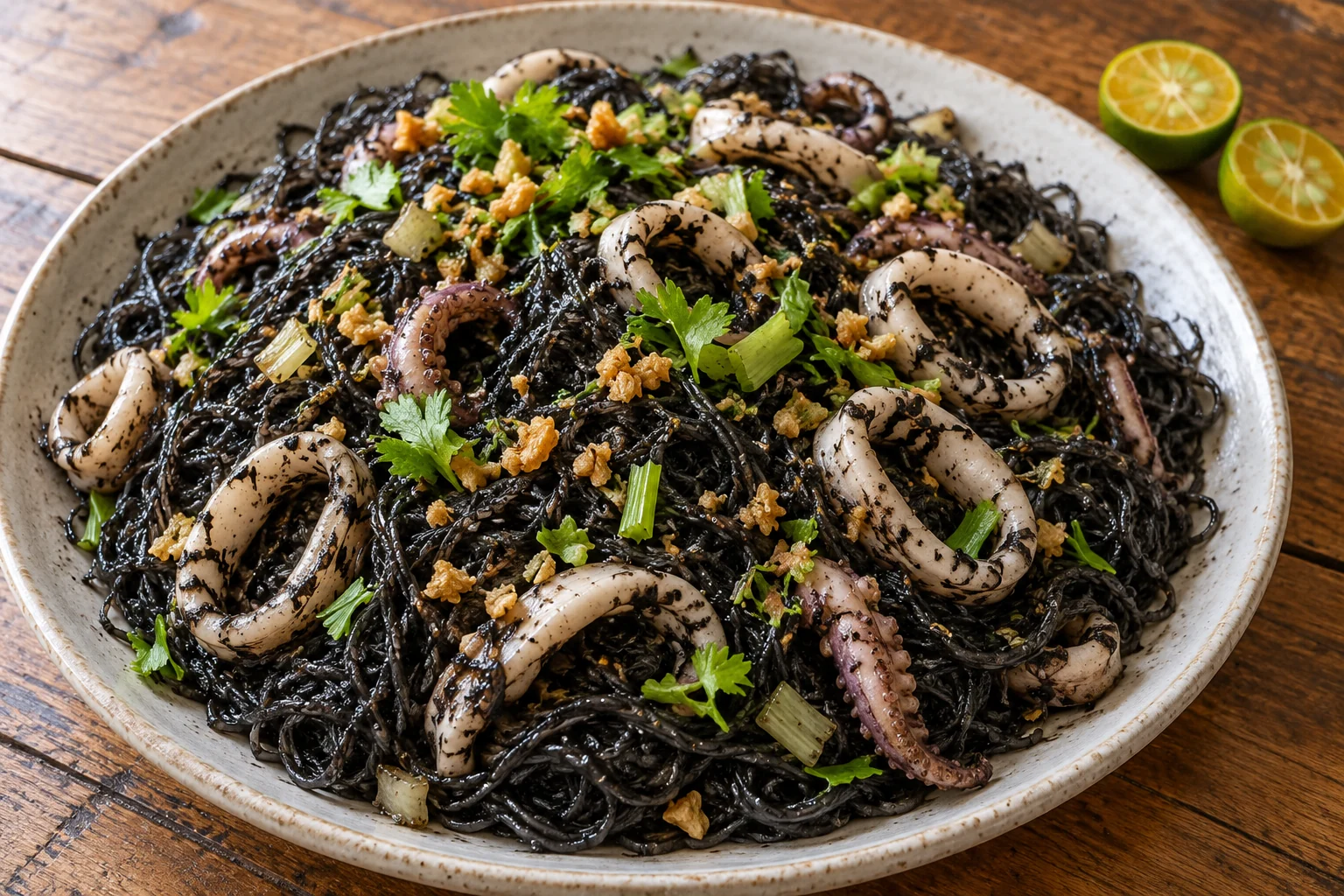
AI-generated serving illustration.
Ingredients
Measure and prepare everything before you begin cooking.
- 200 g dry bihon rice vermicelli; water for soaking as directed on its packet
- 600 g cleaned squid, tubes cut into 1 cm rings and tentacles cut into manageable pieces
- 30 ml neutral cooking oil, divided
- 100 g onion, finely chopped
- 20 g garlic, minced
- 2 dried bay leaves
- 30 ml cane vinegar labelled about 5% acidity
- 16 g food-grade squid or cuttlefish ink, following the product’s cooking instructions
- 400 ml unsalted water, plus up to 150 ml extra hot water only if needed
- 15 ml fish sauce, plus up to 5 ml extra only if needed
- 1/4 tsp ground black pepper
- 15 g kinchay (Chinese celery), chopped
- 2 tbsp ready-prepared crisp fried garlic
- 30 ml calamansi or lime juice, to offer at the table
Instructions
- 1
Soak bihon according to its packet only until pliable, then drain thoroughly. Do not substitute 200 g cooked noodles or sotanghon without adjusting the method. Pat cleaned squid dry and keep chilled until the pan is ready.
- 2
Heat 15 ml oil in a wide heavy pan over medium-high heat. Cook squid in two batches for about 1–2 minutes per batch, just until opaque and firm. Lift onto a clean plate with its juices. Do not leave the squid simmering while the noodles cook.
- 3
Reduce heat to medium. Add remaining 15 ml oil and onion for 3 minutes, then garlic and bay leaves for 30 seconds. Pour in vinegar and simmer uncovered for 2 minutes without letting the pan dry.
- 4
Mix ink with the measured 400 ml water. Add to the pan with the 15 ml fish sauce and pepper, then bring to a gentle simmer for 3 minutes, or longer if required by the ink label. Avoid splashing the ink.
- 5
Add drained bihon. Fold with two utensils over medium-low heat for about 3–6 minutes, until the noodles are tender and evenly coloured and most liquid is absorbed. If still firm and dry, add extra hot water 30 ml at a time. Use only what is needed; if the noodles soften early, continue uncovered briefly to remove excess liquid.
- 6
Return squid and its juices. Fold gently for about 1 minute, until hot throughout and the squid is fully opaque and firm; continue a little longer if necessary. Remove bay leaves. Taste before adding any reserved fish sauce.
- 7
Take off the heat, add kinchay and scatter with ready-prepared fried garlic. Serve immediately with the measured citrus juice offered separately so each person can adjust the sourness.
About Pancit Pusit
Cavite’s squid-ink pancit appears with different noodles and garnishes. We use bihon here and cook the squid separately to keep it from spending the whole noodle-cooking time in the sauce. Citrus at the table is an overseas-friendly choice; kamias gives a different sour note in other versions.
Ingredient swaps wherever you cook
- This recipe is written for dry bihon, then soaked and drained. Sotanghon and pasta absorb liquid differently and are not equal-method replacements.
- Kinchay is Chinese celery. Flat-leaf parsley is an alternative garnish with a different flavour; calamansi or lime is not identical to kamias.
How to know it is ready
- Bihon is tender with distinct strands and no pool of watery sauce.
- Squid is opaque and firm, and the finished pan is hot throughout; prolonged cooking can toughen it.
Common mistakes and fixes
- Pouring in all reserve water automatically can leave soft noodles swimming in liquid.
- Use food-grade ink and follow its cooking and storage instructions. Check labels for added salt and allergens.
Family and regional variations
- For a kamias finish, offer a small amount of thinly sliced clean kamias in place of the table citrus; its sourness varies.
Storage and reheating
Refrigerate in shallow covered containers within 2 hours. Use within 2 days. Reheat only the portion needed once to above 75°C throughout.
What to serve with it
Makes 4 main-dish servings. Contains molluscs (squid/ink) and fish (fish sauce). Check noodle and ink labels. Times assume fried garlic is already prepared. Spoon measures: 1 tbsp = 15 ml; 1 tsp = 5 ml.
Pancit Pusit FAQs
What shows it is ready?
Bihon is tender with distinct strands and no pool of watery sauce. Squid is opaque and firm, and the finished pan is hot throughout; prolonged cooking can toughen it.
What should I check when substituting?
This recipe is written for dry bihon, then soaked and drained. Sotanghon and pasta absorb liquid differently and are not equal-method replacements. Kinchay is Chinese celery. Flat-leaf parsley is an alternative garnish with a different flavour; calamansi or lime is not identical to kamias.
Cooking guidance: Follow current food-safety advice and the instructions for your equipment.