Tuslob Buwa
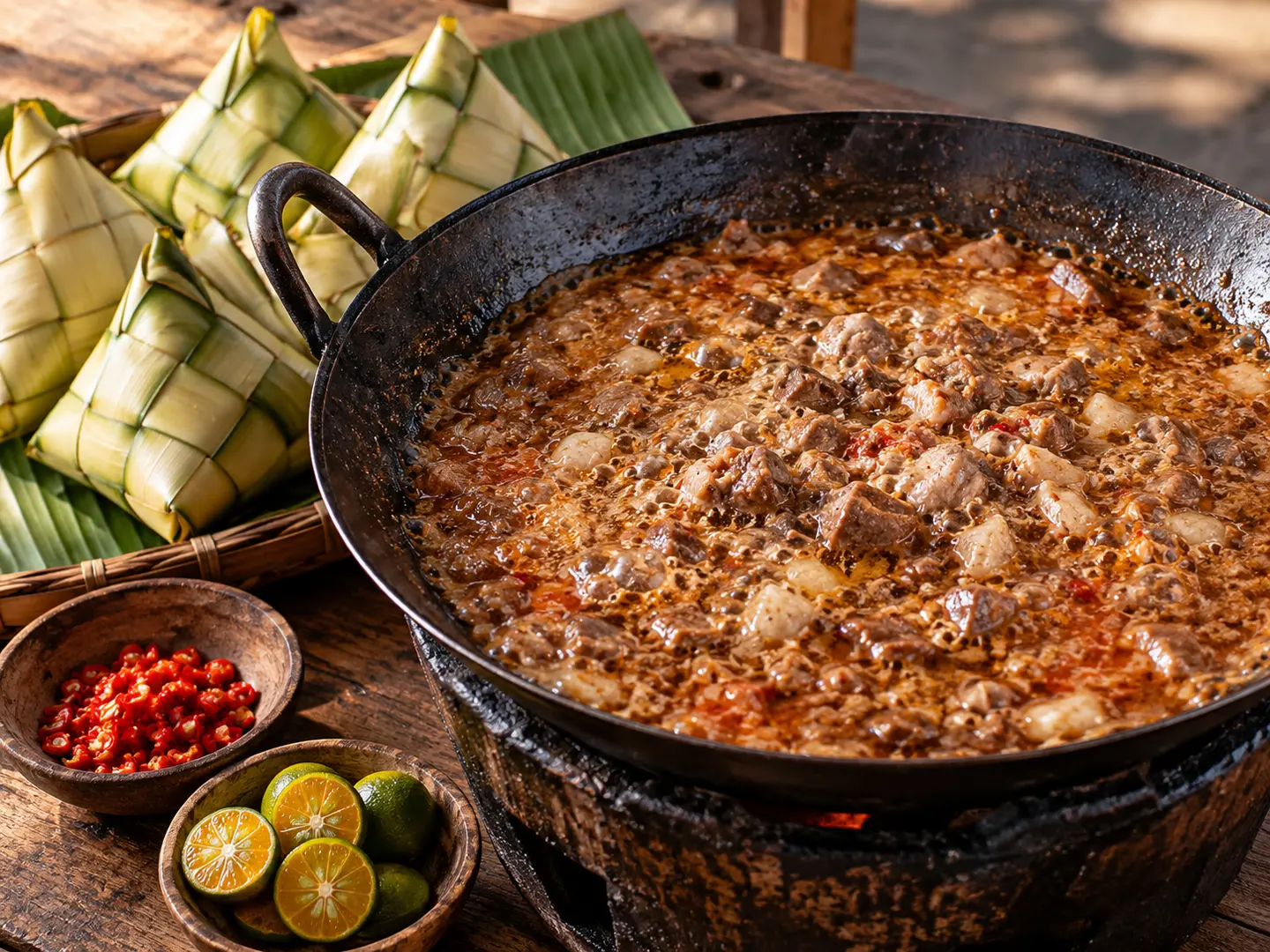
Cebu's bubbling pork-brain and liver dip, served communally with puso or rice.
Ingredients
Measure and prepare everything before you begin cooking.
- 300 g fresh pig brain, ordered from a reputable inspected butcher
- 150 g fresh pork liver, cut into 2 cm pieces
- 1 tbsp neutral cooking oil or rendered pork lard
- 1 medium onion, finely chopped
- 6 garlic cloves, minced
- 2 ripe tomatoes, finely chopped
- 1–2 red chillies, finely sliced, plus more to serve
- 1 tbsp annatto oil
- 1 tbsp Filipino soy sauce
- 1 tbsp fish sauce, plus more only if needed
- 1 tsp brown sugar
- 500 ml low-salt pork or chicken stock, kept hot
- 1 tbsp cornflour mixed with 2 tbsp cold water
- 1 tbsp cane vinegar, to finish
- 8–10 puso (hanging rice) or 4 cups hot steamed rice, to serve
- Calamansi or lemon wedges, to serve
- Freshly ground black pepper, to taste
Instructions
- 1
Keep the brain and liver refrigerated until needed. Use a separate board and utensils for the raw offal, wash your hands thoroughly and sanitise the work area afterwards. Bring a saucepan of water to a gentle boil.
- 2
Lower the pig brain into the water and simmer gently for 10–12 minutes, until the centre reaches at least 75°C for 30 seconds. Lift it into a clean bowl, cool briefly, remove any obvious membrane or bone fragments and chop it coarsely with clean utensils.
- 3
Heat the oil or lard in a wide pan over medium heat. Add the pork liver and cook for 5–7 minutes, turning, until every piece reaches 75°C for 30 seconds. Transfer it to a clean board, chop finely and keep it separate from anything that touched the raw liver.
- 4
In the same pan, cook the onion for 3 minutes. Add the garlic and chilli for 30 seconds, then the tomatoes for 4–5 minutes, pressing them until pulpy. Stir in the annatto oil, soy sauce, fish sauce and sugar.
- 5
Add the chopped liver and 350 ml of the hot stock. Simmer for 5 minutes, then fold in the cooked brain. Mash some of it into the sauce while leaving a little texture. Simmer gently for another 5 minutes; add more stock as needed so the mixture remains loose enough for dipping.
- 6
Stir the cornflour slurry, pour it in gradually and cook for 1–2 minutes, stirring, until the sauce is glossy and bubbles slowly. Add the vinegar, simmer for 30 seconds and taste before adding any more fish sauce.
- 7
Serve immediately in the hot pan with individual portions of puso or steamed rice. Spoon the dip onto each diner's plate rather than repeatedly dipping shared rice. Keep the pan piping hot during service and discard any dip left at room temperature for more than 2 hours.
About Tuslob Buwa
Tuslob buwa means ‘dip in the bubbles’. The communal street-food dish is rooted in the Cebu City neighbourhoods of Pasil and Suba, where hot savoury sauce is traditionally eaten with puso, rice cooked in woven coconut leaves. Pork-brain versions became widely known, but local food research records older and simpler traditions too; it is more accurate to treat the dish as an evolving community food than as a novelty.
Ingredient swaps wherever you cook
- Pig brain: ask an inspected specialty butcher in advance. If unavailable, make an openly labelled brain-free home variation with 250 g pork mince and 100 g extra liver; it will be meatier and less creamy than the Pasil-style dish.
- Puso: use hot steamed jasmine rice when woven coconut-leaf rice is unavailable. Do not attempt to substitute decorative leaves not sold for food use.
- Annatto oil: warm one tablespoon neutral oil with one teaspoon annatto seeds for 2 minutes, then strain. Paprika colours the sauce but does not give the same flavour.
How to know it is ready
- Both brain and liver must reach 75°C for 30 seconds before they are combined with the sauce.
- The finished dip should bubble slowly and coat a spoon while remaining loose enough to scoop with rice.
- Tomato and annatto give the sauce a warm reddish-brown colour; it should taste savoury, gently spicy and balanced rather than aggressively salty.
Common mistakes and fixes
- Treating it as a novelty dish: introduce its Pasil and Suba roots and serve it respectfully as community food.
- Undercooking offal: use a clean thermometer and separate raw utensils from cooked food.
- Letting the pan dry out: add hot stock gradually and stir frequently because brain and cornflour thicken quickly.
Family and regional variations
- Some Cebuano versions include pork intestines or other offal; these require careful cleaning and separate cooking, so they are not included in this home method.
- For a brain-free version, brown pork mince thoroughly before adding chopped cooked liver and stock.
- Adjust the chilli at the table so the base remains welcoming to different heat preferences.
Storage and reheating
Tuslob buwa is best eaten immediately. Cool any untouched portion rapidly, refrigerate within 2 hours and use within 2 days. Reheat once to over 75°C, stirring so the centre becomes piping hot. Do not keep or reuse sauce that diners have dipped into communally.
What to serve with it
Set the hot pan in the centre with puso or steamed rice, sliced chilli and calamansi. For safer home sharing, give everyone a spoon and small plate rather than double-dipping rice into the communal pan.
Tuslob Buwa FAQs
Does tuslob buwa always contain pig brain?
No. Pork-brain versions are now famous, but ethnographic research documents several earlier traditions using sausage, lungs, innards or reduced savoury sauce.
Where can I buy pig brain outside the Philippines?
Availability and local food rules vary. Ask a reputable inspected specialty butcher, keep it refrigerated and never use offal from an unverified source.
Why is it called tuslob buwa?
The Cebuano name refers to dipping food into the bubbling sauce, traditionally using puso or hanging rice.
Cooking guidance: Follow current food-safety advice and the instructions for your equipment.