Pancit Habhab
Lucban-style wheat noodles with pork, shrimp and vegetables, served on banana leaves with a little cane vinegar at the table.
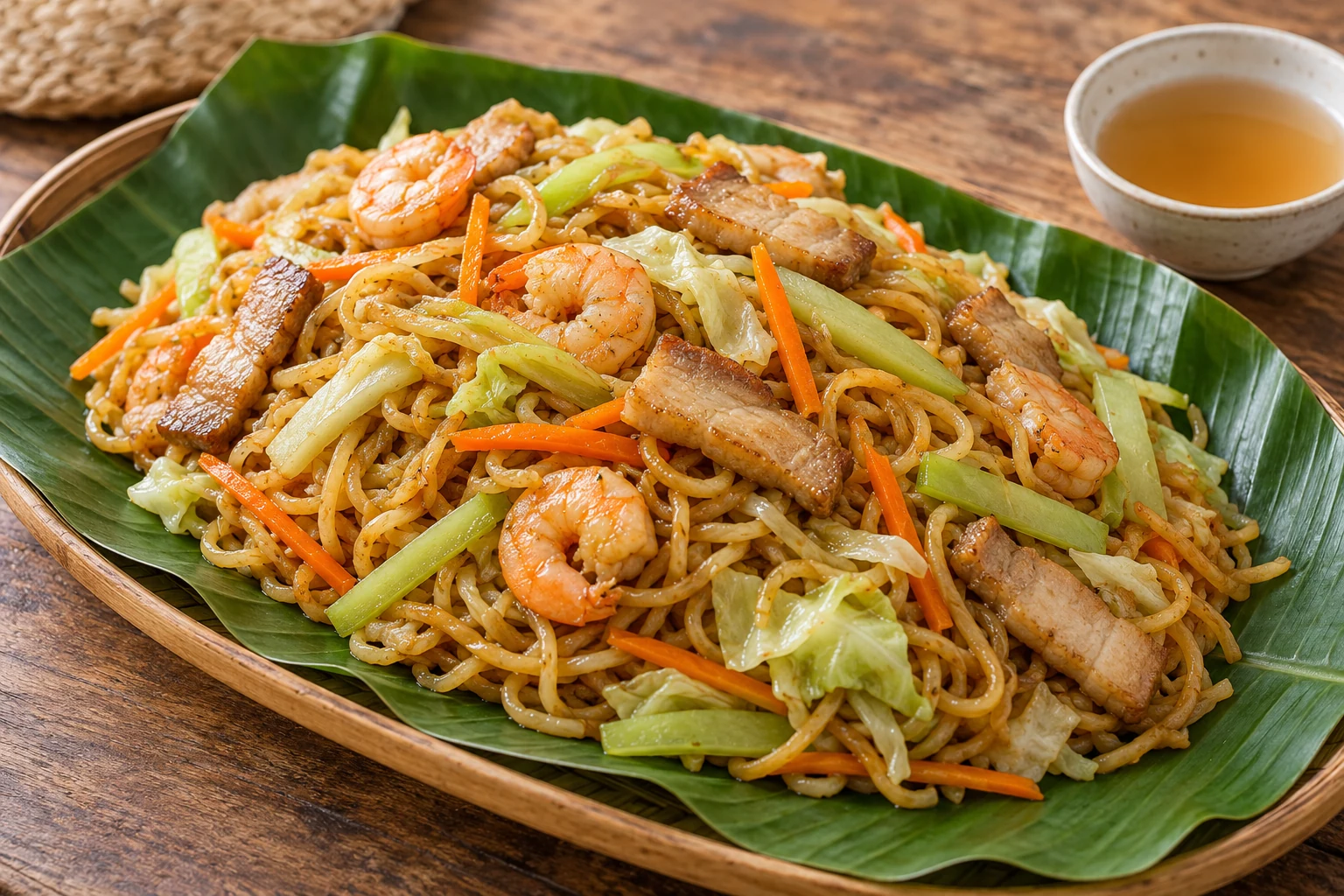
AI-generated serving illustration.
Ingredients
Measure and prepare everything before you begin cooking.
- 250 g dried miki Lucban noodles
- 200 g pork belly, thinly sliced across the grain
- 150 g peeled deveined raw shrimp
- 2 tbsp neutral cooking oil
- 1 small onion, sliced
- 4 garlic cloves, minced
- 150 g sayote, peeled and cut into thin matchsticks
- 100 g carrot, cut into matchsticks
- 150 g cabbage, shredded
- 50 g snow peas, trimmed
- 500 ml low-salt pork or chicken stock, held hot; some may remain unused, plus up to 200 ml extra if needed
- 2 tbsp soy sauce, plus more by teaspoons to taste
- 1 tbsp oyster sauce
- ¼ tsp ground black pepper
- 2 tbsp cane vinegar, for serving to taste
- Clean banana leaves, optional for serving
Instructions
- 1
Read the noodle packet before starting; use any required soaking or pre-cooking instructions. Keep thin raw pork and shrimp on a separate board from vegetables. Prepare all vegetables and have hot stock beside the stove.
- 2
Heat oil in a wide wok or deep pan over medium-high heat. Stir-fry pork for 5–7 minutes until lightly browned. Add onion for 2 minutes and garlic for 30 seconds, then pour in 100 ml of the measured stock. Cover loosely and simmer for 4–5 minutes until the thin pork is cooked through; add a splash more stock if needed.
- 3
Add shrimp and stir for about 2–3 minutes, until opaque right through. Lift the cooked shrimp onto a clean plate. Add sayote and carrot to the pork and toss for 2 minutes.
- 4
Add soy sauce and oyster sauce. For noodles going into the pan dry, pour in the remaining 400 ml measured stock; for noodles already blanched or fully soaked, start with only 200 ml and hold the rest back. Bring to a simmer, add prepared noodles and toss gently for about 5–8 minutes, or as the packet directs. Add the cabbage and snow peas for the final 2–3 minutes. Add extra hot stock in small splashes only as needed for the noodles to soften.
- 5
Return cooked shrimp for the final minute. Check the noodles are tender, vegetables retain a little bite and pork is cooked through. Season with pepper and only then consider extra soy sauce. The noodles should be coated with flavour, without a deep pool of broth.
- 6
Serve immediately on cleaned banana leaves laid over plates, or use ordinary plates. Offer cane vinegar separately and add a few drops to each portion at the table. The leaf-to-mouth eating style gives habhab its name, but utensils are fine at home.
About Pancit Habhab
Pancit Habhab is closely associated with Lucban in Quezon. Its banana-leaf serving style and vinegar finish distinguish it from many other pancit dishes. This version uses pork and shrimp with a modest amount of sauce; local and family versions differ.
Ingredient swaps wherever you cook
- Dried pancit canton can replace dried miki Lucban by the same dry weight; follow its packet because absorption and cooking time vary.
- For 400 g fresh wheat noodles instead, start with only about 250 ml total stock and add more gradually; fresh and dried noodles are not interchangeable by weight.
- Omit shrimp for a pork-only version. Check oyster sauce separately for shellfish; mushroom sauce changes the flavour but avoids that ingredient.
How to know it is ready
- No hard centre remains in the noodles; they are coated rather than swimming in broth.
- Shrimp are opaque and the pork slices are cooked through.
Common mistakes and fixes
- Adding all extra stock at once can turn the dish soupy.
- Long cooking after adding cabbage and snow peas makes them limp.
Family and regional variations
- Use thin green beans in place of snow peas, allowing a little more cooking time.
- A pork-only plate is a simple variation; keep the vinegar finish.
Storage and reheating
Cool leftovers in shallow containers and refrigerate within 2 hours. Use within 2 days. Reheat once with a splash of water until piping hot throughout, above 75°C. Keep vinegar separate until serving.
What to serve with it
Makes 4 generous or 6 smaller portions. Contains wheat, soy and shellfish in the standard version.
Pancit Habhab FAQs
Why serve vinegar instead of calamansi?
A vinegar finish is characteristic of Lucban habhab. Offer it separately so each diner can control the sourness.
Can I use bihon?
Bihon makes a different noodle dish and absorbs liquid differently. A wheat noodle is the closer replacement for miki Lucban.
Cooking guidance: Follow current food-safety advice and the instructions for your equipment.