Pancit Chami
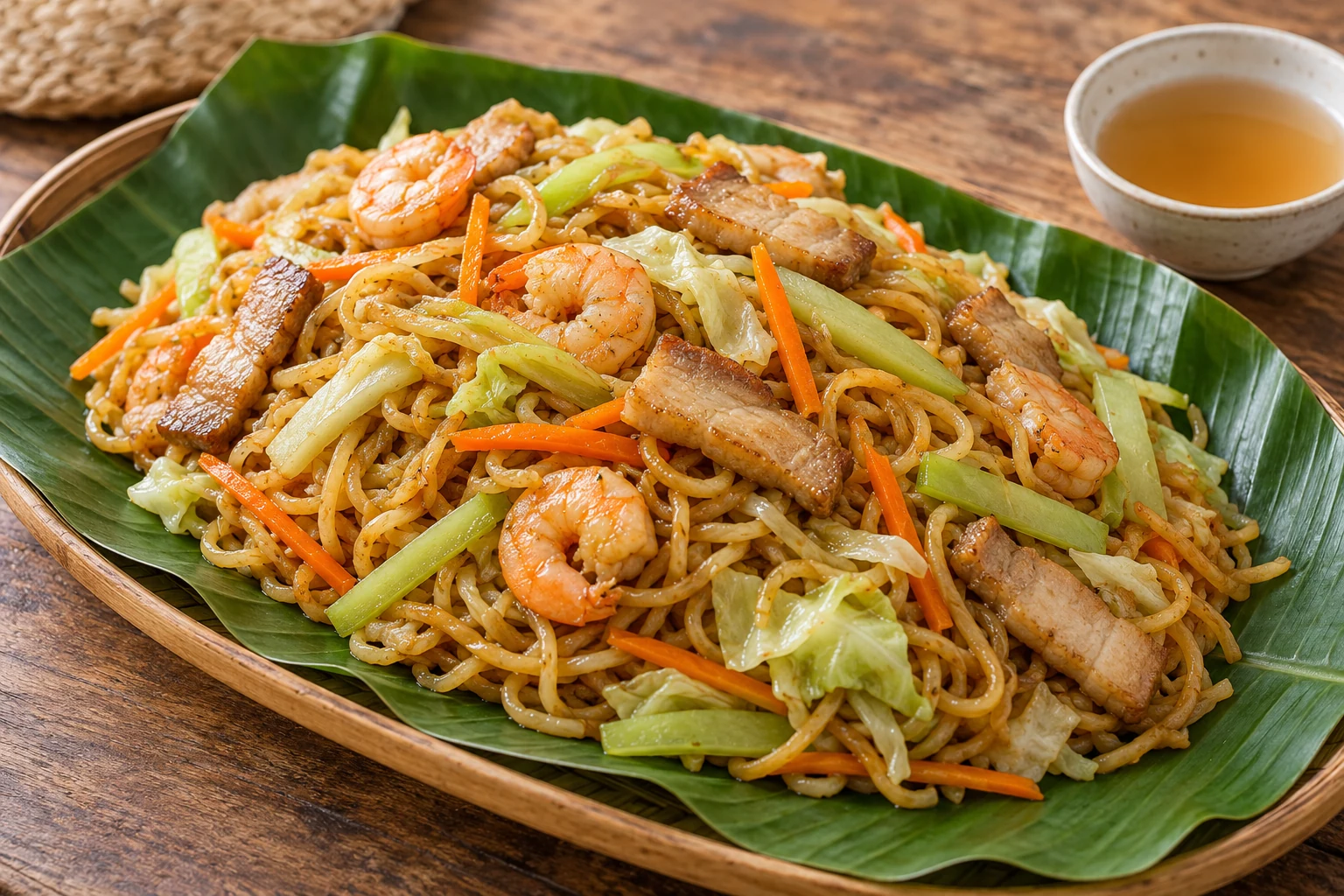
Lucena-style fresh miki noodles with pork, shrimp and vegetables in a glossy sweet-spicy sauce.
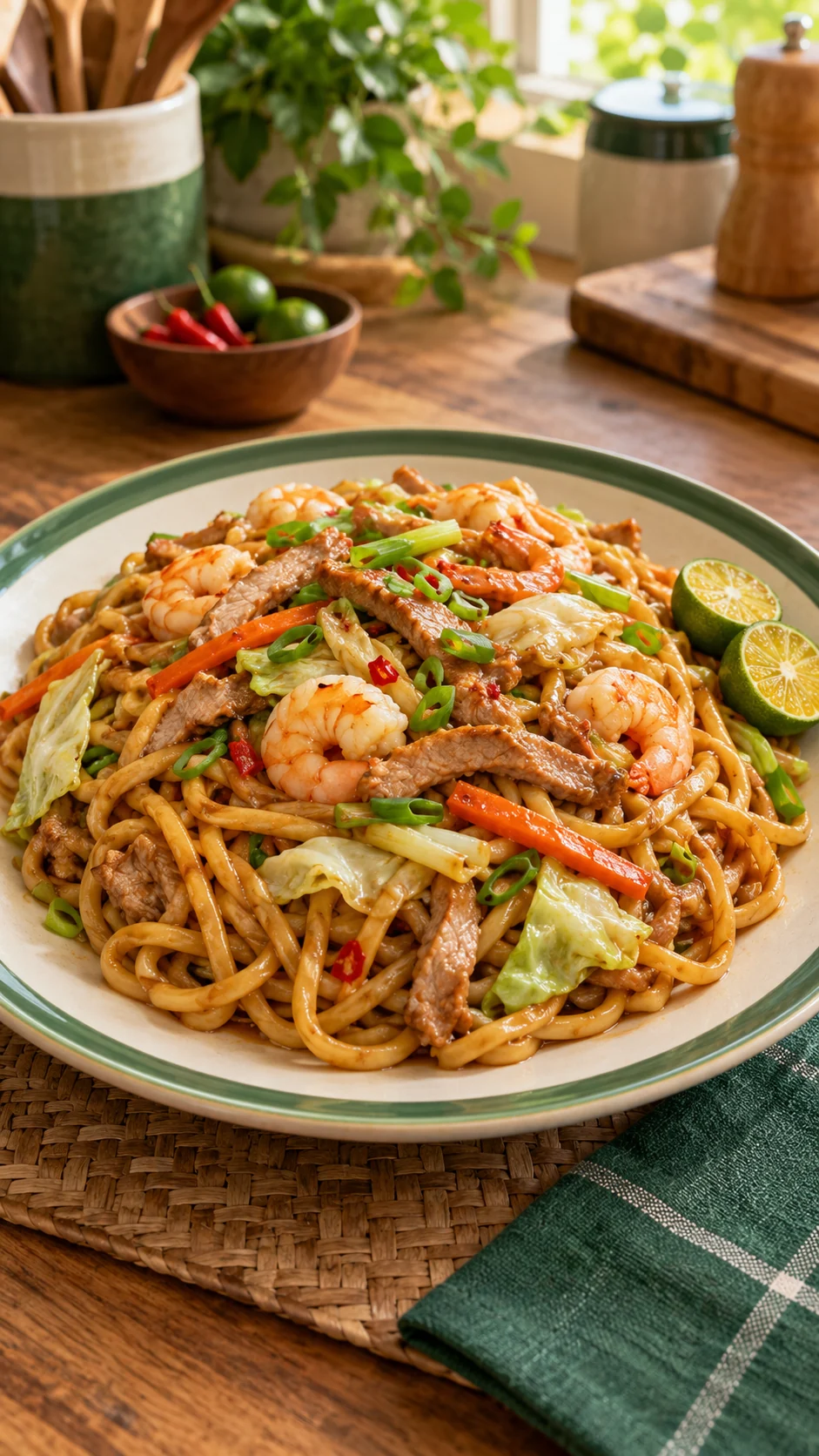
AI-generated serving illustration.
Ingredients
Measure and prepare everything before you begin cooking.
- 600 g fresh thick miki egg noodles; not 600 g dried noodles
- 250 g pork shoulder, sliced across the grain into 3 mm strips
- 150 g raw peeled shrimp, thawed and drained
- 25 ml neutral oil, divided
- 100 g onion, sliced
- 15 g garlic, chopped
- 100 g carrot, cut into thin matchsticks
- 200 g cabbage, shredded
- 350 ml low-salt chicken stock, plus up to 150 ml hot stock as needed
- 30 ml soy sauce
- 20 ml oyster sauce
- 25 g brown sugar
- 1 small red chilli, finely chopped; adjust to preference
- 1 g ground black pepper
- 20 g spring onions, sliced
- 4 calamansi, halved, to serve
Instructions
- 1
Separate noodles gently. Follow the packet's rinsing or blanching directions and drain thoroughly. Mix 350 ml stock with soy sauce, oyster sauce, sugar and pepper.
- 2
Heat 10 ml oil. Cook shrimp briefly until opaque; remove to a clean plate.
- 3
Add remaining oil. Brown pork strips for 4–5 minutes. Add onion for 2 minutes, then garlic and chilli for 30 seconds.
- 4
Pour in the stock mixture. Simmer until pork is tender and cooked through, approximately 5–8 minutes; extend if needed before adding noodles.
- 5
Add carrot and noodles. Toss and simmer for 3–5 minutes, following noodle packet cooking requirements. Add extra hot stock in 50 ml amounts only if needed. Fold in cabbage for the final 2 minutes.
- 6
Return shrimp and heat through. Aim for tender noodles with glossy clinging sauce. Taste, top with spring onions and serve immediately with calamansi.
About Pancit Chami
Lucena’s Chami Tamis-Anghang is built around fresh miki and a sweet-spicy savoury sauce. Our pork-and-shrimp version keeps the protein list manageable for a home wok, with vegetables folded in late and stock added gradually. It has a different noodle and seasoning profile from Lucban’s Habhab.
Ingredient swaps wherever you cook
- Use fresh thick egg noodles when miki are unavailable. Read their cooking directions; a packet sold ready-cooked needs less simmering than raw fresh noodles.
- Lemon or lime can stand in for calamansi. Keep citrus for the table so each person can balance the sweetness.
- Dried noodles are not a gram-for-gram replacement. Cook them separately and develop the liquid quantity for that product.
How to know it is ready
- The noodles are tender with a light coating of sauce, not a pool of broth.
- Pork is cooked through before noodles enter; the returned shrimp are hot and opaque.
Common mistakes and fixes
- Putting all the reserve stock in at once can turn the dish soupy. Add 50 ml only when the noodles need it.
- Leaving shrimp in the pan throughout the pork simmer makes them firm. Cook separately and return them at the end.
Family and regional variations
- For milder diners, reduce the red chilli and offer extra at the table. The sweet-spicy direction is adjustable without adding several new meats.
Storage and reheating
Spread leftovers in shallow containers and refrigerate within 2 hours. Use within 2 days. Reheat once to above 75°C throughout with a small splash of water, tossing gently.
What to serve with it
Makes 4 generous servings. Contains crustaceans, molluscs in oyster sauce, egg, soy and commonly wheat; inspect noodle, sauce and stock labels.
Pancit Chami FAQs
Why does my miki need more liquid?
Fresh noodles vary in starch, moisture and whether they have been pre-cooked. Follow the packet and use the separate reserve stock a little at a time.
Is Chami the same as Habhab?
No. This Lucena-style version uses fresh miki and a tamis-anghang sauce. Habhab is associated with Lucban and has a distinct noodle and serving tradition.
Cooking guidance: Follow current food-safety advice and the instructions for your equipment.