Sinantolan
Shredded santol simmered in coconut milk with shrimp paste and chillies; a tangy, rich Southern Luzon favourite.
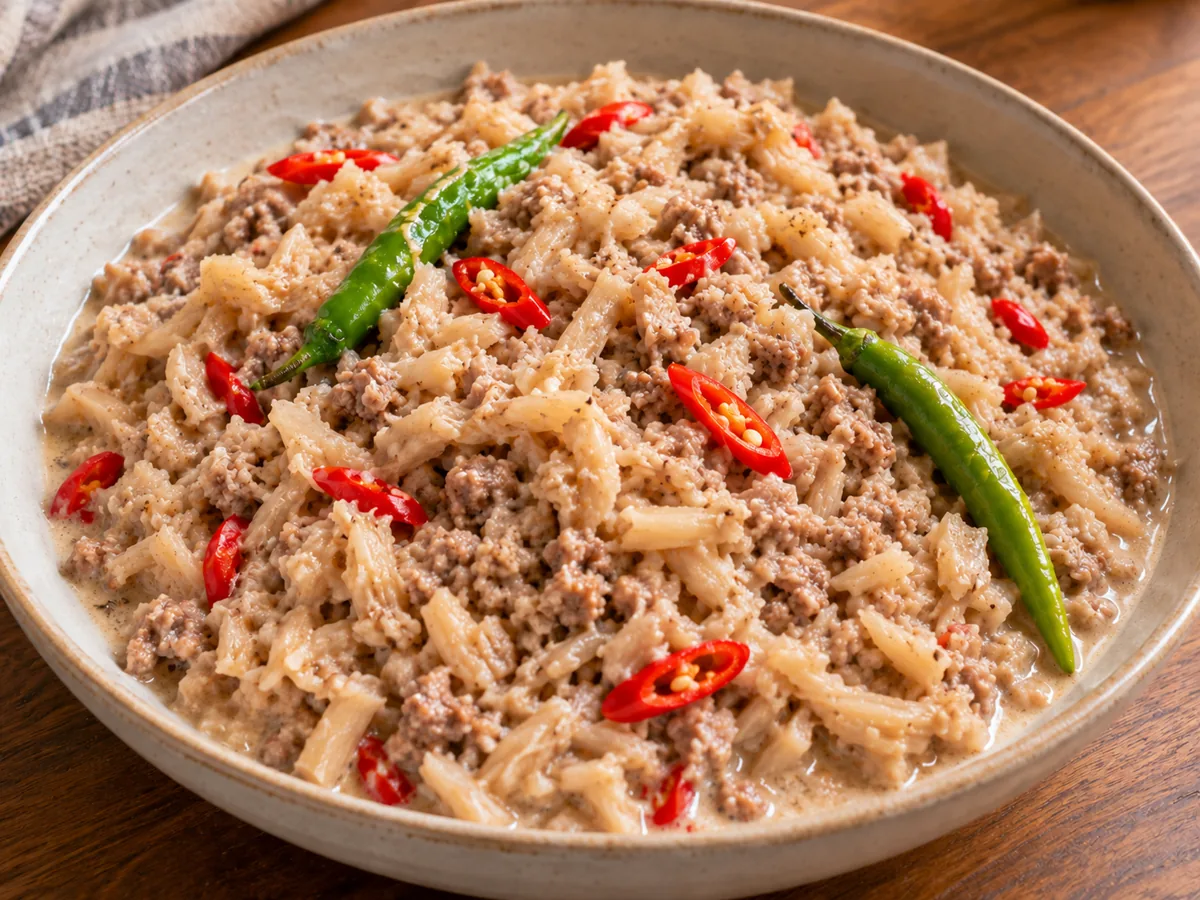
AI-generated serving illustration.
Ingredients
Measure and prepare everything before you begin cooking.
- 500 g prepared santol rind, from about 4–6 fruits; weight after peeling, removing seeds and squeezing
- 200 g pork mince
- 400 ml coconut milk
- 200 ml coconut cream
- 1 small onion, finely chopped
- 4 garlic cloves, minced
- 20 g ginger, minced
- 1 tbsp cooked bagoong alamang, plus up to ½ tbsp more to taste
- 2 long green chillies, slit
- 1 red chilli, sliced, optional
- 1 tbsp oil
- 150 ml water, as needed
- ¼ tsp ground black pepper
- Fine salt, to taste (use less when the dish contains soy sauce, fish sauce or bagoong)
Instructions
- 1
Wash santol. Remove the thin tough outer peel, split the fruit and remove every hard seed and its soft white pulp. Grate or mince only the firm pale rind beneath the peel; never blend whole fruit. Wrap in a clean cloth and squeeze out the juice. If excessively sour, rinse briefly and squeeze again. Weigh 500 g of prepared rind.
- 2
Heat oil over medium heat. Sauté onion for 3 minutes, garlic and ginger for 1 minute. Add pork and cook until no longer pink, breaking up lumps.
- 3
Stir in bagoong for 1 minute. Add shredded santol and coconut milk; mix thoroughly.
- 4
Simmer uncovered over low heat for 20–25 minutes, stirring frequently to prevent sticking. Add a little water if too dry.
- 5
Stir in coconut cream, optional chillies and pepper. Cook gently for another 10–15 minutes until thick and the santol is tender. Stir often and loosen with small splashes of water if it catches. Check the pork mixture reaches 75°C for 30 seconds. Taste before adding more cooked bagoong; brands differ in saltiness.
- 6
Serve in small portions with hot rice and tell diners it contains shrimp paste. Sinantolan belongs to Southern Luzon cooking, including Quezon and Bicol; household variations differ.
About Sinantolan
Sinantolan, also called sinantol or ginataang santol, is associated with Southern Luzon, including Quezon and Bicol. This version uses the firm fruit rind, coconut milk, pork and shrimp paste. The thin outer peel, seeds and soft pulp around the seeds are removed before cooking.
Ingredient swaps wherever you cook
- Use fresh or properly labelled frozen grated santol; thaw frozen fruit in the refrigerator and check carefully for seeds.
- Green mango gives a different dish and is not a direct santol replacement.
- Shrimp paste contains crustaceans. A shrimp-free variation can omit it and use salt gradually; check all other labels.
How to know it is ready
- Santol is finely minced and tender, with no hard seed fragments.
- The mixture is moist and thick rather than watery or scorched.
Common mistakes and fixes
- Rinse and squeeze very sour minced rind before cooking.
- Stir frequently as coconut milk reduces; add water by tablespoons if it catches.
Family and regional variations
- Omit pork for a vegetable version; shrimp paste still makes it non-vegetarian.
- Leave chillies out and offer them separately.
Storage and reheating
Refrigerate in shallow covered containers within 2 hours. Use within 2 days; reheat once to over 75°C throughout.
What to serve with it
Makes 4–6 servings. Serve hot with rice.
Sinantolan FAQs
Which part of santol do I use?
The firm pale rind beneath the thin outer peel, after completely removing seeds and soft seed pulp.
Can I process the whole fruit?
No. Remove the peel, every seed and the seed pulp before mincing.
Cooking guidance: Follow current food-safety advice and the instructions for your equipment.