Sapin-Sapin
Three chewy steamed layers of ube, coconut and jackfruit, finished with golden coconut curds.
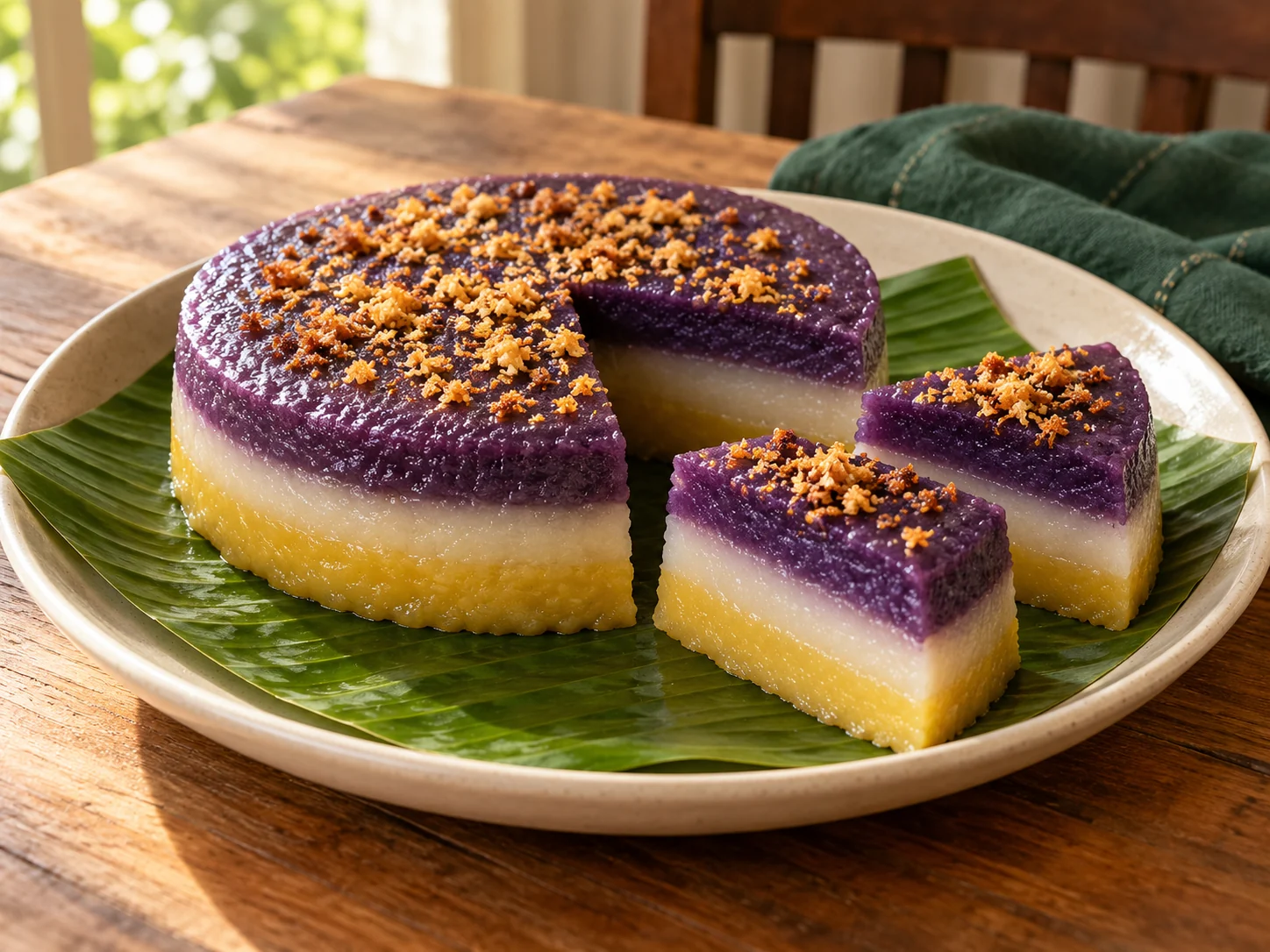
AI-generated serving illustration.
Ingredients
Measure and prepare everything before you begin cooking.
- 240 g glutinous rice flour (sweet rice flour), not ordinary rice flour
- 400 ml full-fat unsweetened coconut milk
- 200 ml water for the base batter
- 140 g white sugar
- 2 g fine salt
- 60 g cooked unsweetened ube, mashed very smooth and cooled
- 50 g ripe jackfruit flesh, drained and finely minced or puréed
- 20 ml additional water for blending the ube
- 1–2 drops food-grade ube extract, optional
- 200 ml unsweetened coconut cream for the latik topping
- 1 tbsp coconut oil, for greasing and finishing if the latik yields too little
- Extra boiling water for the steamer
Instructions
- 1
Use a solid 20 cm round tin at least 6 cm deep; check it fits on a rack above the steamer water. Grease the base and sides lightly with coconut oil and line the base with baking parchment. Set the steamer over a steady simmer, with the water below the rack. Keep a kettle of boiling water ready for topping up.
- 2
Make the latik while preparing the batter: simmer coconut cream in a small heavy pan. Once oil separates and small curds form, lower the heat and stir along the base until the curds turn golden, about 15–25 minutes overall. Strain and keep the curds and oil separately. Stop before the curds become dark brown.
- 3
Whisk rice flour, coconut milk, 200 ml water, sugar and salt until smooth. Strain out lumps, then weigh the batter into three equal portions. Blend the cooked ube with the additional 20 ml water; stir into one portion, adding optional ube extract. Fold jackfruit into a second portion and leave the third plain. Stir each portion again just before pouring.
- 4
Pour the purple ube batter into the tin. Steam covered for about 15 minutes, until the surface is set and a skewer at the centre has no liquid batter. Handle the hot tin with dry oven gloves; do not test the hot surface with a bare finger. Check the steamer has sufficient water.
- 5
Pour the plain batter slowly over the back of a spoon onto the set ube layer. Steam about 15 minutes until this layer is set. Add the jackfruit batter in the same gentle way and steam for 20–25 minutes, until a skewer through the centre has no wet flour paste. Add boiling water below the rack as needed; keep condensation from dripping onto the cake by wiping the lid away from the tin.
- 6
Turn off the heat and rest covered for 10 minutes. Lift out and cool for about 60 minutes, until it can be released without stretching; refrigerate promptly if cooling would otherwise exceed 2 hours. Loosen the edge, invert onto a lightly oiled platter and peel off the parchment: purple will be on top. Brush lightly with reserved coconut oil and scatter with latik. Cut into 12 wedges with a lightly oiled knife.
About Sapin-Sapin
Sapin-sapin brings several flavours together in one layered kakanin. Our dairy-free flour-based version has ube on top, a plain coconut centre and jackfruit underneath after unmoulding. A small batch in a measured tin makes the layers easier to handle at home.
Ingredient swaps wherever you cook
- Frozen cooked unsweetened ube can be thawed, drained and mashed smooth. Ube halaya contains extra sugar and often milk, so it is not a direct replacement for this measured purée.
- Use ripe canned jackfruit in syrup after draining well. Young green jackfruit is a savoury ingredient and is unsuitable here.
- Glutinous rice flour is also called sweet rice flour. Ordinary rice flour does not produce the same cohesive chew.
How to know it is ready
- Each layer is set at the centre before another batter is added.
- A skewer through the finished cake has no liquid batter or wet flour paste; cooled slices hold their layers.
Common mistakes and fixes
- Pouring onto a wet first layer mixes the colours. Wait for a set surface and pour gently over a spoon.
- Letting the steamer run dry interrupts cooking. Add boiling water below the rack without splashing the cake.
- Unmoulding while hot can stretch or split the layers. Allow cooling time, then loosen the edge.
Family and regional variations
- Replace latik with 30 g unsweetened desiccated coconut toasted gently until golden for a quicker, differently textured topping. Keep the measured cake batter unchanged.
Storage and reheating
Refrigerate within 2 hours of finishing cooking, in a covered container once steam has escaped. Use within 2 days. Reheat individual portions gently until piping hot throughout; a brief steam softens the chilled rice cake. Store the topping separately for better texture.
What to serve with it
Makes 12 modest wedges from one 20 cm cake. Serve with coffee or tea. This version has no dairy or egg ingredients; check extract and packaged coconut labels for allergens.
Sapin-Sapin FAQs
Why is my sapin-sapin still very soft?
It may still be hot, or a layer may need more steaming. Check for wet batter at the centre first; then allow it to cool before judging the final chew.
Do I have to use food colouring?
No. Cooked ube and ripe jackfruit supply flavour and some colour. The optional ube extract strengthens the purple, but the natural layers will be subtler.
Cooking guidance: Follow current food-safety advice and the instructions for your equipment.