Kamote Cue
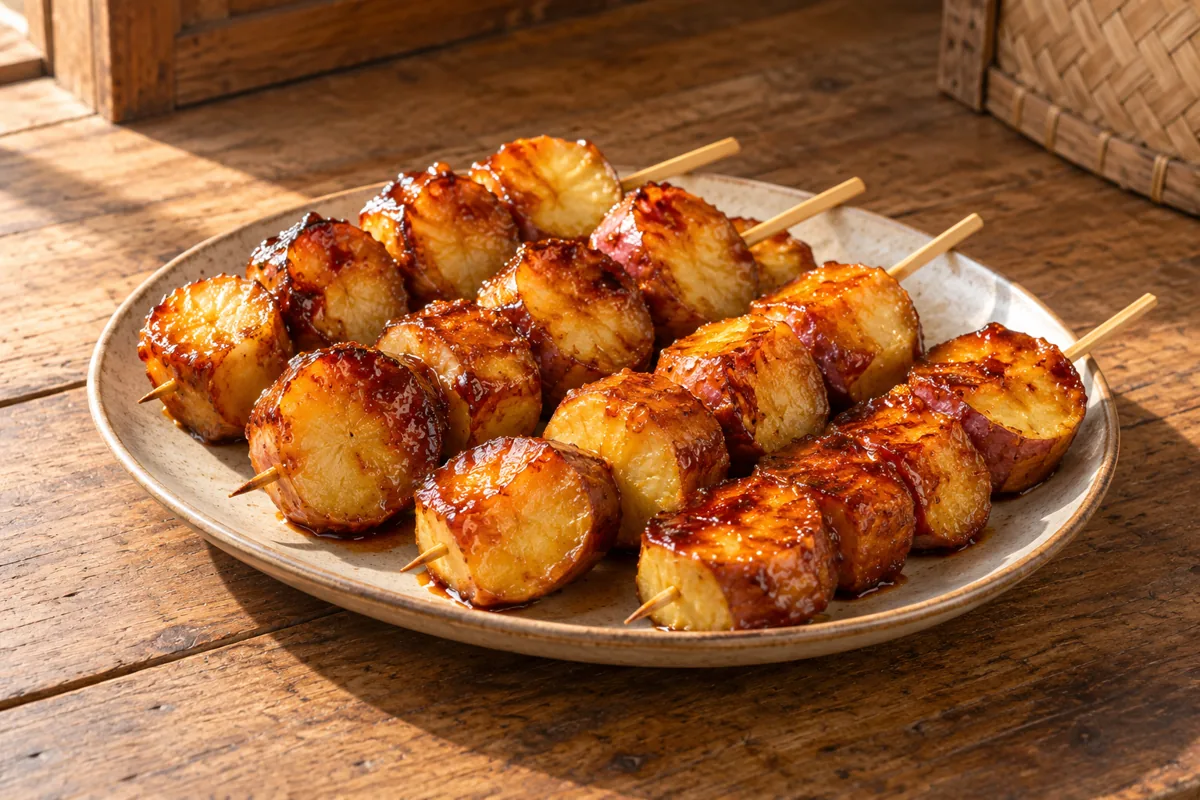
Fried sweet-potato slices with a caramelised brown-sugar coating, a classic merienda.
Ingredients
Measure and prepare everything before you begin cooking.
- 600 g firm sweet potatoes, preferably a pale-fleshed Asian variety, peeled
- 90 g brown sugar
- Neutral cooking oil for a 3 cm frying depth
- 4–6 bamboo skewers, optional for serving
Instructions
- 1
Slice the peeled sweet potatoes crosswise about 1 cm thick. Keep pieces similar in size and dry them thoroughly. Place a wire rack over a tray and have the sugar ready beside the stove.
- 2
Heat oil in a deep frying pan to about 170°C. Keep the pan less than half full and work in batches if the slices would overlap. Lower the dry slices into the oil carefully.
- 3
Fry for roughly 7–10 minutes, turning occasionally, until the sweet potato is nearly tender and lightly golden. Test a thick piece with a fork; it should not have a hard raw centre. Adjust heat if the surface colours too quickly.
- 4
Lower the heat slightly and scatter the brown sugar into the oil around the slices in small additions. Turn the slices carefully for another 2–4 minutes as patches of sugar melt, caramelise and cling. Do not add water to hot oil.
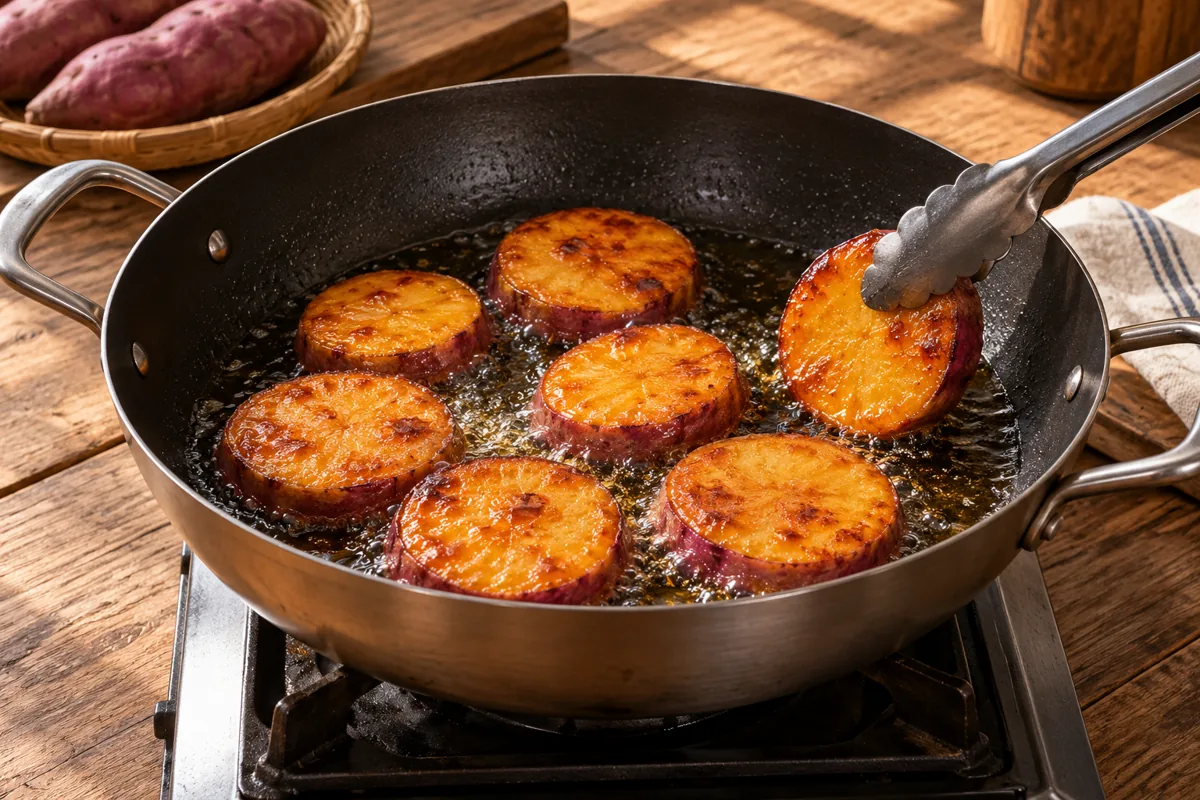
Cooking-stage illustration; never add water to hot frying oil. - 5
Lift the slices onto the rack, keeping them separated while the coating sets. Let cool for at least 5 minutes before touching or tasting; melted sugar is much hotter than it looks.
- 6
Serve on small plates, or slide the cooled slices onto optional skewers carefully. Remove sticks before serving young children. Enjoy the same day for the best caramel crunch.
About Kamote Cue
Kamote cue is a familiar sweet merienda made from sweet potato rather than saba. The name is also spelled camote cue. Golden slices and irregular caramel patches give it a different texture from sweet potato simmered in syrup.
Ingredient swaps wherever you cook
- Pale-fleshed Asian sweet potatoes give a firm familiar texture. Orange-fleshed sweet potato or kūmara can be used but may soften sooner.
- Dark brown sugar gives a deeper flavour; light brown sugar also works.
- Skewers are optional: a plate is easier and safer for many diners.
How to know it is ready
- A fork enters the sweet-potato centre without a hard raw core.
- Caramel forms amber patches, not black bitter clumps.
- The cooled coating firms up while the inside stays tender.
Common mistakes and fixes
- Raw middle: use even 1 cm slices and cook before adding sugar.
- Burnt caramel: lower heat before sugar and add it gradually.
- Sticky pile: cool slices separately on a rack.
Family and regional variations
- Serve without sticks for a simple family snack.
- Use a smaller amount of sugar for a lighter patchy coating.
- Make several smaller batches rather than crowding one pan.
Storage and reheating
Best the day it is made. Refrigerate cooled leftovers within 2 hours and use within 2 days. Reheat carefully until hot throughout; caramel may soften. Let the coating cool before eating.
What to serve with it
Makes 4–6 snack portions. Hot caramel can cause burns; allow adequate cooling and remove skewers for children.
Kamote Cue FAQs
Is kamote cue the same as banana cue?
The caramel-frying idea is similar, but kamote cue uses sliced sweet potato and banana cue uses saba bananas. Sweet potato needs time to cook through before caramelising.
Can I use orange sweet potato?
Yes. Choose firm roots and check tenderness earlier, because orange varieties can soften more quickly.
Cooking guidance: Follow current food-safety advice and the instructions for your equipment.