Binignit
A Visayan coconut dessert with glutinous rice, taro, sweet potato, saba, jackfruit and cooked sago; thick, warm and spoonable.
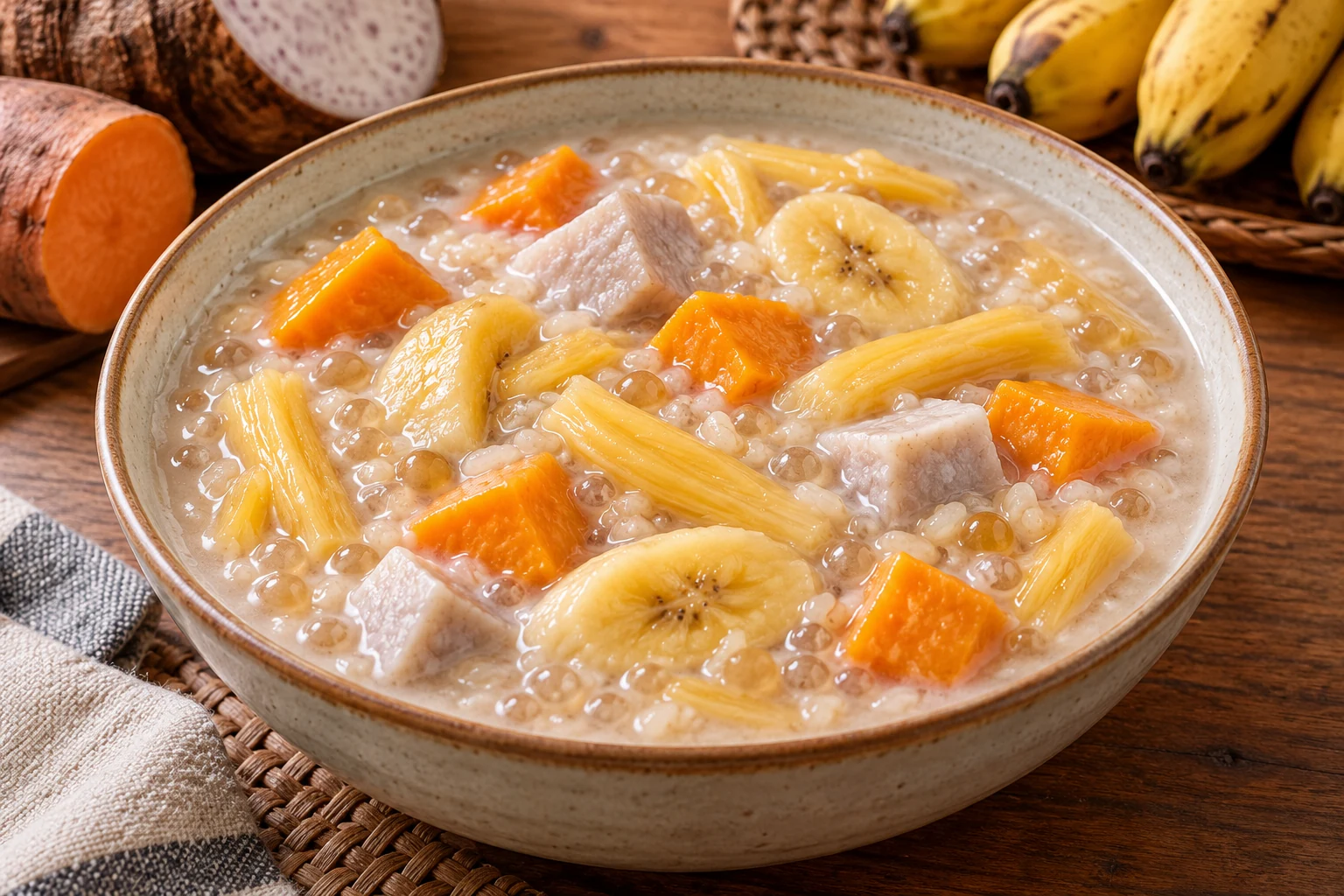
AI-generated serving illustration.
Ingredients
Measure and prepare everything before you begin cooking.
- 75 g uncooked glutinous rice, rinsed and drained
- 600 ml water, plus extra hot water as needed
- 400 ml coconut milk
- 200 ml coconut cream
- 200 g taro, peeled and cut into 1½ cm cubes
- 200 g orange sweet potato, peeled and cut into 1½ cm cubes
- 2 ripe but firm saba bananas, about 200 g peeled, sliced
- 100 g ripe jackfruit flesh, seeds removed, cut into strips
- 100 g cooked small sago or tapioca pearls, drained; prepare separately according to packet
- 60–90 g muscovado or brown sugar, to taste
- ¼ tsp fine salt
Instructions
- 1
Have cooked sago ready; the stated cooking time excludes separately cooking dried pearls. Follow their packet, because pearl sizes cook differently. Peel taro with gloves if it irritates your skin, rinse it, and keep it separate from ready-to-eat ingredients. Never taste raw taro.
- 2
Bring 600 ml water and coconut milk to a gentle simmer in a heavy pot. Add rinsed glutinous rice and cook for 10 minutes over low heat, stirring often so the grains do not catch on the bottom.
- 3
Add taro and sweet potato. Simmer gently for about 15–20 minutes, stirring from the bottom, until both the rice and root crops are soft throughout. Add hot water in 50 ml splashes whenever the mixture thickens before the centres soften. Do not add sugar while the root crops remain hard.
- 4
Add saba, jackfruit, cooked sago, 60 g sugar and salt. Simmer for 5–7 minutes until the banana is tender and the sugar dissolves. Taste a small cooled spoonful before deciding whether to add more sugar.
- 5
Stir in coconut cream and heat gently for 3–5 minutes. Check a taro cube and a rice grain: neither should have a hard or chalky centre. Continue cooking with a little extra hot water if needed; time is a guide, not a substitute for full doneness.
- 6
Serve warm in small bowls. The mixture should flow slowly from a spoon, as it thickens further while standing. If needed, loosen individual portions with a small splash of hot water. This glutinous-rice version has no bilo-bilo dough balls; cooked sago is the practical alternative to landang used here.
About Binignit
Binignit is a Visayan sweet coconut stew associated with Cebu and Holy Week meals. Ingredients vary by household. This version uses whole glutinous rice grains, root crops and cooked sago rather than rice dough balls; landang is another traditional thickening ingredient used in some versions.
Ingredient swaps wherever you cook
- Use firm ripe plantain if saba is unavailable; it changes the banana flavour, and timing depends on ripeness.
- Glutinous rice is sold as sticky or sweet rice. Ordinary long-grain rice gives a different texture.
- Canned ripe jackfruit in syrup can be drained and used; start with the smaller sugar amount. Do not use canned young green jackfruit.
How to know it is ready
- Rice and taro have no hard centre; all root crops are fully tender.
- The coconut mixture is thick but still spoonable, not a set pudding.
Common mistakes and fixes
- Adding sugar too early can delay softening of the root crops.
- A thick pot needs frequent bottom-to-top stirring to prevent scorching.
Family and regional variations
- For a simpler pot, omit jackfruit and keep the other measured ingredients.
- Adjust sugar only after the fruit has cooked and released its sweetness.
Storage and reheating
Divide leftovers into shallow containers and refrigerate within 2 hours, sooner in hot weather. As this version contains rice, use within 2 days. Reheat once with a little water until piping hot throughout, above 75°C; do not repeatedly warm and cool the whole pot.
What to serve with it
Makes 6 modest dessert portions. Contains coconut; check packaged sago for additional ingredients.
Binignit FAQs
Is binignit the same as ginataang bilo-bilo?
They are related coconut desserts, with household variations. This version uses glutinous rice grains and sago, while our bilo-bilo recipe features rice dough balls.
Can I put dried sago straight into the pot?
Not for this method. Cook it separately following the packet, drain it, then weigh the cooked pearls so they do not take liquid needed by the rice and root crops.
Cooking guidance: Follow current food-safety advice and the instructions for your equipment.