Pork Tocino (Tocilog)
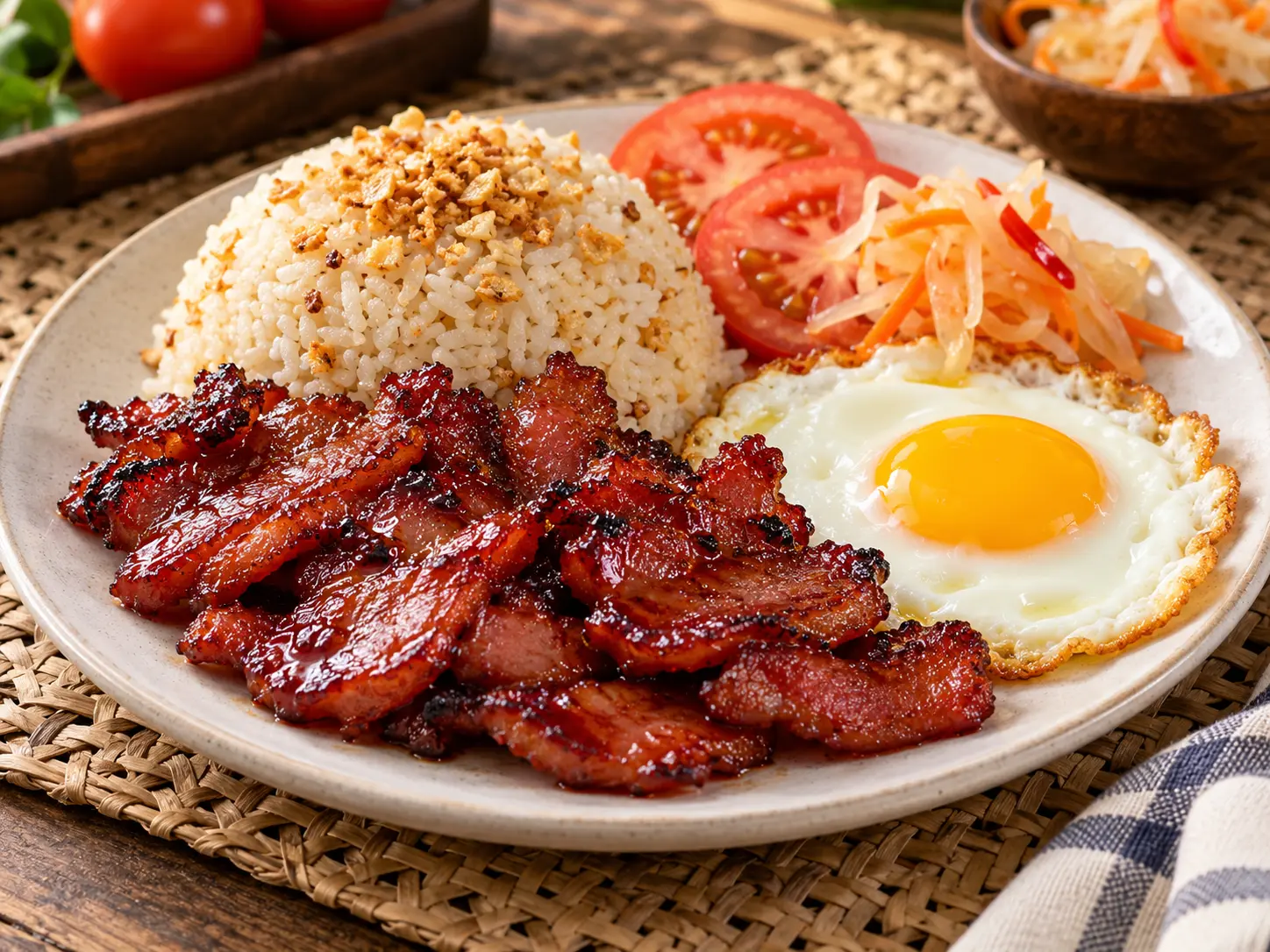
Sweet-garlicky Filipino cured-style pork served with garlic rice and fried egg.
Ingredients
Measure and prepare everything before you begin cooking.
- 750 g pork shoulder, sliced 5 mm thick across the grain
- ⅓ cup brown sugar
- ¼ cup pineapple juice
- 2 tbsp soy sauce
- 1 tbsp cane vinegar or apple-cider vinegar
- 5 garlic cloves, finely grated
- 1 tsp fine salt
- ½ tsp ground black pepper
- 1 tsp sweet paprika or annatto powder, for colour (optional)
- 2 tbsp neutral cooking oil
- ½ cup water
- Garlic fried rice, fried eggs, tomato and atchara, to serve
Instructions
- 1
Whisk the sugar, pineapple juice, soy sauce, vinegar, garlic, salt, pepper and optional paprika or annatto until the sugar mostly dissolves.
- 2
Coat the pork thoroughly in the marinade. Cover and refrigerate for at least 8 hours or overnight, turning once if possible. Do not leave the pork at room temperature to marinate.
- 3
Tip the pork and marinade into a wide frying pan and add the water. Bring to a simmer over medium heat and cook for 12–15 minutes, turning the slices, until the liquid has nearly evaporated.
- 4
Add the oil and lower the heat to medium-low. Fry the pork in batches for 3–5 minutes per side, watching closely as the sugar caramelises, until browned and cooked through.
- 5
Check that the thickest slices reach at least 71°C, then rest for 3 minutes. Add a spoonful of water if the glaze begins to catch before the pork is cooked.
- 6
Serve hot with garlic fried rice, a fried egg, tomato and atchara for a complete tocilog breakfast.
About Pork Tocino (Tocilog)
Tocino is sweet, garlicky cured-style pork strongly associated with Pampanga and the Filipino breakfast table. Served with sinangag and itlog, it becomes tocilog—an all-day breakfast plate loved for its caramelised edges and savoury-sweet glaze.
Ingredient swaps wherever you cook
- Pork shoulder is easier to slice and less fatty than belly while staying juicy.
- Use apple-cider vinegar when Filipino cane vinegar is unavailable.
- Paprika adds a warm natural colour; the recipe does not require commercial curing salt.
How to know it is ready
- Slice the pork evenly across the grain so every piece cooks at the same rate.
- Let the marinade reduce before frying so the pork caramelises rather than boils.
- The pork is done at 71°C, followed by a 3-minute rest.
Common mistakes and fixes
- Burnt sugar: lower the heat once the liquid evaporates and turn the pork frequently.
- Dry tocino: choose shoulder and stop cooking once safely done.
- Uneven flavour: massage the marinade into every slice and refrigerate overnight.
Family and regional variations
- Use chicken thigh and cook it to 75°C for chicken tocino.
- Add a little calamansi or lemon for a brighter marinade.
- Serve the tocino in pandesal for a portable breakfast sandwich.
Storage and reheating
Marinate refrigerated and cook within 24 hours, or freeze the pork in its marinade for up to 2 months. Refrigerate cooked tocino for up to 3 days and reheat until steaming hot.
What to serve with it
Pair with garlic fried rice, a sunny-side egg, tomato and atchara. Spiced vinegar on the side cuts through the sweet glaze.
Pork Tocino (Tocilog) FAQs
Why add water before frying?
The water gently cooks the pork first; once it evaporates, the meat fries and caramelises without burning too early.
Does homemade tocino need curing salt?
Not for this fresh refrigerated version. It is marinated for flavour, then cooked promptly rather than preserved for long storage.
Can I freeze marinated tocino?
Yes. Freeze in meal-size portions for up to 2 months and thaw safely in the refrigerator.
Cooking guidance: Follow current food-safety advice and the instructions for your equipment.