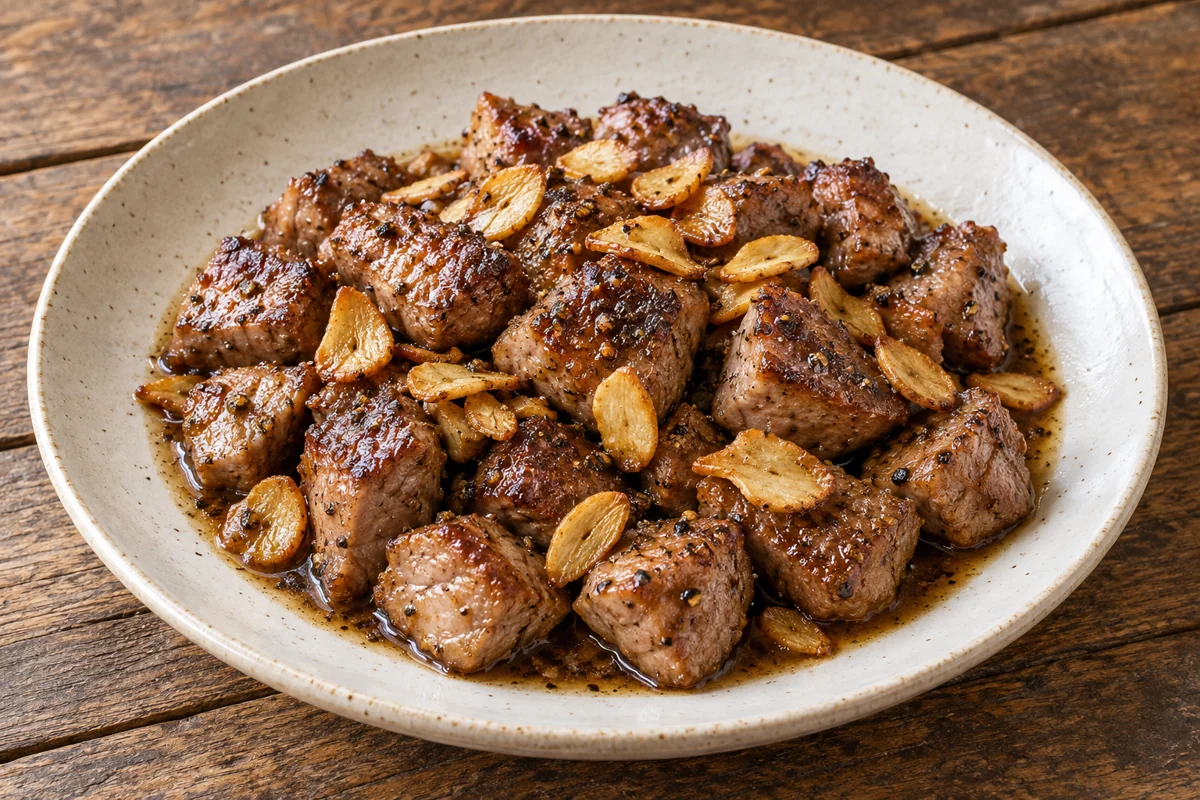
Pork Salpicao
Quick-seared pork tenderloin with toasted garlic and a savoury butter glaze.
Ingredients
Measure and prepare everything before you begin cooking.
- 700 g pork tenderloin, silverskin removed and cut into 2 cm cubes
- 8 garlic cloves, thinly sliced
- 2 tbsp neutral cooking oil
- 1½ tbsp oyster sauce
- 1 tbsp Worcestershire sauce
- 1 tbsp soy sauce, preferably reduced-salt
- 3 tbsp water
- 25 g unsalted butter
- ¼ tsp freshly ground black pepper
- 1 spring onion, sliced, optional garnish
Instructions
- 1
Pat the pork cubes dry. Mix oyster sauce, Worcestershire sauce, soy sauce and water in a small bowl. Prepare a clean plate for the cooked meat, separate from the plate used for raw pork.
- 2
Put the oil and sliced garlic in a large frying pan over medium-low heat. Stir for 2–4 minutes until the garlic turns pale gold. Lift the garlic onto a plate immediately; it will continue to darken as it cools.
- 3
Raise the heat to medium-high. Add half the pork in one layer and leave it for about 2 minutes to brown before turning. Cook for another 2–3 minutes, then transfer to a bowl. Repeat with the remaining pork; these first times are for browning, not a doneness guarantee.
- 4
Return all pork and its juices to the pan. Add the mixed sauce and pepper, then stir over medium heat for 2–4 minutes. Check a large cube with a thermometer: reach 63°C, then allow a 3-minute rest before eating. Continue cooking and add a splash of water if needed.
- 5
Lower the heat and stir in the butter and half the toasted garlic. Toss just until the butter melts and the glossy sauce coats the pork. Avoid reducing the sauce completely dry.
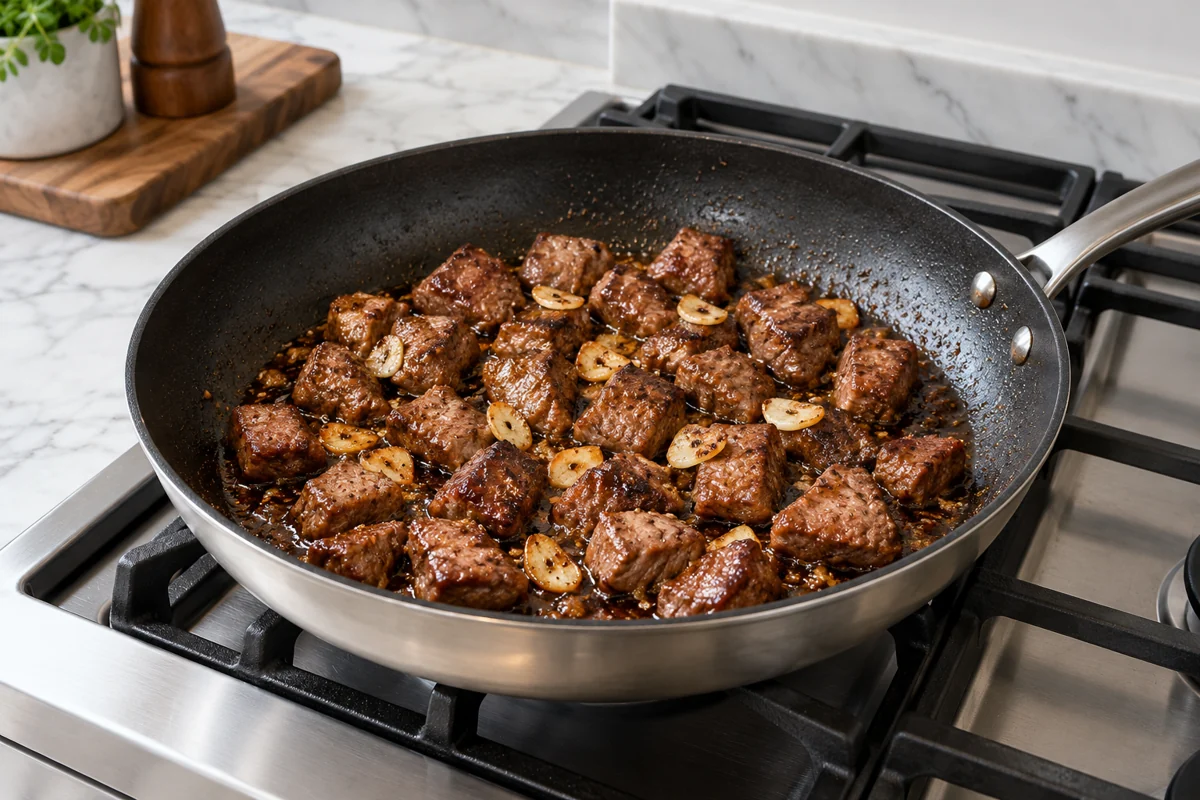
Cooking-stage illustration; follow the timings and doneness checks in the instructions. - 6
Take the pan off the heat and rest the pork for at least 3 minutes after it has reached 63°C. Top with the remaining garlic and optional spring onion. Serve with rice and a vegetable side; the sauces already supply salt.
About Pork Salpicao
Salpicao is familiar on Filipino restaurant and home tables as a garlic-rich, quickly seared meat dish. Pork tenderloin makes a practical alternative to beef. This version uses a modest amount of salty sauces and finishes with butter rather than a long braise.
Ingredient swaps wherever you cook
- Pork tenderloin: pork fillet is the same cut under a different name. Shoulder and belly need different, longer cooking methods.
- Oyster sauce: mushroom stir-fry sauce works for a shellfish-free variation; check all labels for allergens.
- Worcestershire sauce: brands vary; check for fish and gluten if those matter to your household.
How to know it is ready
- A dry surface and uncrowded pan encourage browned edges.
- Check a large pork cube for 63°C, followed by a 3-minute rest.
- The sauce should coat the cubes without becoming a burnt sticky crust.
Common mistakes and fixes
- Pale, watery pork: brown it in two batches.
- Bitter garlic: lift it out when pale gold, before it becomes dark brown.
- Tough pork: use tenderloin and check doneness promptly instead of simmering for a long time.
Family and regional variations
- Add sautéed mushrooms after the pork has browned.
- Add chilli flakes with the sauce for a spicy variation.
- Use less butter for a lighter finish.
Storage and reheating
Refrigerate within 2 hours and use within 3 days. Reheat only the portion needed until steaming hot throughout, adding a splash of water to loosen the sauce.
What to serve with it
Serve with rice, cucumber or a simple vegetable sauté. Keep extra garlic separate for those who enjoy a stronger topping.
Pork Salpicao FAQs
Can I use pork shoulder?
It is not a direct swap: shoulder needs longer cooking to become tender and does not suit this quick-sear method.
Should I add salt?
Taste the cooked dish first. The three sauces usually provide enough salt without extra.
Cooking guidance: Follow current food-safety advice and the instructions for your equipment.