Piaya
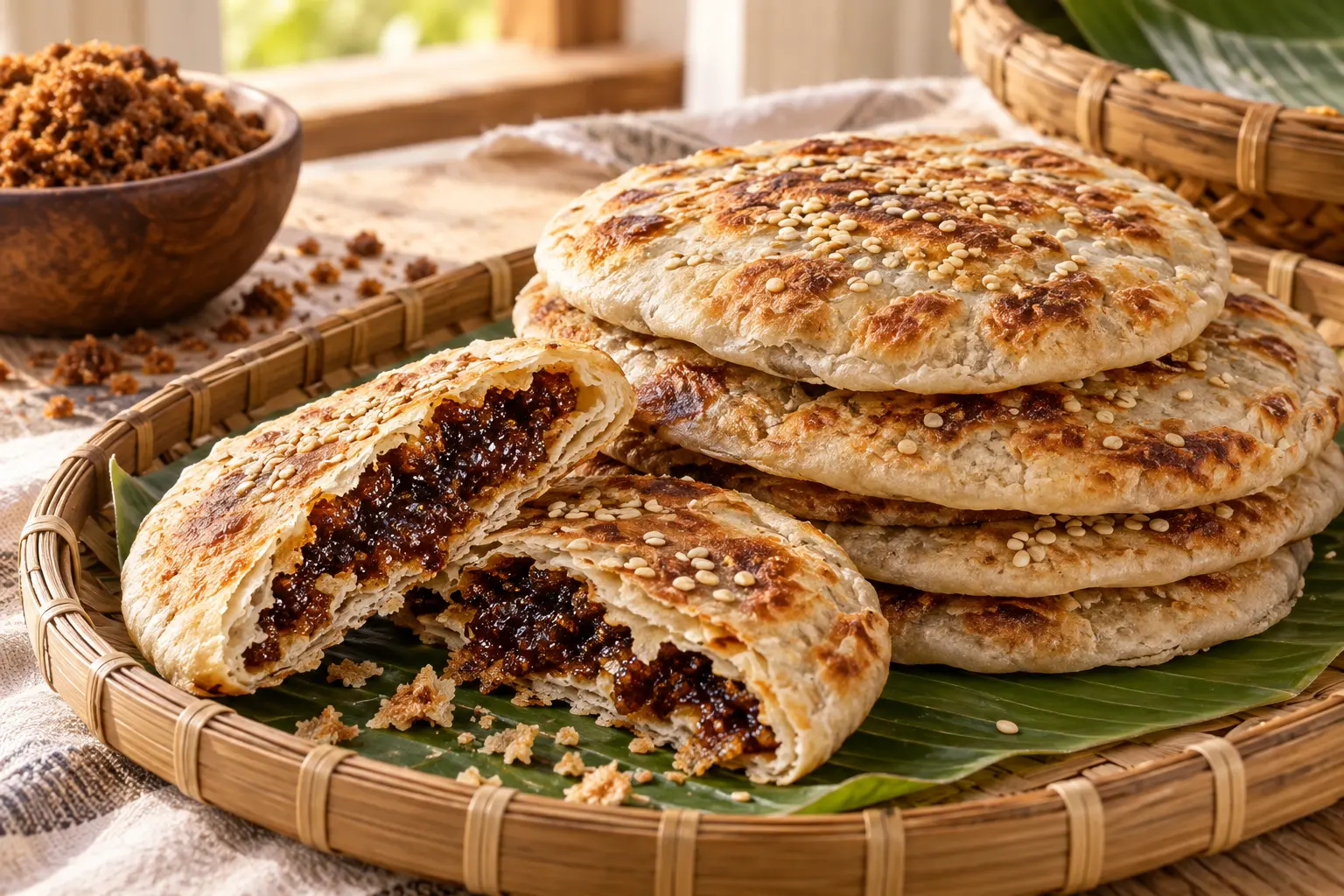
Thin Negros flatbreads with a dark muscovado filling and toasted sesame.
Ingredients
Measure and prepare everything before you begin cooking.
- 250 g plain flour, plus extra for dusting
- 25 g caster sugar
- ½ tsp fine salt
- 75 g cold unsalted butter or vegetable shortening, cubed
- 110–125 ml cool water
- 160 g dark muscovado sugar
- 35 g plain flour, for the filling
- 1 tbsp neutral cooking oil
- 1–2 tbsp water, as needed
- 2 tbsp sesame seeds
Instructions
- 1
Whisk the 250 g flour, caster sugar and salt in a bowl. Rub in the cold butter or shortening until the mixture resembles coarse crumbs. Add 110 ml water and mix; add the remaining water only as needed to form a soft, smooth dough.
- 2
Knead briefly for 2–3 minutes, cover and rest for 30 minutes. Meanwhile, mix the muscovado, 35 g flour and oil. Add just enough water for the filling to hold together when pressed; it should be damp and crumbly, not runny.
- 3
Divide the dough and filling into 12 equal portions. Flatten one dough portion, place one filling portion in the centre, gather the edges to seal and pinch firmly. Repeat, keeping the pieces covered so they do not dry out.
- 4
With the seam underneath, gently roll each filled piece into a thin 12–14 cm round. If the filling begins to break through, stop rolling and patch the spot with a pinch of flour. Press sesame seeds onto both sides.
- 5
Heat a dry heavy frying pan or griddle over medium-low heat. Cook the piaya in batches for 2–3 minutes per side, turning when golden brown spots appear and adjusting the heat so the sugar warms without burning.
- 6
Transfer to a rack and cool for at least 10 minutes—the muscovado filling will be very hot and firms slightly as it rests. Serve warm or at room temperature.
About Piaya
Piaya is a thin, griddled muscovado-filled flatbread strongly associated with Negros Occidental and its sugar-growing history. Its pleasure is in the contrast: a lightly crisp, sesame-speckled shell and a dark caramel-like centre.
Ingredient swaps wherever you cook
- Dark muscovado gives the most characteristic molasses depth; dark brown sugar works but tastes milder.
- Vegetable shortening gives a particularly crisp, flaky dough, while unsalted butter contributes a richer flavour.
- If sesame is unsuitable, omit it—the filled flatbread will still cook correctly.
How to know it is ready
- The filling should clump when pressed but should not be wet enough to leak.
- Roll gently from the centre so the muscovado stays evenly distributed inside the dough.
- Cook over medium-low heat until mottled golden brown; very high heat burns the sugar before the dough becomes crisp.
Common mistakes and fixes
- Leaking filling: use less water in the muscovado mixture and pinch every seam firmly.
- Tough piaya: mix only until smooth and let the dough rest for the full 30 minutes.
- Burnt spots: lower the heat and wipe loose sugar from the pan between batches.
Family and regional variations
- Add a little pandan extract to the dough for a fragrant variation.
- Replace part of the filling with smooth ube halaya for a modern ube piaya.
- Bake on a preheated tray at 200°C for about 8–10 minutes, turning once, when griddle cooking is impractical.
Storage and reheating
Cool completely before storing. Keep airtight at room temperature for up to 3 days, or freeze with baking paper between pieces for up to 1 month. Rewarm briefly in a dry pan or low oven.
What to serve with it
Serve warm or at room temperature with coffee or tea. Let freshly cooked piaya rest before eating because the muscovado centre becomes extremely hot.
Piaya FAQs
Why did the filling leak?
The mixture may have been too wet or the seam insufficiently sealed. Use only enough water for the sugar to hold together.
Can I use brown sugar instead of muscovado?
Yes, but choose the darkest soft brown sugar available and expect a lighter molasses flavour.
Is piaya fried in oil?
No. It is normally cooked on a dry griddle or pan, which gives it toasted spots and a crisp surface.
Cooking guidance: Follow current food-safety advice and the instructions for your equipment.