Kinunot na Isda
Generous flakes of white fish with malunggay, green chillies and a creamy coconut sauce in our Bicol home version.
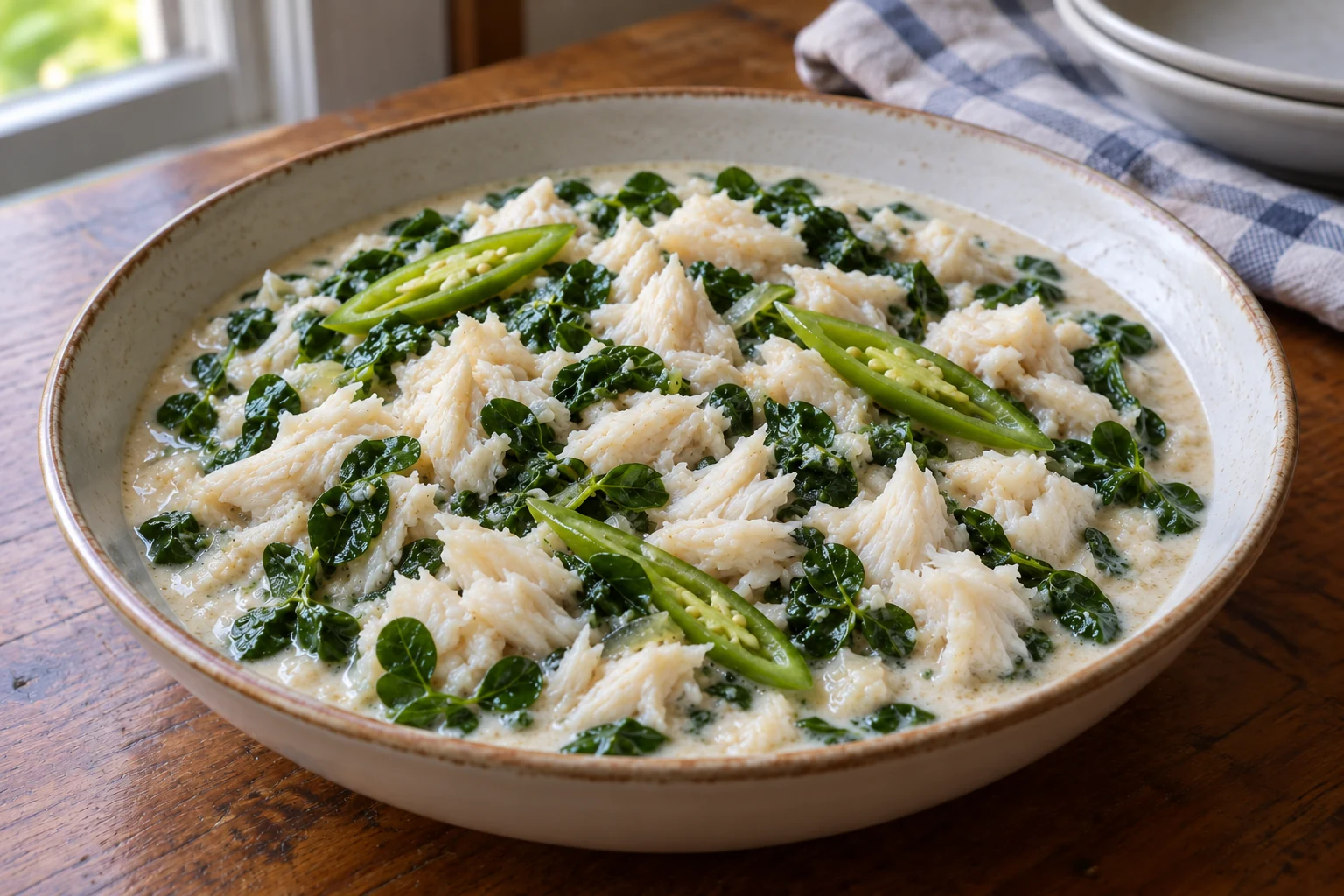
AI-generated serving illustration.
Ingredients
Measure and prepare everything before you begin cooking.
- 700 g firm white fish fillets, skin and bones removed
- 750 ml water
- 20 g fresh ginger, sliced, plus 20 g cut into strips
- 60 ml cane or coconut vinegar
- 1/2 tsp fine salt, divided
- 1/2 tsp freshly ground black pepper, divided
- 1 tbsp neutral cooking oil
- 1 medium onion, finely chopped
- 4 garlic cloves, minced
- 400 ml unsweetened coconut milk
- 200 ml coconut cream
- 4 long green chillies, sliced
- 1-2 red bird's-eye chillies, sliced (optional)
- 60 g moringa leaves, or 120 g baby spinach
- 1-2 tsp fish sauce, only if needed
Instructions
- 1
Put the fish, water, sliced ginger and 1/4 tsp salt in a shallow pan. Poach at a gentle simmer for about 6-8 minutes, until opaque and flaking, with the thickest part at least 63°C. Thickness may require longer.
- 2
Lift out and cool only until safe to handle. Flake into generous pieces and check carefully for bones. Reserve 125 ml poaching liquid; discard the rest and the sliced ginger.
- 3
Toss the cooked fish with the vinegar and 1/4 tsp pepper. Leave for 10 minutes while you start the sauce, then drain off unabsorbed vinegar.
- 4
Heat the oil. Soften onion and ginger strips for 3 minutes, then garlic for 30 seconds. Add coconut milk and the reserved poaching liquid. Simmer gently for 8 minutes.
- 5
Fold in the fish and chillies. Simmer for 5 minutes, moving the pan gently rather than stirring hard. Add moringa and coconut cream for a further 4-6 minutes. If using spinach instead, add it only for the last 2 minutes.
- 6
When the fish is hot throughout and the greens are tender, add the remaining pepper. Taste before adding fish sauce in 1/2 tsp amounts or any reserved salt. Rest for 3 minutes and serve.
About Kinunot na Isda
Kinunot has versions made with different fish. This edition uses firm white fish fillets, gently flaked so they retain some texture. Moringa brings a green note, while a short vinegar dressing sharpens the richness of coconut.
Ingredient swaps wherever you cook
- Use moringa leaves stripped from tough stems. Baby spinach can stand in, but add it only for the last 2 minutes. Choose a fish species from a responsible local supplier.
- Use unsweetened coconut milk and cream. Sweetened coconut products and dairy cream change the balance.
How to know it is ready
- There are distinct flakes of fish in the sauce, not a fine paste. The greens are tender and the coconut is creamy rather than watery.
- The first-cooked fish reaches at least 63°C, is checked for bones and is hot throughout again after the final simmer.
Common mistakes and fixes
- Do not pour all the poaching water into the sauce: reserve only 125 ml.
- Vigorous stirring breaks the fish into paste. Fold gently and keep generous flakes.
Family and regional variations
- Offer extra chilli at the table after tasting the cooked dish.
Storage and reheating
Refrigerate in shallow covered containers within 2 hours. Use within 2 days. Reheat only the portion needed once to above 75°C throughout.
What to serve with it
Makes 4–6 servings with rice. Contains fish and fish sauce. Check coconut product labels. Spoon measures: 1 tbsp = 15 ml; 1 tsp = 5 ml.
Kinunot na Isda FAQs
How do I know it is ready?
There are distinct flakes of fish in the sauce, not a fine paste. The greens are tender and the coconut is creamy rather than watery. The first-cooked fish reaches at least 63°C, is checked for bones and is hot throughout again after the final simmer.
What matters when choosing a substitute?
Use moringa leaves stripped from tough stems. Baby spinach can stand in, but add it only for the last 2 minutes. Choose a fish species from a responsible local supplier.
Cooking guidance: Follow current food-safety advice and the instructions for your equipment.