
Pancit Bato
Bicol’s wavy sun-dried noodles tossed with pork, prawns and vegetables.
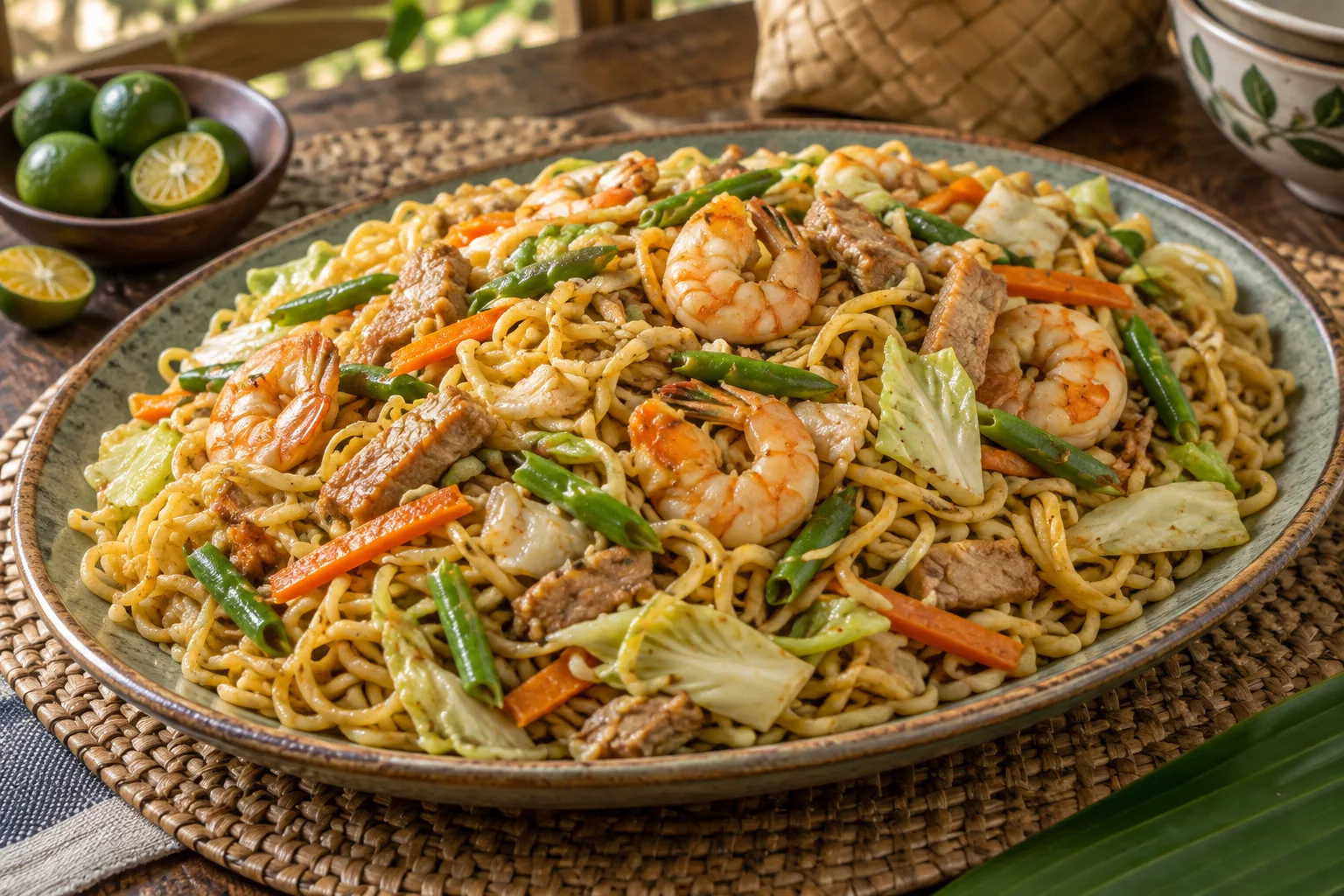
Ingredients
Measure and prepare everything before you begin cooking.
- 400 g pancit bato noodles
- 250 g pork shoulder, thinly sliced
- 200 g peeled prawns
- 3 cups chicken or pork stock
- 2 tbsp soy sauce
- 1 tbsp fish sauce
- 1 onion, sliced
- 4 garlic cloves, minced
- 1 carrot, cut into matchsticks
- 2 cups sliced cabbage
- 150 g green beans, sliced
- 1 tbsp neutral cooking oil
- ½ tsp black pepper
- Lemon or calamansi wedges
Instructions
- 1
Separate the noodles gently but do not soak unless the packet directs it. Mix stock, soy sauce and fish sauce in a jug.
- 2
Heat oil in a wok over medium-high. Brown the pork for 3–4 minutes, add onion and garlic, then cook until fragrant.
- 3
Add carrots and beans and stir-fry for 2 minutes. Add prawns and cook just until they begin turning pink; transfer the mixture to a plate.
- 4
Pour the seasoned stock into the wok and bring to a boil. Add noodles, lower to medium and turn them gently as they absorb the liquid.
- 5
When noodles are almost tender, return the pork mixture and add cabbage. Toss for 2–3 minutes until the noodles are springy, prawns cooked and vegetables still bright.
- 6
Taste before adding pepper or more fish sauce. Serve immediately with lemon or calamansi.
About Pancit Bato
Pancit Bato comes from Bato, Camarines Sur, where the wavy noodles are traditionally sun-dried. They are slightly firmer than many fresh pancit noodles and absorb savoury stock beautifully, making the dish a proud Bicolano merienda and celebration food.
New Zealand ingredient swaps
- Look for dried Pancit Bato at Filipino grocers; dried pancit canton is the closest alternative.
- Use NZ pork shoulder, chicken thigh or tofu.
- Replace calamansi with lemon or lime wedges.
How to know it is ready
- Do not soak unless the packet says to do so.
- Add stock gradually because different noodle brands absorb different amounts.
- Finished noodles should be tender and springy with no pool of liquid.
Common mistakes and fixes
- Mushy noodles: use less stock and stop cooking as soon as tender.
- Dry noodles: add hot stock two tablespoons at a time.
- Overcooked prawns: remove them as soon as pink and return near the end.
Family and regional variations
- Make a saucier guisado or a soupier version according to local and family preference.
- Use pork, chicken, seafood or a combination.
- Add chilli for a distinctly Bicolano kick.
Storage and reheating
Refrigerate for up to 3 days. Reheat covered with a splash of water; freezing is not recommended.
What to serve with it
Serve with lemon or calamansi, fried garlic and sliced spring onion. Pair with lumpia for gatherings.
Pancit Bato FAQs
What makes Pancit Bato different?
Its wavy, traditionally sun-dried noodles have a firm texture and strong connection to Bato, Camarines Sur.
Should I soak the noodles?
Usually not, but follow the packet because brands differ.
Can I make it without prawns?
Yes. Use chicken, pork, tofu or extra mushrooms.
Our recipe standard: This page has been editorially reviewed for clarity, cultural context and practical home-kitchen guidance. We do not label a recipe as personally kitchen-tested unless that testing has actually been completed. Always follow current food-safety advice and the instructions for your equipment.


