Ngohiong
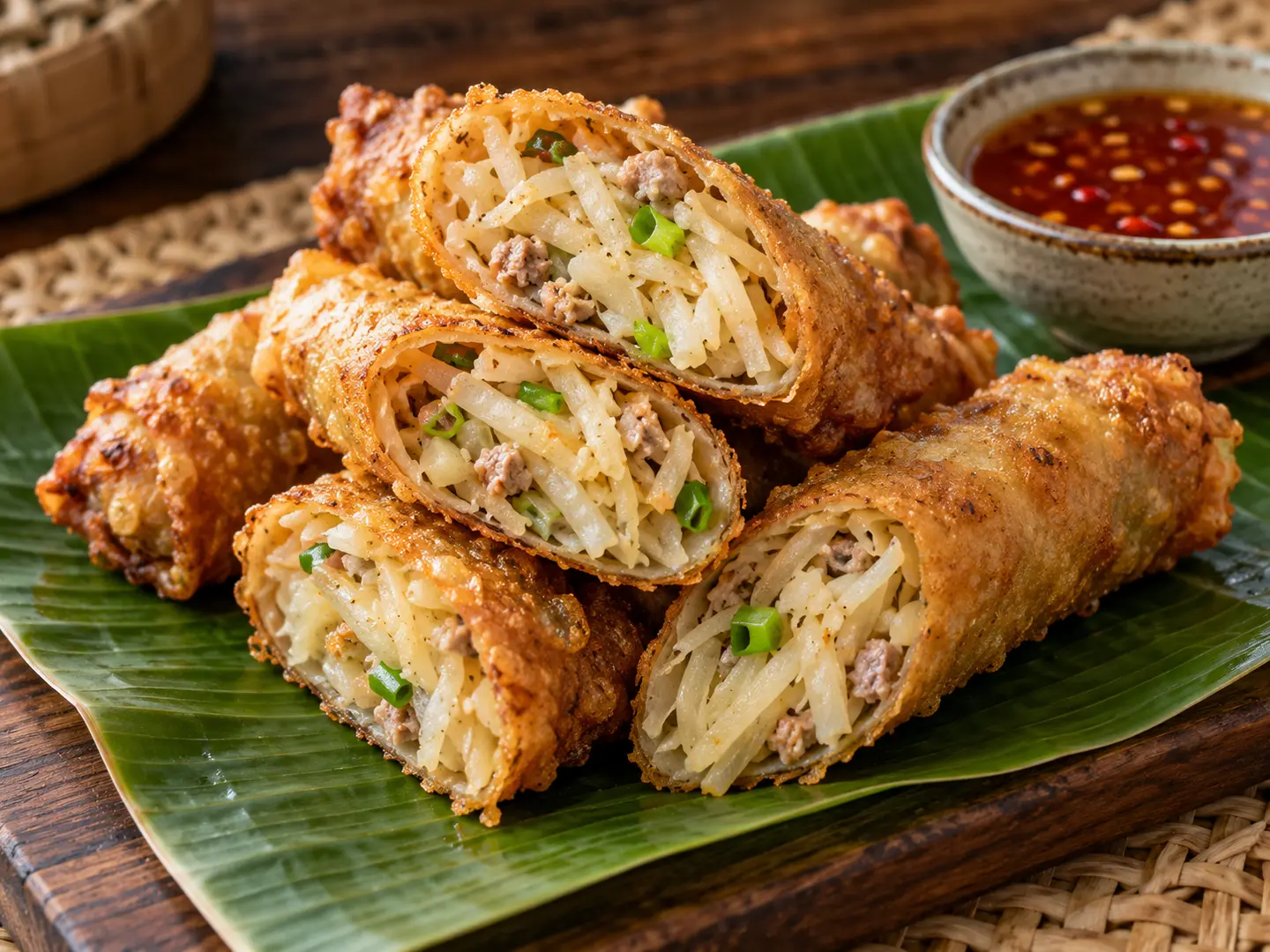
Cebuano five-spice vegetable spring rolls, fried crisp and served with a tangy chilli dip.
Ingredients
Measure and prepare everything before you begin cooking.
- 20 square lumpia or spring-roll wrappers
- 250 g pork mince
- 400 g singkamas (jicama), peeled and cut into fine matchsticks
- 200 g fresh ubod, finely shredded, or drained canned bamboo shoots
- 1 medium onion, finely chopped
- 5 garlic cloves, minced
- 3 spring onions, thinly sliced
- 1½ tsp Chinese five-spice powder
- 1 tbsp soy sauce
- 1 tsp brown sugar
- ½ tsp fine salt, plus more only if needed
- ½ tsp ground black pepper
- 2 tbsp neutral cooking oil, plus 1 litre for deep-frying
- 120 g cornflour
- 30 g plain flour
- 180–210 ml ice-cold water
- ½ tsp fine salt, for the batter
- 120 ml water, for the dipping sauce
- 2 tbsp cane vinegar
- 2 tbsp soy sauce, for the dipping sauce
- 2 tbsp brown sugar, for the dipping sauce
- 1 tsp cornflour mixed with 1 tbsp cold water
- ¼ tsp Chinese five-spice powder, for the dipping sauce
- 1 small red chilli, finely sliced
Instructions
- 1
Heat two tablespoons oil in a wide pan over medium heat. Cook the onion for 3 minutes, then add the garlic for 30 seconds. Add the pork mince and break it into very small pieces. Cook for 5–6 minutes, until no pink remains and the meat reaches at least 71°C.
- 2
Add the singkamas, ubod or bamboo shoots, spring onions, five-spice, soy sauce, sugar, salt and pepper. Cook over medium-high heat for 4–5 minutes, stirring, until the vegetables soften slightly but retain some bite. Transfer to a colander, press out excess liquid and cool completely.
- 3
Place a wrapper like a diamond on the work surface. Spoon about two tablespoons filling across the lower third, fold in the sides and roll tightly. Seal the edge with water. Keep the finished rolls and unused wrappers covered with a barely damp cloth so they do not dry out.
- 4
For the dip, combine 120 ml water, vinegar, soy sauce, brown sugar and the quarter-teaspoon five-spice in a small saucepan. Simmer for 2 minutes, stir in the cornflour slurry and cook until glossy. Add the chilli, then set aside to cool slightly.
- 5
Whisk the 120 g cornflour, plain flour and half-teaspoon salt with 180 ml ice-cold water. Add more water a tablespoon at a time until the batter is thin enough to coat a roll without forming a thick shell. Heat the frying oil in a deep heavy pan to 175°C; keep the pan no more than half full.
- 6
Working in batches, dip each roll in the batter, let the excess drain, then lower it carefully into the oil. Fry for 3–4 minutes, turning once, until crisp and deep golden. Keep the oil between 170°C and 180°C and never leave it unattended.
- 7
Drain on a wire rack rather than paper so the shells stay crisp. Let the rolls stand for 3 minutes before cutting or eating because the filling will be very hot. Serve immediately with the five-spice chilli dip.
About Ngohiong
Ngohiong is a well-loved Cebuano street food shaped by the region's long Chinese-Filipino culinary connections. The name points to the five-spice seasoning that distinguishes these rolls from other lumpia. Versions range from vegetable-only to pork-and-shrimp fillings; ubod, singkamas and green papaya are common local choices.
Ingredient swaps wherever you cook
- Singkamas: look for jicama at an Asian or specialty produce shop. Firm kohlrabi is a practical substitute where jicama is unavailable.
- Fresh ubod: drained canned bamboo shoots provide bite and are easier to find overseas. Canned hearts of palm are softer, so drain them well and mix with jicama.
- Lumpia wrappers: use thin frozen Filipino spring-roll pastry, thawed in its sealed packet. Do not use thick egg-roll wrappers.
How to know it is ready
- The cooked filling should be moist but not wet; excess liquid makes the wrappers split.
- The batter should leave a thin translucent coating rather than a heavy layer.
- Properly fried ngohiong is crisp and deep golden, with a hot but still textured filling.
Common mistakes and fixes
- Burst rolls: cool and drain the filling fully, roll firmly and avoid overfilling.
- Greasy coating: return the oil to 175°C between batches and do not crowd the pan.
- Soft shells: drain on a wire rack and serve promptly; stacked hot rolls trap steam.
Family and regional variations
- Make a meat-free version with extra ubod, singkamas or finely shredded green papaya.
- Add 100 g finely chopped raw prawns with the pork, cooking until opaque before wrapping.
- Some Cebuano vendors double-fry their rolls for a particularly crisp exterior.
Storage and reheating
Ngohiong is best freshly fried. Refrigerate cooled cooked rolls within 2 hours for up to 3 days. Reheat on a rack at 200°C until crisp and piping hot; do not reheat in a microwave if you want the shell to remain crisp.
What to serve with it
Cut one roll diagonally to show the vegetable filling, then serve the rest whole with the sweet-sour five-spice dip. They work as merienda, pulutan or part of a larger Cebuano table.
Ngohiong FAQs
What does ngohiong taste like?
It is savoury, lightly sweet and aromatic from Chinese five-spice, with crisp wrapper and a tangy chilli dip.
Can I bake the rolls?
You can brush them with oil and bake at 210°C, but the traditional battered, fried texture will be different.
Can I freeze them?
Freeze the cooled, unbattered rolls in a single layer, then pack airtight for up to one month. Thaw in the refrigerator before dipping and frying.
Cooking guidance: Follow current food-safety advice and the instructions for your equipment.