Lechon Kawali
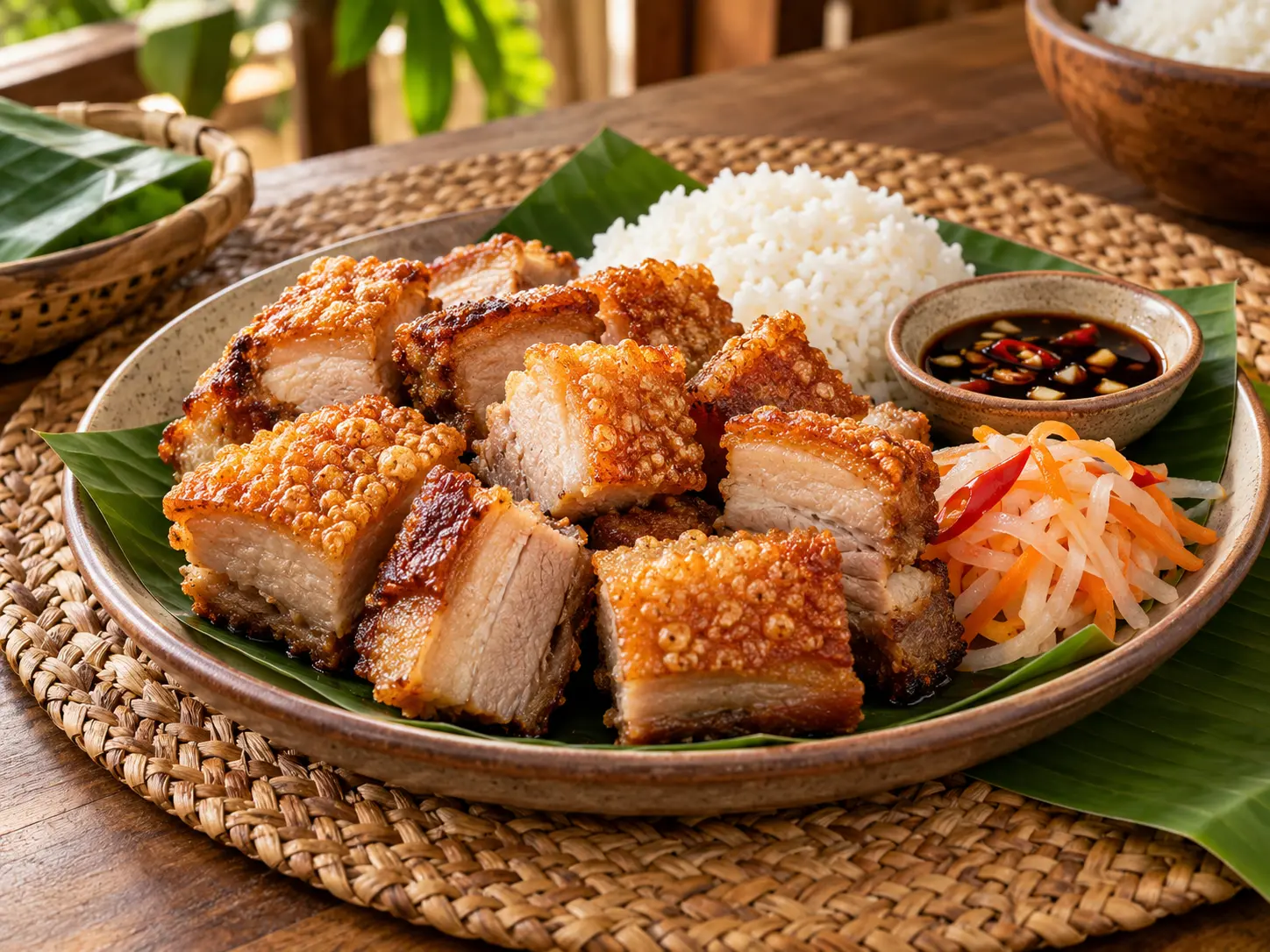
Crisp, golden pork belly with juicy layers and a sharp Filipino dipping sauce.
Ingredients
Measure and prepare everything before you begin cooking.
- 1.2 kg skin-on pork belly, cut into 2 large slabs
- 8 cups water, or enough to cover
- 1 onion, quartered
- 6 garlic cloves, lightly crushed
- 3 bay leaves
- 1 tbsp whole black peppercorns
- 1½ tbsp salt, plus extra for the skin
- Neutral high-heat oil, for deep-frying
- Steamed rice and atchara, to serve
- ¼ cup cane vinegar
- 2 tbsp soy sauce
- 1 small red chilli and 1 garlic clove, finely chopped
Instructions
- 1
Put the pork belly in a deep pot with the water, onion, garlic, bay leaves, peppercorns and salt. Bring slowly to a boil, skim the surface, then simmer gently for 45–55 minutes until the meat is tender but still holds its shape.
- 2
Lift the pork onto a rack and pat it completely dry. Prick the skin all over without cutting deeply into the meat, rub the skin lightly with salt, then refrigerate uncovered for at least 4 hours or overnight so the surface dries thoroughly.
- 3
Remove the pork from the refrigerator 30 minutes before frying. Pour oil into a deep, heavy pot to a depth of about 8 cm, leaving the pot no more than one-third full. Heat the oil to 175°C.
- 4
Lower one slab into the oil carefully, using long tongs and standing back from splashes. Cover with a splatter screen, not a solid lid. Fry for 10–14 minutes, turning as needed, until deeply golden and crisp. Keep the oil between 170–180°C.
- 5
Transfer to a rack and repeat with the second slab. Rest the pork for 10 minutes before chopping through the crisp skin into bite-size pieces.
- 6
Mix the vinegar, soy sauce, chilli and chopped garlic. Serve the lechon kawali immediately with rice, atchara and the dipping sauce.
About Lechon Kawali
Lechon kawali turns pork belly into one of the Philippines’ most irresistible contrasts: juicy, tender meat beneath a brittle layer of golden crackling. The pork is first simmered with aromatics, dried thoroughly and then fried until crisp.
Ingredient swaps wherever you cook
- Choose an evenly thick skin-on pork belly with balanced layers of meat and fat.
- Apple-cider vinegar can replace cane vinegar in the dipping sauce.
- Use a neutral high-heat oil such as rice-bran or canola oil.
How to know it is ready
- The simmered pork should be tender but firm enough to lift without falling apart.
- The skin must feel completely dry before it enters the oil.
- The crackling should be blistered and crisp while the meat remains juicy.
Common mistakes and fixes
- Dangerous splattering: dry the pork thoroughly, use a deep pot and lower it into the oil carefully.
- Rubbery skin: chill the pork uncovered and keep the frying oil close to 175°C.
- Dry meat: avoid over-boiling and rest the pork before chopping.
Family and regional variations
- Air-fry or oven-roast the dried belly for a lower-splatter version, though the crust will differ.
- Serve with lechon sauce instead of soy-vinegar sawsawan.
- Add calamansi or lemon to the dipping sauce for extra brightness.
Storage and reheating
Refrigerate cooked pork within 2 hours for up to 3 days. Reheat uncovered in a 200°C oven or air fryer until steaming hot and crisp. Do not microwave if you want to preserve the crackling.
What to serve with it
Serve immediately with steamed rice, atchara and a sharp dipping sauce. A tomato-and-cucumber salad helps balance the richness.
Lechon Kawali FAQs
Why must the pork be dry before frying?
Surface moisture causes violent splattering and prevents the skin from crisping properly.
Can I prepare it a day ahead?
Yes. Simmer, dry and refrigerate the pork uncovered overnight, then fry shortly before serving.
How do I keep the skin crispy?
Drain on a rack rather than paper towels and serve promptly after its short resting time.
Cooking guidance: Follow current food-safety advice and the instructions for your equipment.