Pinais na Hipon
Shrimp and young coconut tucked into banana-leaf parcels and gently cooked in coconut water, in our Quezon-style home version.
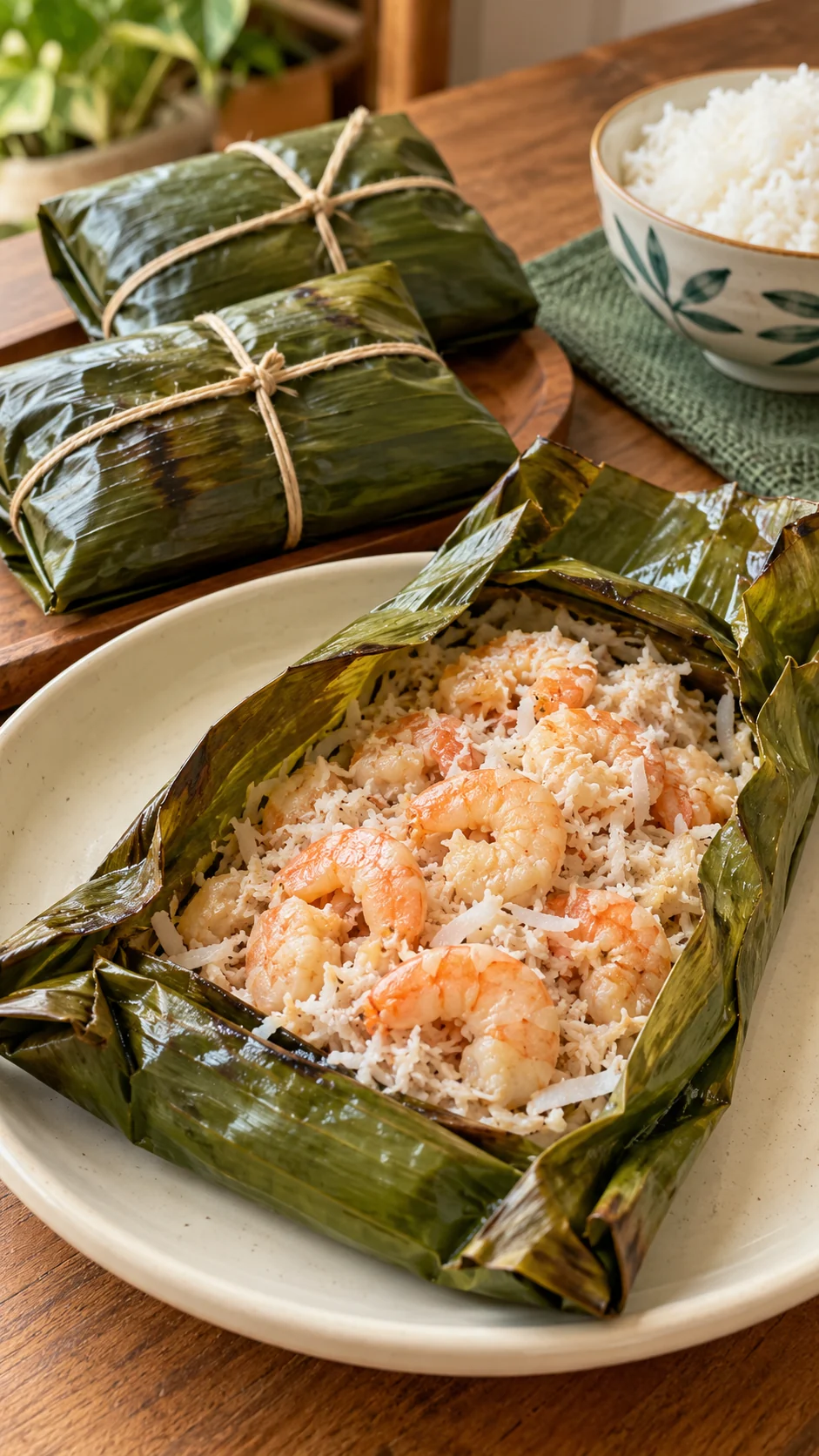
AI-generated serving illustration.
Ingredients
Measure and prepare everything before you begin cooking.
- 400 g raw small shrimp, peeled and deveined weight, thawed and drained
- 300 g finely shredded tender young coconut, drained; not sweetened macapuno
- 20 g garlic, finely chopped
- 3 g fine salt
- 1 g ground black pepper
- 750 ml unsweetened coconut water
- Up to 250 ml hot water, if needed for the pan
- 8 food-grade banana-leaf rectangles, about 25 × 30 cm, plus patches for tears
- Cooked rice, to serve
Instructions
- 1
Thaw and wipe the leaves. Soften briefly in a dry warm pan until flexible. Patch tears with a second piece.
- 2
Mix coconut, garlic, salt and pepper. Divide into eight portions. Distribute the shrimp evenly among them.
- 3
Place filling on each leaf; spread no thicker than 2 cm. Fold into secure flat parcels and tie with kitchen string.
- 4
Arrange seam-side up in one layer. Add coconut water to roughly halfway up the parcels; supplement with hot water if necessary. Bring to a simmer and cover.
- 5
Cook gently for 25–35 minutes, keeping liquid in the pan. Open a central parcel carefully: the shrimp must be opaque and the filling hot throughout. Check the centre reaches at least 63°C.
- 6
Continue cooking if necessary. Lift onto a platter; remove string and open at the table. The leaves are wrappers, not food.
About Pinais na Hipon
Pinais belongs to Quezon’s tradition of leaf-wrapped cooking. Our small shrimp-and-buko parcels follow a coconut-water preparation, with banana leaves as the wrapper. Camamba, used for aroma in some local versions, is omitted here rather than replaced with an unidentified leaf.
Ingredient swaps wherever you cook
- Frozen raw shrimp work well after thawing in the fridge and draining. Weigh 400 g after peeling; large shrimp should be cut into smaller pieces.
- Use food-grade frozen banana leaves and unsweetened young coconut from a Filipino grocer. Finely chop thick buko strips. Desiccated coconut and sweetened macapuno are not direct swaps.
How to know it is ready
- Each parcel is flat, with filling at most 2 cm thick.
- Shrimp are opaque through the middle and the centre of the filling reaches at least 63°C.
Common mistakes and fixes
- Thick bundles cook unevenly. Divide the filling into eight modest parcels rather than four large ones.
- Check the liquid level while cooking. A dry pan scorches the leaves and loses the gentle heat needed inside.
Family and regional variations
- Serve the same cooked filling in its opened wrapper with a squeeze of calamansi at the table, if desired.
Storage and reheating
Remove wrappers and refrigerate filling in shallow covered containers within 2 hours. Use within 2 days. Reheat once to above 75°C throughout; a splash of water helps keep the coconut moist.
What to serve with it
Makes 8 parcels: 4 servings of two with rice. Contains crustaceans. Remove all string and banana leaves before eating.
Pinais na Hipon FAQs
Can I use coconut milk instead of coconut water?
This version is written for coconut water. Coconut milk makes a richer, different preparation; it is not a like-for-like change to this recipe.
What does the banana leaf do?
It holds the filling together and brings a light leaf aroma. It is a wrapper, not an edible ingredient or a replacement for camamba’s particular flavour.
Cooking guidance: Follow current food-safety advice and the instructions for your equipment.