
Ginataang Langka Bicolano
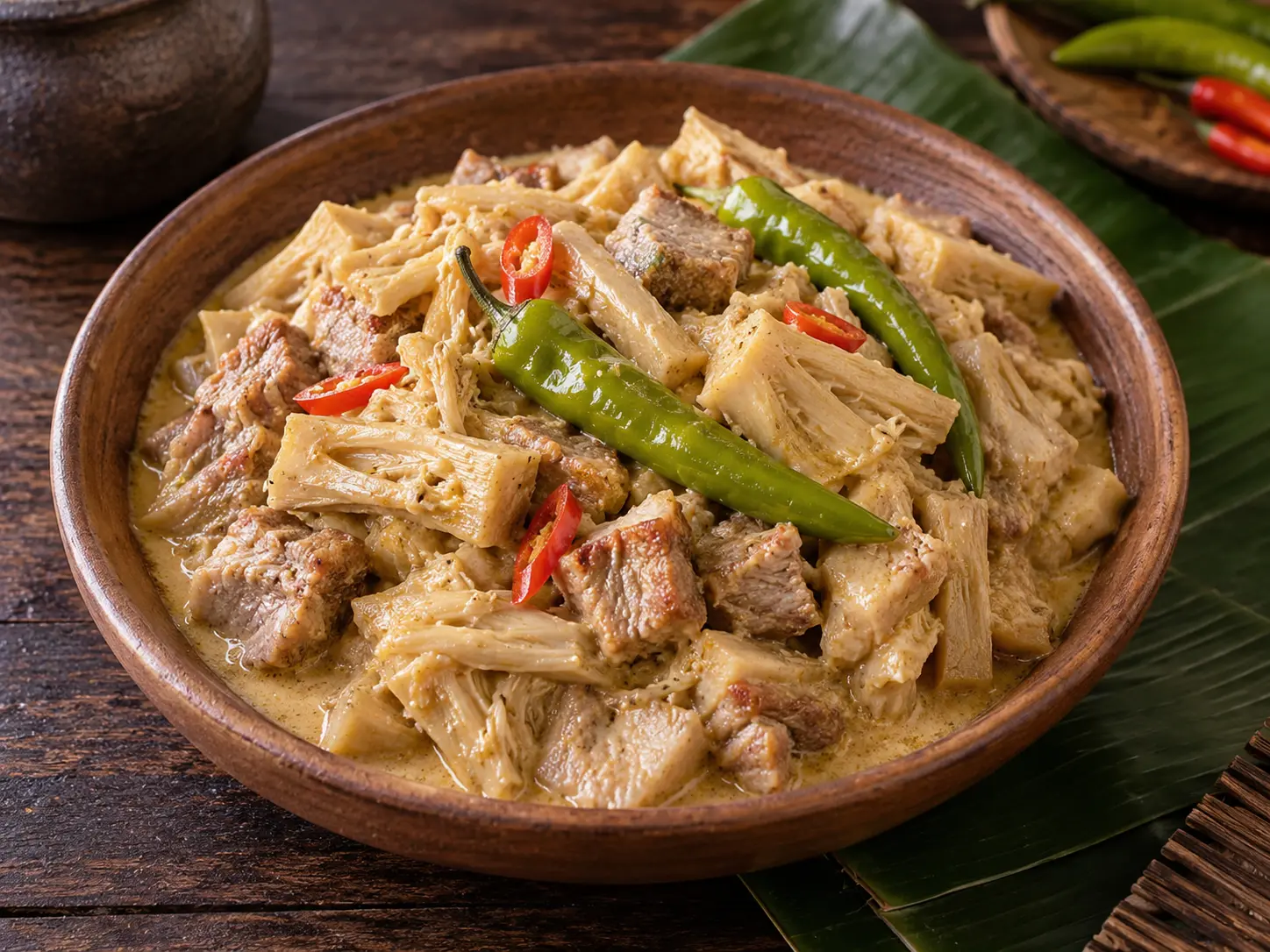
Young jackfruit, pork and chillies slowly simmered in savoury coconut milk.
Ingredients
Measure and prepare everything before you begin cooking.
- 700 g drained young green jackfruit in water or brine, rinsed
- 300 g pork belly or shoulder, cut into 2 cm pieces
- 1 tbsp neutral cooking oil
- 1 medium onion, chopped
- 5 garlic cloves, minced
- 25 g fresh ginger, cut into thin strips
- 1 tbsp bagoong alamang
- 400 ml unsweetened coconut milk
- 200 ml coconut cream
- 250 ml water
- 4 long green chillies
- 1–2 red bird’s-eye chillies, sliced, optional
- ½ tsp freshly ground black pepper
- Fine salt, to taste (use less when the dish contains soy sauce, fish sauce or bagoong)
Instructions
- 1
Rinse the young jackfruit thoroughly, squeeze it gently and pull any large pieces into bite-size shreds. Pat the pork dry.
- 2
Heat the oil in a wide heavy pot over medium-high heat. Brown the pork for 6–8 minutes, stirring occasionally, until several edges are golden.
- 3
Lower the heat to medium. Add the onion and ginger and cook for 3 minutes. Add the garlic and bagoong, then cook for 1 minute until fragrant.
- 4
Add the jackfruit, coconut milk and water. Bring only to a gentle simmer, cover partly and cook over low heat for 25–30 minutes, stirring from the bottom every 8 minutes.
- 5
When the pork and jackfruit are tender, add the green chillies and coconut cream. Simmer uncovered for 10–12 minutes until the sauce thickens and lightly coats the jackfruit.
- 6
Add the optional red chillies and black pepper. Taste before adding salt or fish sauce because the bagoong may already provide enough seasoning.
- 7
Rest for 5 minutes before serving with steamed rice. The jackfruit should be tender and savoury rather than sweet, and the coconut sauce should not look watery.
About Ginataang Langka Bicolano
In ginataang langka, young green jackfruit is treated as a vegetable. It absorbs coconut milk, bagoong and chilli, producing a comforting Bicolano dish very different from sweet ripe jackfruit.
New Zealand ingredient swaps
- Canned young green jackfruit in water or brine works well; rinse and drain it thoroughly.
- Use pork shoulder instead of belly for a leaner version.
- Bagoong brands vary in saltiness, so begin with less and adjust near the end.
How to know it is ready
- The jackfruit should be tender enough to pull apart with a spoon.
- The pork should be fully tender before the final reduction.
- The finished sauce should be thick with small beads of coconut oil at the edges.
Common mistakes and fixes
- Sweet result: ripe jackfruit was used; choose young green jackfruit only.
- Too salty: rinse canned jackfruit and add bagoong gradually.
- Split sauce: maintain a gentle simmer rather than a rolling boil.
Family and regional variations
- Replace pork with tinapa, dried fish or prawns.
- For a meat-free version, add mushrooms and use a suitable fermented seasoning.
- Add extra bird’s-eye chilli for a hotter Bicolano finish.
Storage and reheating
Refrigerate for up to 3 days or freeze for up to 2 months. Reheat gently until steaming.
What to serve with it
Serve with steamed rice, grilled or fried fish and a tomato side dish.
Ginataang Langka Bicolano FAQs
Can I use canned jackfruit?
Yes—choose young green jackfruit in water or brine, then rinse it well.
Can I use ripe jackfruit?
No. Ripe jackfruit is sweet and will not produce the intended savoury dish.
Can I make it vegetarian?
Yes. Omit pork, add mushrooms and use a vegetarian alternative to shrimp paste.
Our recipe standard: This page has been editorially reviewed for clarity, cultural context and practical home-kitchen guidance. We do not label a recipe as personally kitchen-tested unless that testing has actually been completed. Always follow current food-safety advice and the instructions for your equipment.


