
Dinuguan sa Gata
Bicolano pork blood stew enriched with coconut milk and bright chilli.
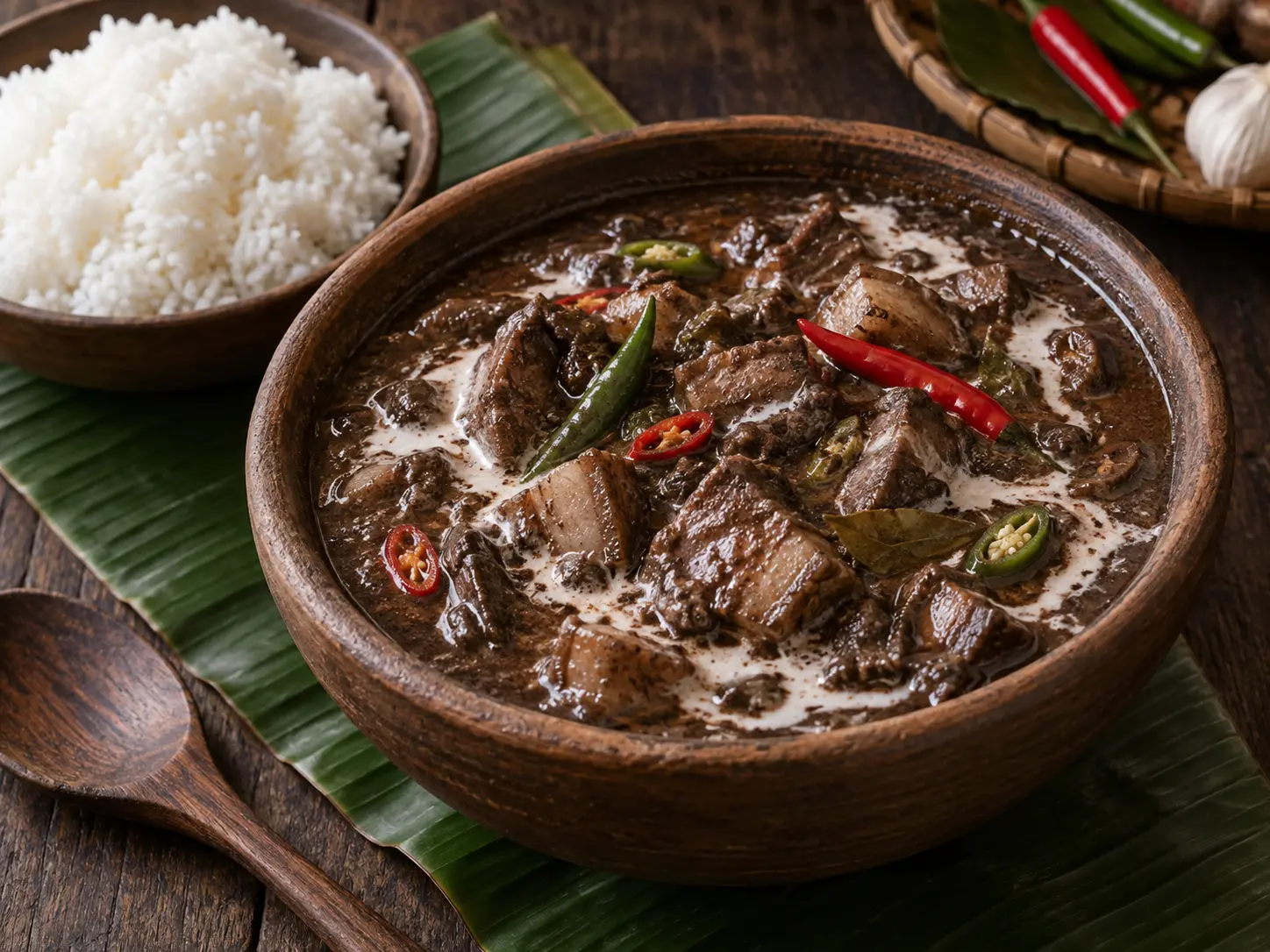
Ingredients
Measure and prepare everything before you begin cooking.
- 800 g pork shoulder, cut into 2 cm pieces
- 250 g clean pork blood
- 2 tbsp neutral cooking oil
- 1 medium onion, finely chopped
- 5 garlic cloves, minced
- 30 g fresh ginger, cut into thin strips
- 80 ml cane vinegar
- 400 ml unsweetened coconut milk
- 250 ml water
- 2 tbsp fish sauce, plus more only if needed
- 3 long green chillies
- 1 red bird’s-eye chilli, sliced, optional
- ½ tsp freshly ground black pepper
Instructions
- 1
Whisk the pork blood until smooth, then strain it through a fine sieve into a clean bowl. Keep it refrigerated while preparing the pork and aromatics.
- 2
Heat the oil in a heavy pot over medium-high heat. Brown the pork in two batches for 5–6 minutes each, then transfer it to a plate.
- 3
Reduce the heat to medium. Cook the onion and ginger for 3 minutes, add the garlic for 30 seconds, then return the pork and its juices to the pot.
- 4
Add the water and 1 tablespoon fish sauce. Cover partly and simmer gently for 30–35 minutes, until the pork is nearly tender.
- 5
Pour in the vinegar and let it bubble uncovered for 2 minutes without stirring. Lower the heat, gradually stir in the strained blood and continue stirring for 4–5 minutes so it cooks smoothly without forming lumps.
- 6
Add the coconut milk and green chillies. Simmer very gently, uncovered, for 15–20 minutes, stirring the bottom regularly, until the pork is tender and the sauce is thick and glossy. Do not allow a hard boil.
- 7
Add the optional red chilli and black pepper. Taste before adding the remaining fish sauce. The stew must be piping hot and the blood fully cooked before serving with rice or puto.
About Dinuguan sa Gata
Dinuguan sa gata is a coconut-rich Bicolano variation of dinuguan. Its savoury, tangy and spicy sauce depends on clean food-grade pork blood from a trusted source and patient, gentle cooking.
New Zealand ingredient swaps
- Use pork shoulder for a leaner dish or belly for extra richness.
- Coconut or apple-cider vinegar can replace cane vinegar.
- Long green chilli adds aroma; bird’s-eye chilli controls the heat.
How to know it is ready
- The pork should be tender before the blood mixture is added.
- The sauce should become smooth, dark and glossy as it cooks.
- Keep a gentle simmer after adding coconut milk and cook until piping hot.
Common mistakes and fixes
- Lumpy sauce: whisk and strain the blood, then add it gradually while stirring.
- Split coconut: lower the heat and avoid a hard boil.
- Too salty: season only after reduction and loosen with unsweetened coconut milk.
Family and regional variations
- Add cleaned offal only if your household enjoys it.
- Use extra coconut milk for a milder, creamier sauce.
- Choose mild green chillies or add hot chillies to taste.
Storage and reheating
Refrigerate promptly and use within 2 days, or freeze for up to 1 month. Reheat once until steaming hot throughout.
What to serve with it
Serve with steamed rice or puto and a fresh cucumber-and-tomato side.
Dinuguan sa Gata FAQs
Can I use blood from a supermarket or butcher?
Use only fresh, clean, food-grade pork blood from a trusted butcher or supplier.
Why add vinegar before stirring?
A brief undisturbed simmer mellows its raw sharpness before the sauce is mixed.
What colour should the sauce be?
It should be dark brown to almost black; coconut milk may soften the colour.
Our recipe standard: This page has been editorially reviewed for clarity, cultural context and practical home-kitchen guidance. We do not label a recipe as personally kitchen-tested unless that testing has actually been completed. Always follow current food-safety advice and the instructions for your equipment.


