Banana Cue
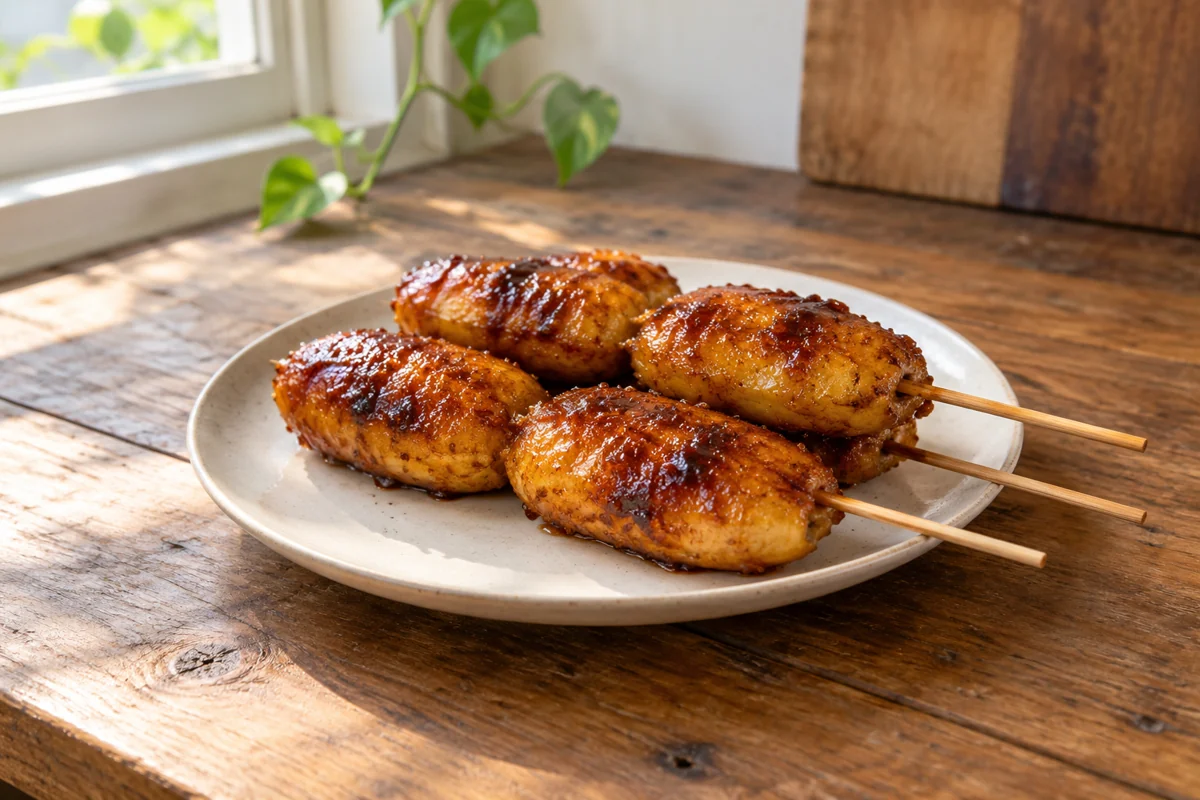
Saba bananas with a crisp caramelised brown-sugar coating, a classic Filipino merienda.
Ingredients
Measure and prepare everything before you begin cooking.
- 6 ripe but firm saba bananas, peeled and dried
- 80 g brown sugar
- Neutral cooking oil, enough for about 3 cm depth in a deep frying pan
- 3–6 bamboo skewers, optional for serving
Instructions
- 1
Peel the saba bananas and pat their surfaces dry. Choose fruit that is ripe but still holds its shape; very soft bananas can collapse. Set a wire rack above a tray and place the sugar beside the stove.
- 2
Heat about 3 cm oil in a deep frying pan to around 170°C, keeping the pan less than halfway full. Lower the dry bananas into the oil carefully and leave room between them. Fry in batches if needed.
- 3
Fry for about 5–7 minutes, turning gently with tongs, until the bananas begin to turn golden and soften through. The exact time depends on their size and ripeness; adjust the heat to avoid scorching.
- 4
Lower the heat slightly and scatter the brown sugar around the bananas in small additions. Turn them carefully for another 2–3 minutes as the sugar melts into irregular caramel patches and clings to the fruit. Do not add water to the hot oil.
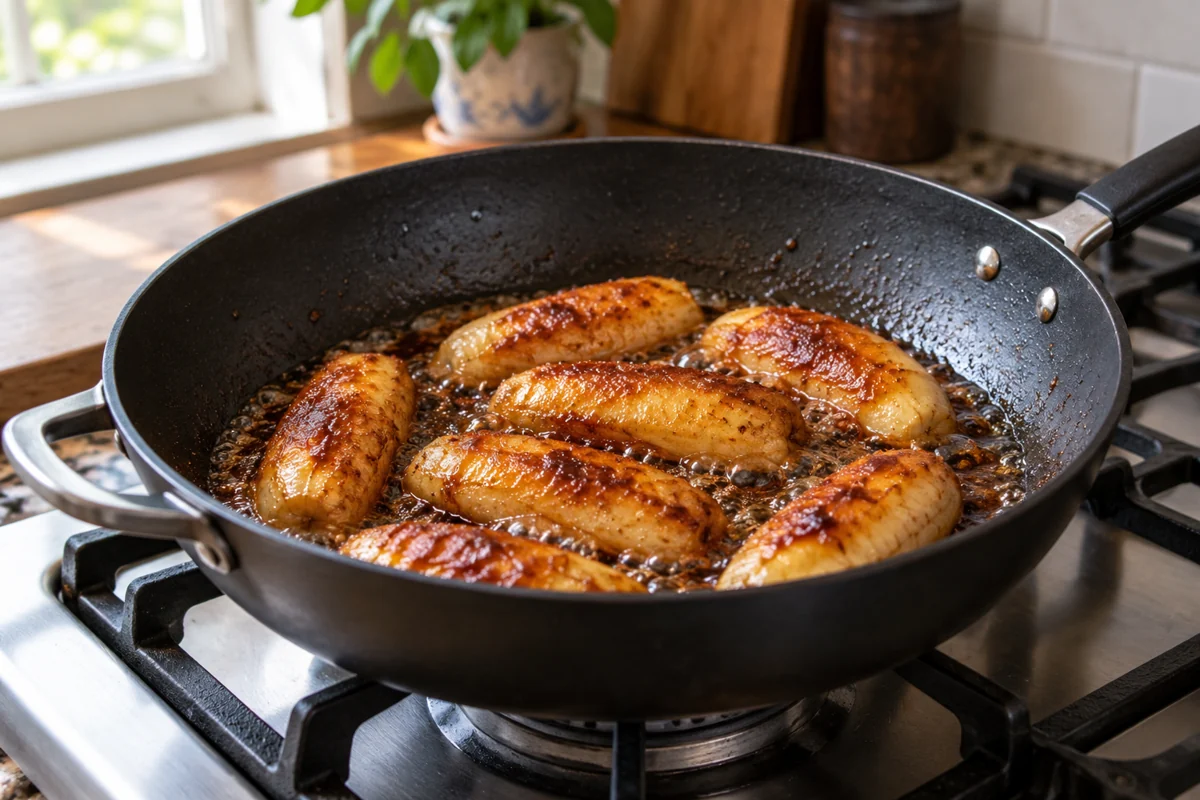
Cooking-stage illustration; follow the measured ingredients and instructions below. - 5
Lift the coated bananas onto the rack, spaced apart, and let them cool for at least 5 minutes. Hot caramel can burn badly; do not touch or taste it straight from the pan. Avoid stacking the bananas while the coating sets.
- 6
Serve without skewers, or insert bamboo skewers carefully only once the bananas are cool enough to handle. Use one or two bananas per skewer. Banana cue is best the day it is made, while the sugar coating still has some crunch.
About Banana Cue
Banana cue is a familiar Filipino merienda sold with caramelised sugar clinging to short saba bananas, often on a bamboo skewer. Despite the name, it is fried rather than barbecued. The texture depends on ripe but firm fruit and careful handling of hot caramel.
Ingredient swaps wherever you cook
- Saba: firm ripe cooking bananas such as cardaba are closest. Ripe plantain gives a different, larger version; cut it into shorter pieces and adjust cooking time.
- Brown sugar: light or dark brown sugar works; dark sugar gives a deeper molasses flavour.
- Ordinary soft dessert bananas are a poor direct substitute because they can collapse in hot oil.
How to know it is ready
- Fruit should be softened through but still hold its shape.
- Sugar should form golden-to-amber patches rather than a black burnt crust.
- Let the coating cool before touching or tasting.
Common mistakes and fixes
- Burnt caramel: lower the heat before adding sugar and watch it closely.
- Collapsing bananas: use firmer fruit and handle gently with tongs.
- Sticky pile: drain bananas separately while the coating sets.
Family and regional variations
- Use similarly sized ripe plantain pieces for an accessible variation.
- Serve on a plate without skewers.
- For kamote cue, use sweet potato and a separately adjusted cooking time; do not assume banana timings apply.
Storage and reheating
Enjoy freshly cooked after the caramel has cooled. Refrigerate leftovers within 2 hours and use within 2 days; the coating will soften. Reheat carefully and let hot sugar cool before eating.
What to serve with it
Serve one banana as a small sweet snack, with water, tea or coffee. Remove sharp skewers before serving children.
Banana Cue FAQs
Is banana cue grilled?
No. It is fried and coated with caramelised sugar; the skewer is for serving.
Can I make it in advance?
It is best freshly made. The sugar coating softens as it stands, particularly in humid conditions.
Cooking guidance: Follow current food-safety advice and the instructions for your equipment.