Bam-i
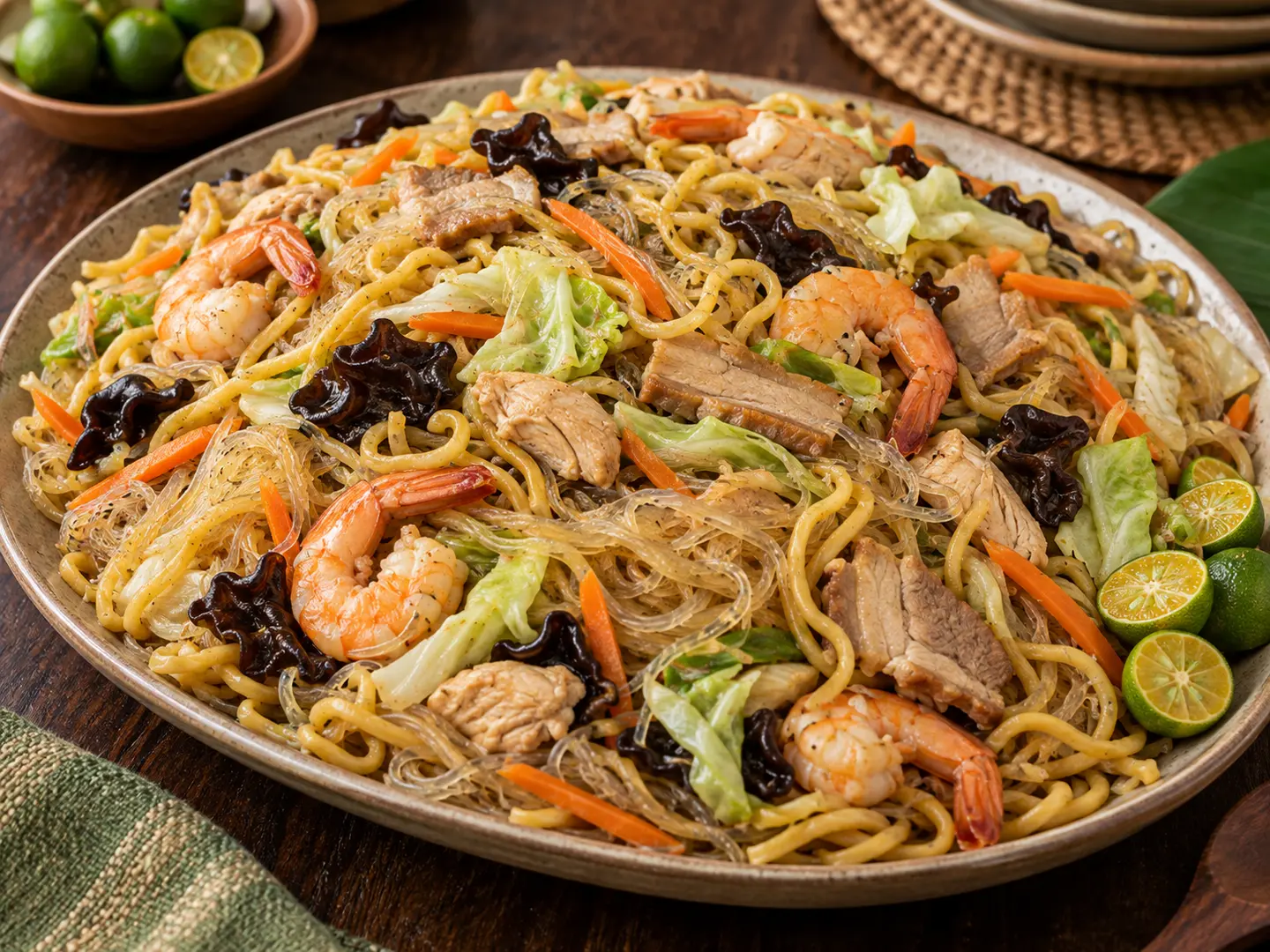
Cebuano celebration pancit combining springy canton and translucent sotanghon noodles.
Ingredients
Measure and prepare everything before you begin cooking.
- 250 g dried pancit canton noodles
- 100 g sotanghon (mung-bean glass noodles)
- 200 g boneless chicken thigh, cut into thin strips
- 200 g pork shoulder, cut into thin strips
- 200 g raw peeled prawns, deveined
- 1 Chinese sausage, thinly sliced (optional)
- 15 g dried wood-ear mushrooms
- 1 medium onion, thinly sliced
- 5 garlic cloves, minced
- 1 medium carrot, cut into matchsticks
- 200 g cabbage, finely shredded
- 100 g snow peas or green beans, thinly sliced
- 750 ml low-salt chicken stock, kept hot
- 3 tbsp soy sauce
- 2 tbsp oyster sauce
- 1 tbsp fish sauce, plus more only if needed
- 1 tsp freshly ground black pepper
- 3 spring onions, sliced
- Calamansi or lemon wedges, to serve
- 1–2 tbsp neutral cooking oil, as needed
Instructions
- 1
Cover the wood-ear mushrooms with boiling water for 20 minutes, then drain, remove any hard centres and slice thinly. Soak the sotanghon separately in cool water for 10 minutes and drain. Keep the canton noodles dry until needed.
- 2
Mix the hot stock, soy sauce, oyster sauce, fish sauce and black pepper. Heat one tablespoon oil in a large wok or very wide pan over medium-high heat. Cook the pork for 3–4 minutes and the chicken for 3 minutes, until lightly browned; transfer both to a clean plate.
- 3
Add the optional Chinese sausage and cook for 1 minute. Add the prawns and stir-fry just until pink, about 1–2 minutes, then transfer them to the plate so they do not overcook.
- 4
Add another tablespoon oil if the wok is dry. Cook the onion for 2 minutes, then garlic for 30 seconds. Add the carrot, snow peas and wood-ear mushrooms and toss for 2 minutes.
- 5
Pour in 600 ml of the seasoned hot stock and bring to a lively simmer. Add the dry pancit canton and turn it gently for 3–4 minutes, until it begins to soften and absorb the liquid.
- 6
Add the drained sotanghon, cabbage, pork and chicken. Toss continuously but gently for 3–5 minutes, adding the remaining stock a little at a time only as needed. Both noodles should be tender yet distinct, with no puddle of sauce.
- 7
Return the prawns and Chinese sausage and toss for 1 minute, until every protein is piping hot; chicken must reach 75°C and pork at least 71°C. Taste before adding extra fish sauce. Finish with spring onions and serve immediately with calamansi or lemon.
About Bam-i
Bam-i is a Cebuano celebration pancit known for bringing two noodles together in one pan: chewy yellow canton and slippery translucent sotanghon. It is served at birthdays, fiestas and family gatherings, where noodles symbolise long life and the generous mix of proteins and vegetables makes one platter feed a crowd.
Ingredient swaps wherever you cook
- Pancit canton: use plain dried wheat or egg noodles of similar thickness, not instant flavoured noodles.
- Sotanghon: choose mung-bean glass noodles. Rice bihon can be used, but it has a different texture and absorbs liquid differently.
- Wood-ear mushrooms: use fresh brown mushrooms for flavour if needed, although they will not provide the same crisp texture.
- Calamansi: serve with lemon or lime wedges.
How to know it is ready
- Cook the canton first because it needs more time; add the soaked sotanghon only after the yellow noodles begin to soften.
- The two noodles should remain visibly distinct and lightly coated rather than wet or clumped.
- Remove the prawns as soon as pink and return them only at the end; chicken must reach 75°C and pork at least 71°C.
Common mistakes and fixes
- Mushy noodles: keep some stock in reserve and add it gradually instead of pouring everything in at once.
- Dry or uneven noodles: use a very wide pan and turn from the bottom with tongs or two wooden spoons.
- Rubbery prawns: cook them briefly at the beginning, remove them, and return for only the final minute.
Family and regional variations
- Use shredded cooked chicken and leftover roast pork for a practical celebration-day version.
- Add squid or fish balls for a fuller seafood mix, cooking each only until done.
- For a simpler household platter, choose pork and prawns as the two proteins while keeping both noodles and wood-ear mushrooms.
Storage and reheating
Bam-i is best freshly cooked. Refrigerate leftovers within 2 hours for up to 3 days. Reheat covered with a tablespoon or two of water until piping hot; freezing is not recommended because both noodles soften.
What to serve with it
Transfer to a large warm platter, scatter with spring onion and place calamansi or lemon wedges around the edge. Serve with lumpia or grilled meat for a Cebuano-style celebration table.
Bam-i FAQs
What two noodles are used in Bam-i?
This version uses pancit canton and sotanghon. Recipes vary, and some families use bihon in place of the glass noodles.
Why cook the proteins separately?
Pork, chicken and prawns finish at different times. Removing them prevents overcooking while the noodles absorb the sauce.
Can Bam-i be made ahead?
Prepare and slice the ingredients ahead, but cook the noodles shortly before serving for the best texture.
Cooking guidance: Follow current food-safety advice and the instructions for your equipment.