Waknatoy
Marikina-style pork stew with sweet gherkins, tomato, chorizo and chickpeas.
Prep: 20 minutes · Cook: 75–95 minutes · Total: about 1 hour 35 minutes–1 hour 55 minutes. No marinating time is required. Tougher pork may need longer.
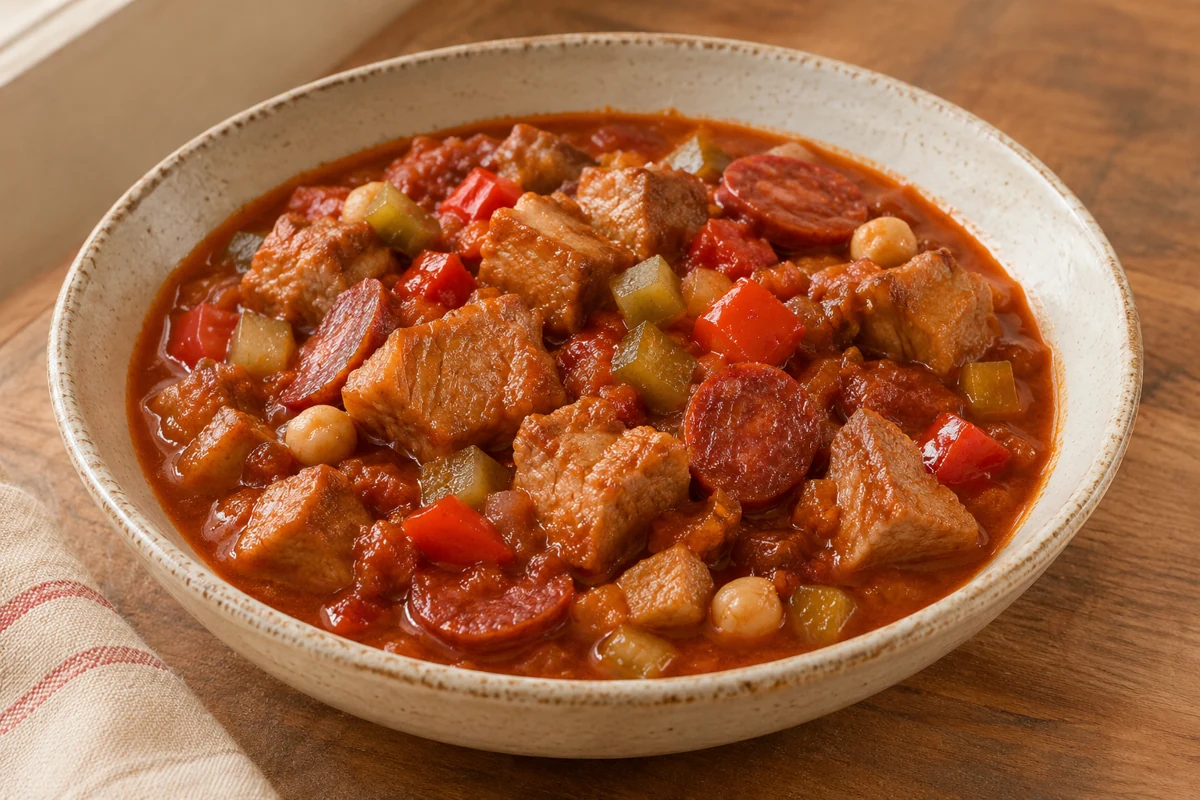
AI-generated serving illustration.
Equipment
Use a heavy 24 cm lidded casserole or saucepan and a separate board for raw pork.
Ingredients
Measure and prepare everything before you begin cooking.
- 800 g boneless pork shoulder, trimmed and cut into 2.5 cm cubes
- 15 ml neutral cooking oil
- 150 g onion, finely chopped
- 20 g garlic, minced
- 30 g tomato paste
- 400 g canned chopped tomatoes, including their juice
- 350 ml water, plus up to 200 ml hot water only if needed
- 15 ml soy sauce
- 2 dried bay leaves
- 1/2 teaspoon ground black pepper
- 100 g ready-to-eat, dry-cured Spanish-style chorizo, cut into 5 mm slices
- 140 g canned chickpeas, drained and rinsed
- 120 g red capsicum, cut into 2 cm pieces
- 100 g drained sweet gherkins, diced
- 30 ml sweet-gherkin brine, measured separately
- Up to 2 g fine salt, only if needed after tasting
- Cooked rice, to serve separately
Instructions
- 1
Prepare the pork and pickles. Pat the pork dry. Drain and measure the gherkins and brine separately. Check that the sausage is labelled ready-to-eat or dry-cured; raw cooking sausage needs a different cooking sequence.
- 2
Brown in batches. Heat the oil in the pot over medium-high heat. Brown the pork in two batches for about 4 minutes each, then transfer to a plate. It will still be undercooked inside.
- 3
Build the sauce. Reduce to medium heat. Cook the onion in the same pot for 4 minutes, stirring. Add garlic for 30 seconds, then tomato paste for 1 minute. Stir in canned tomatoes, scraping the base to lift the browned bits.
- 4
Braise gently. Return pork and its juices. Add the measured 350 ml water, soy sauce, bay leaves and pepper. Bring to a simmer, cover and lower the heat. Simmer gently for 45–60 minutes, stirring every 15 minutes, until a fork enters the pork easily. If it is still chewy, continue before adding the final ingredients. Add reserve hot water in 50 ml amounts only if the sauce becomes too thick or starts catching.
- 5
Add the waknatoy flavour. Stir in chorizo, chickpeas, capsicum, sweet gherkins and all 30 ml brine. Simmer partly covered for 12–15 minutes. The capsicum should soften while retaining its shape, and the pork should be fully tender.
- 6
Adjust the consistency. Remove the lid for the last few minutes if the sauce is thin. It should cling to the pork but still spoon easily over rice. If too thick, loosen with a little of the measured reserve water. Remove bay leaves. Taste before adding any optional salt: sausage, soy sauce and pickle brine already season the sauce.
- 7
Serve. Serve hot with rice and a simple vegetable side. Do not add sugar automatically; sweet gherkins differ considerably between brands.
About Waknatoy
If you enjoy menudo, waknatoy offers another reason to put a pot of pork stew on the stove. Associated with Marikina, it has a sweet-sour pickle flavour that gives the tomato sauce its own character. Our version uses sweet gherkins, a little of their brine and ready-to-eat Spanish-style chorizo. There are no potatoes or carrots in this particular pot, and liver is omitted for a simpler home preparation.
Ingredient swaps wherever you cook
- Use jars labelled sweet gherkins or sweet pickles. Dill pickles are sharper and less sweet, so they will change the dish.
- Chorizo de Bilbao can replace the dry-cured Spanish-style chorizo if it is ready-to-eat; check its label. A cooked smoked sausage is another practical, differently flavoured option. Do not use raw Mexican-style chorizo with the late-addition timing above.
- For a soy-sauce alternative, use an appropriate labelled gluten-free tamari, then check the sausage and other packaged ingredients too. One substitution does not establish that the whole dish is gluten-free.
- Chickpeas are included in this version. If you prefer to leave them out, the stew will be less substantial; keep the same pork-cooking checks.
How to know it is ready
- Pork yields easily to a fork and the capsicum is softened but holds its shape.
- The tomato sauce coats the pork and remains spoonable, with a distinct sweet-pickle tang.
Common mistakes and fixes
- Pork still chewy: give it more time at a gentle simmer before reducing the sauce.
- Too salty: check labels and hold back optional salt; reduction concentrates seasoning.
- Too sour: start with the specified sweet pickles rather than dill, and use only the measured brine.
- Sauce catches: lower the heat, stir gently and add a small amount of hot water before the base scorches.
Family and regional variations
- This version omits liver, potatoes and carrots; sweet pickles remain central to the sauce.
Storage and reheating
Refrigerate leftovers in shallow covered containers promptly, within 2 hours. Use within 2 days as a simple household target. Reheat the portion needed once to above 75°C throughout. Store accompanying rice separately and use it within 2 days. Contains soy and usually wheat from soy sauce; sausage may contain other allergens, including milk. Read labels.
What to serve with it
Makes 6 servings with separately cooked rice and a vegetable side. Spoon measures: 1 tablespoon = 15 ml; 1 teaspoon = 5 ml.
Waknatoy FAQs
How do I know it is ready?
Pork yields easily to a fork and the capsicum is softened but holds its shape. The tomato sauce coats the pork and remains spoonable, with a distinct sweet-pickle tang.
What should I check when buying ingredients overseas?
Use jars labelled sweet gherkins or sweet pickles. Dill pickles are sharper and less sweet, so they will change the dish. Chorizo de Bilbao can replace the dry-cured Spanish-style chorizo if it is ready-to-eat; check its label. A cooked smoked sausage is another practical, differently flavoured option. Do not use raw Mexican-style chorizo with the late-addition timing above.
Cooking guidance: Follow current food-safety advice and the instructions for your equipment.