Tupig
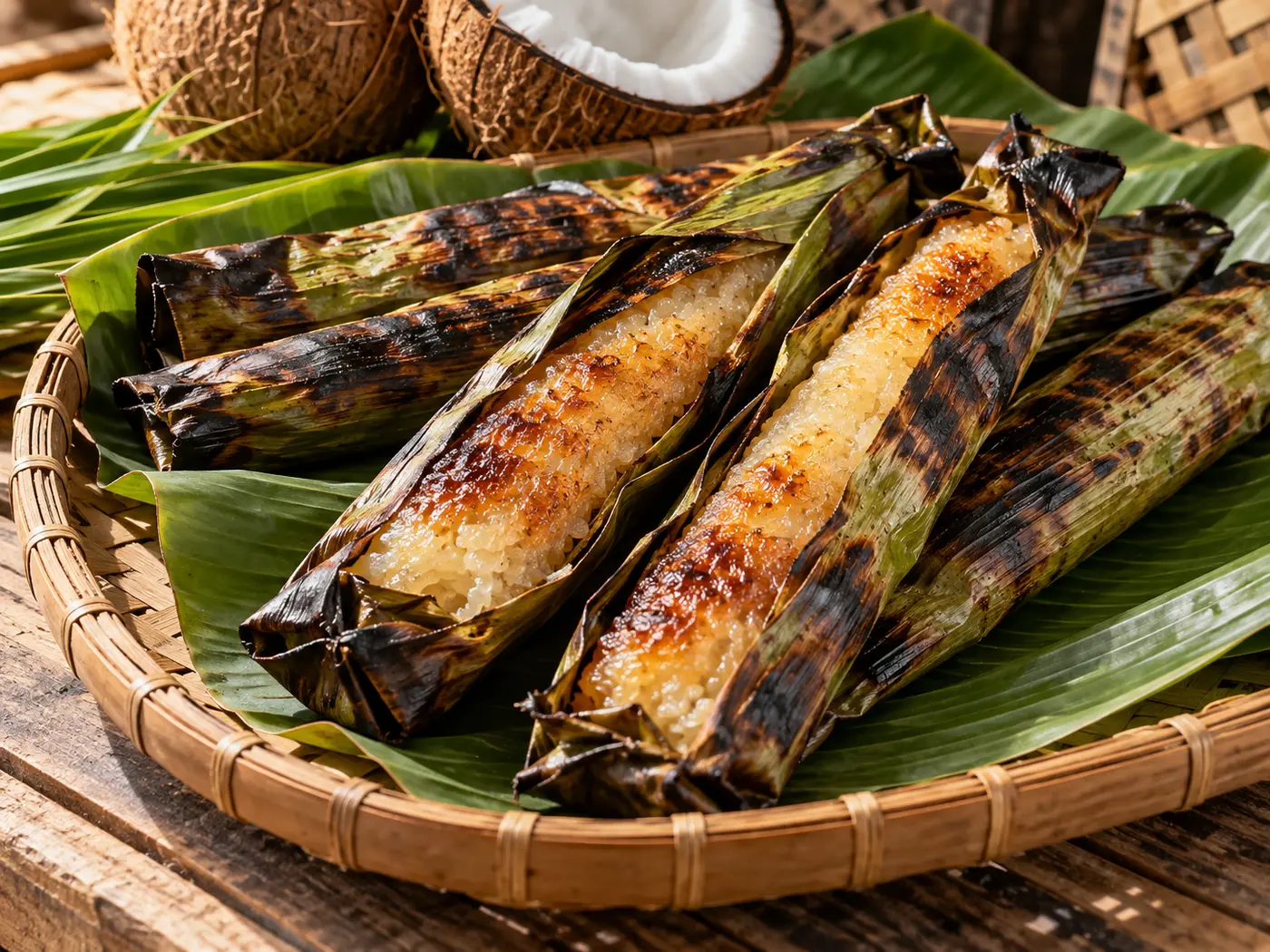
Grilled Ilocano sticky rice cakes with coconut, wrapped in banana leaves.
Ingredients
Measure and prepare everything before you begin cooking.
- 2 cups glutinous rice flour
- 1 cup coconut milk
- ¾ cup dark brown sugar
- 1 cup young coconut, finely shredded
- ¼ tsp fine salt
- 1 tbsp sesame seeds (optional)
- 8–10 banana-leaf rectangles, about 20 × 25 cm
Instructions
- 1
Pass each banana-leaf rectangle briefly over a low flame or a hot dry pan until glossy and flexible. Wipe clean and set aside.
- 2
Whisk the coconut milk, brown sugar and salt until the sugar mostly dissolves. Stir in the glutinous rice flour, shredded coconut and sesame seeds to make a thick, spoonable batter.
- 3
Place 3 tablespoons of batter near one long edge of each leaf. Shape it into a narrow log, roll the leaf snugly around it and fold or tuck the ends so the batter stays enclosed.
- 4
Arrange the parcels over a medium-low charcoal grill or ridged pan. Turn every few minutes so the leaves char evenly without burning through.
- 5
Cook for 25–35 minutes until the cakes feel firm and pull away cleanly from the leaves. Open one parcel to check that the centre is glossy and fully cooked rather than floury.
- 6
Rest for 10 minutes before serving. Tupig is best warm, when the edges are lightly caramelised and the centre remains chewy.
About Tupig
Tupig is a grilled coconut rice cake associated with Ilocos and Pangasinan. Glutinous rice flour, coconut milk and shredded young coconut make a chewy centre, while the banana-leaf wrapper protects the batter over the heat. This small-batch recipe can be made on a charcoal grill or a stovetop grill pan.
Ingredient swaps wherever you cook
- Use glutinous rice flour, also sold as sweet rice flour or mochiko; ordinary rice flour is not a direct replacement.
- Frozen young coconut strips work: thaw in the refrigerator, drain and chop finely. Mature desiccated coconut produces a different, less tender texture.
- Frozen food-grade banana leaves are sold at many Filipino and Asian grocers abroad. Thaw, wipe and soften them in a dry pan before folding.
How to know it is ready
- Keep logs narrow and similar in thickness so the middle cooks evenly.
- Use medium-low heat and turn frequently; browned leaves do not prove that the batter inside is cooked.
- Open a thick parcel: the centre should be cohesive and chewy, without wet or powdery batter. Continue cooking if needed.
Common mistakes and fixes
- Burnt wrapper and raw centre: reduce the heat, move away from direct flame and turn more often.
- Leaking batter: use intact leaves, overlap torn areas and fold both ends securely.
- Dry cakes: avoid making overly thin parcels or leaving them on the heat after the centres are cooked.
Family and regional variations
- Sesame seeds are optional; leave them out if avoiding sesame.
- Use a stovetop grill pan on medium-low heat when charcoal grilling is unavailable.
- Serve smaller parcels as a merienda snack, checking them sooner because size changes cooking time.
Storage and reheating
Refrigerate within 2 hours and use within 3 days. Reheat the portion needed until steaming hot throughout. Keep wrappers on during covered reheating to help retain moisture.
What to serve with it
Makes about 8–10 small parcels, for 4–6 snack servings. Serve warm with coffee or hot chocolate; remove the banana-leaf wrapper before eating.
Tupig FAQs
Is tupig baked or grilled?
This recipe is grilled in banana leaves, over charcoal or in a stovetop grill pan. Turning and gentle heat help the rice batter cook before the leaves burn through.
Can I use ordinary rice flour?
No. Glutinous rice flour gives the characteristic chewy texture; ordinary rice flour behaves differently.
How do I know tupig is cooked?
Open a thick parcel and check the middle. It should be set and chewy, with no wet floury batter; the wrapper colour alone is not a reliable test.
Cooking guidance: Follow current food-safety advice and the instructions for your equipment.