Nilupak na Kamoteng Kahoy
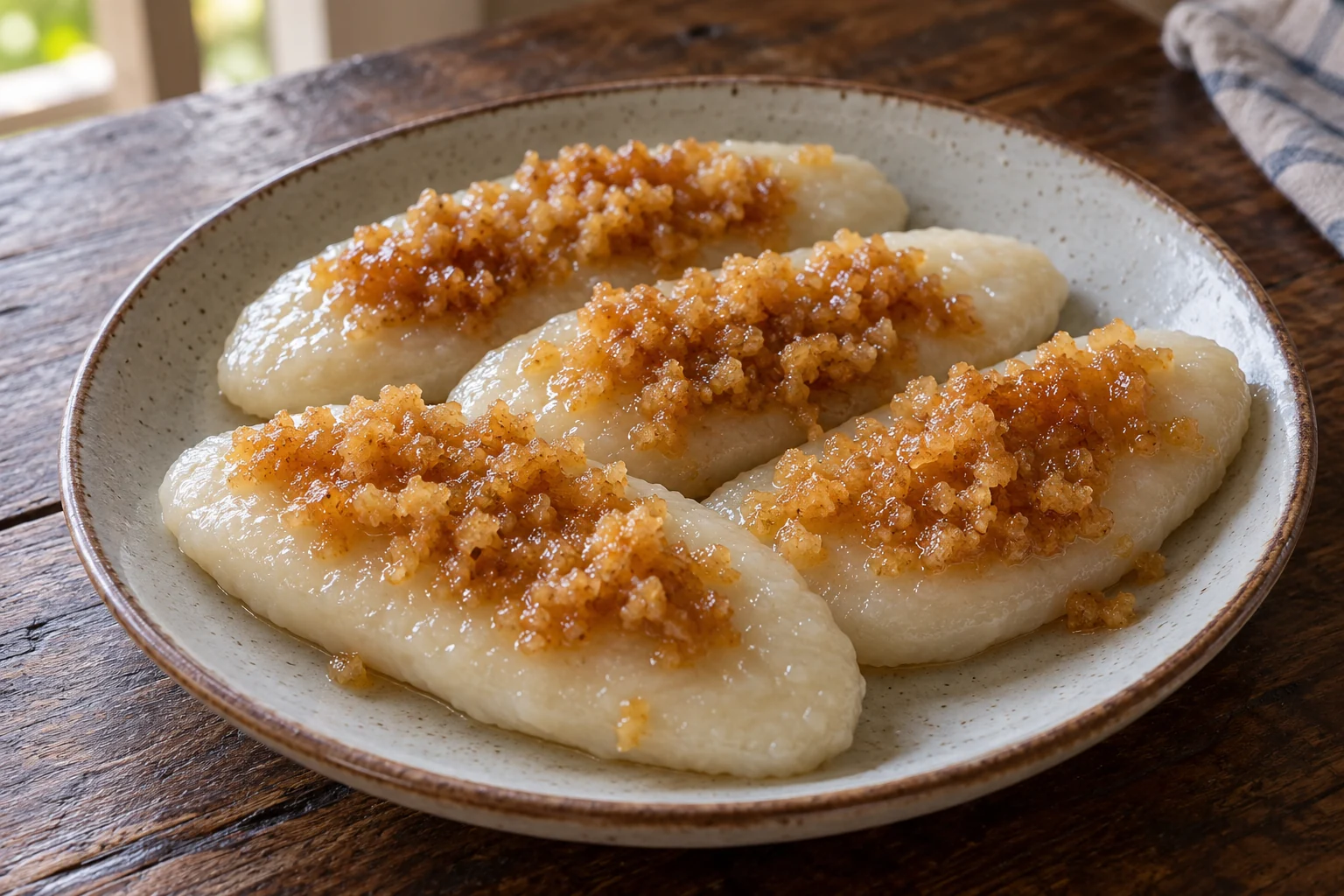
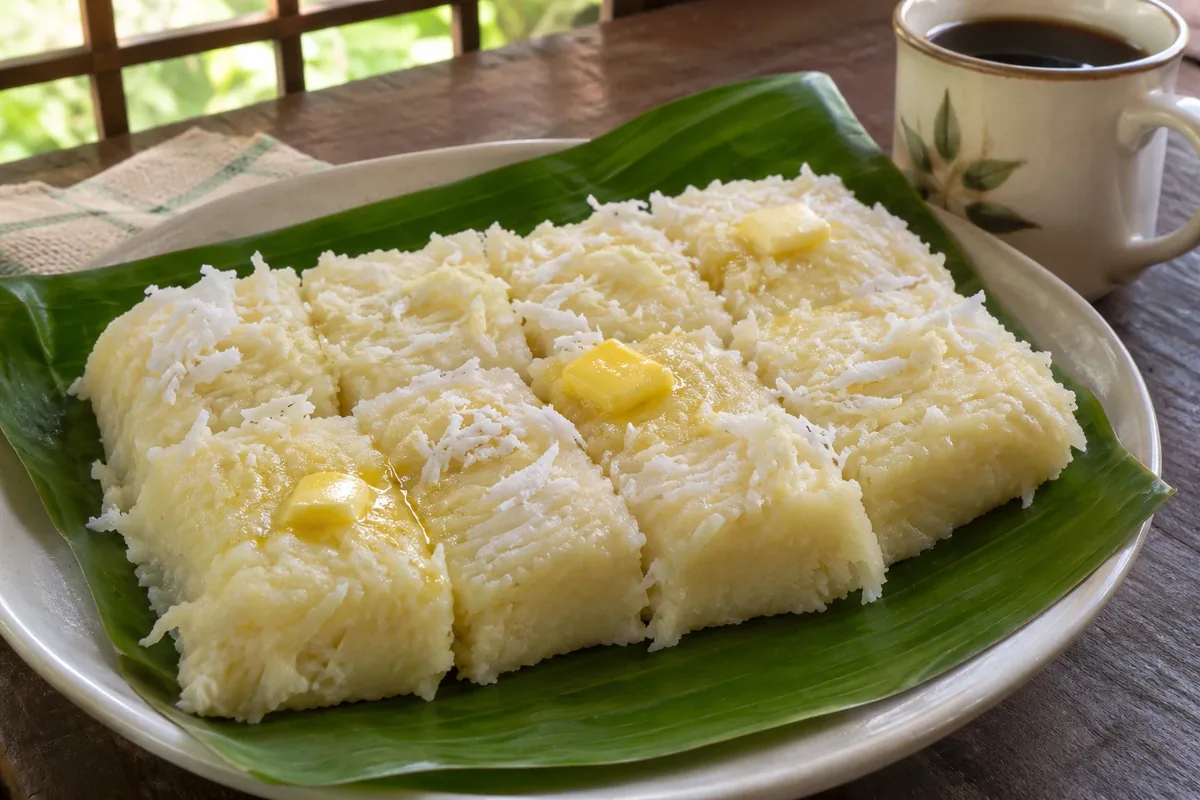
Soft mashed cassava with coconut, sugar and butter, shaped into a simple Tagalog-style merienda.
Total includes 15 minutes of setting. Cassava size and brand affect boiling time; allow longer when the package or doneness checks require it.
Ingredients
Measure and prepare everything before you begin cooking.
- 1 kg commercially sold peeled sweet cassava (kamoteng kahoy or yuca), fresh or frozen chunks, prepared as directed on the pack
- Water to cover the cassava generously, for boiling only
- 120 g finely grated unsweetened coconut, fresh or thawed frozen
- 100 g white sugar
- 60 g unsalted butter, softened, plus 10 g for greasing and topping
- ¼ tsp fine salt
Instructions
- 1
Use food-grade sweet cassava from a reputable grocer and follow its preparation instructions. If starting with fresh whole roots, remove all brown skin and the pinkish layer beneath, then rinse and cut into 3 cm pieces. Cut away any woody central fibre you can see. Do not use unknown or bitter cassava varieties, and never taste it raw.
- 2
Put the prepared cassava in a large pot with plenty of fresh water to cover it by about 5 cm. Bring to a full boil, then maintain a steady uncovered boil for at least 30 minutes and until every piece is fully cooked and easily crushed with a fork. Follow a longer cooking time if the package requires it, adding boiling water to keep the pieces covered. This timing applies to commercial sweet cassava, not unknown varieties.
- 3
Drain thoroughly and discard all the cooking water. Do not use it in the dessert. Remove any remaining tough central strands from the cooked pieces, then return the cassava to the warm empty pot for 1–2 minutes off the heat so surface moisture can evaporate.
- 4
Meanwhile, stir the grated coconut in a small dry frying pan over low heat for 3–4 minutes until hot, keeping it white rather than browned. Mash the warm cassava with a sturdy potato masher, then work in the coconut, sugar, 60 g butter and salt until evenly combined and cohesive. Continue mashing until no hard lumps remain.
- 5
Use a little of the remaining 10 g butter to grease a small shallow dish, about 22 cm square. Press in the mixture to a 2–3 cm depth and smooth or rake the top with a fork. Rest for 15 minutes to firm slightly, then cut into eight portions. Spread the remaining butter lightly over the top and serve warm or at room temperature.
About Nilupak na Kamoteng Kahoy
Nilupak takes its name from pounding or mashing. Cassava, saba and sweet potato versions appear in Tagalog cooking, and communal paglulupak is part of Batangas food culture. This simple cassava-and-coconut version uses a potato masher and shallow dish for an overseas kitchen; richer family versions may add condensed milk, peanuts or cheese.
Ingredient swaps wherever you cook
- Frozen peeled cassava chunks labelled for cooking are convenient abroad. Follow their pack instructions; do not substitute raw grated cassava directly into this boiling method.
- Frozen finely grated unsweetened coconut can replace fresh coconut. Thaw it in the fridge first. Sweetened desiccated coconut changes both moisture and sweetness.
- Use a plant-based butter with a similar fat content for a dairy-free adaptation, checking the ingredient label.
How to know it is ready
- The cassava is completely soft before mashing, with no firm centre. The cooking water is discarded.
- The warm mixture holds a mound and presses into a soft slab; expect small coconut flecks rather than a perfectly smooth custard.
Common mistakes and fixes
- Mashing undercooked pieces leaves hard lumps. Return the cassava to fresh boiling water and cook fully before adding the other ingredients.
- Do not blend in cassava boiling water to loosen the mash. Drain it completely and discard it.
- Overworking in a blender can make the mash gluey. Use a hand masher for a more rustic texture.
Family and regional variations
- Add a little grated mild cheese at serving for a modern savoury-sweet topping.
- Serve small scoops instead of pressing the mixture into a dish.
Storage and reheating
Refrigerate covered portions within 2 hours, especially because they contain coconut. Eat within 2 days. Reheat only the portion needed, covered, until piping hot throughout; let it cool slightly before eating.
What to serve with it
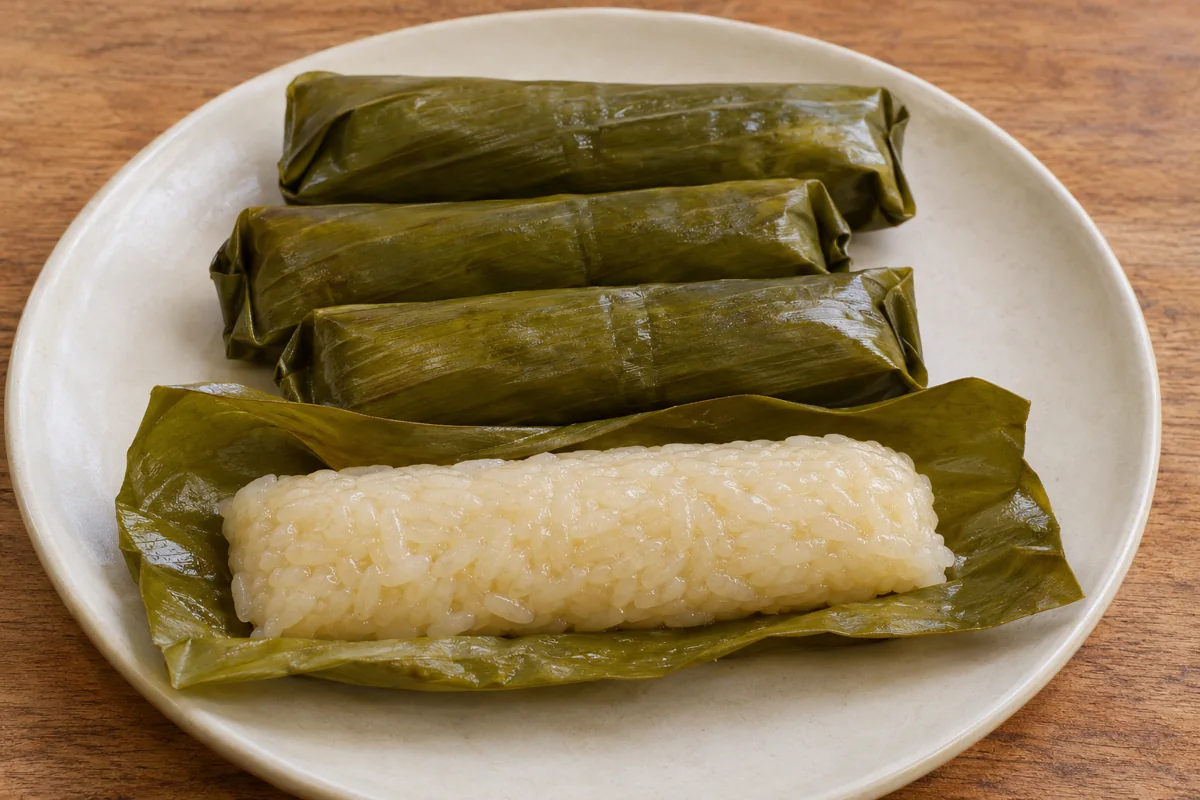
Serve eight merienda portions with coffee or tea. A clean food-grade banana leaf is optional for presentation.
Nilupak na Kamoteng Kahoy FAQs
Can I use cassava flour or grated frozen cassava?
Not as a direct replacement here. This method is written for commercial sweet cassava pieces that are fully boiled and drained before mashing.
Is nilupak only made with cassava?
No. Saba and sweet potato versions also exist. This page focuses on kamoteng kahoy with coconut, sugar and butter.
Can I skip peeling or eat the cassava raw?
No. Cassava must be appropriately prepared and fully cooked. Use a commercial food-grade product, follow its instructions, and discard the boiling water.
Cooking guidance: Follow current food-safety advice and the instructions for your equipment.