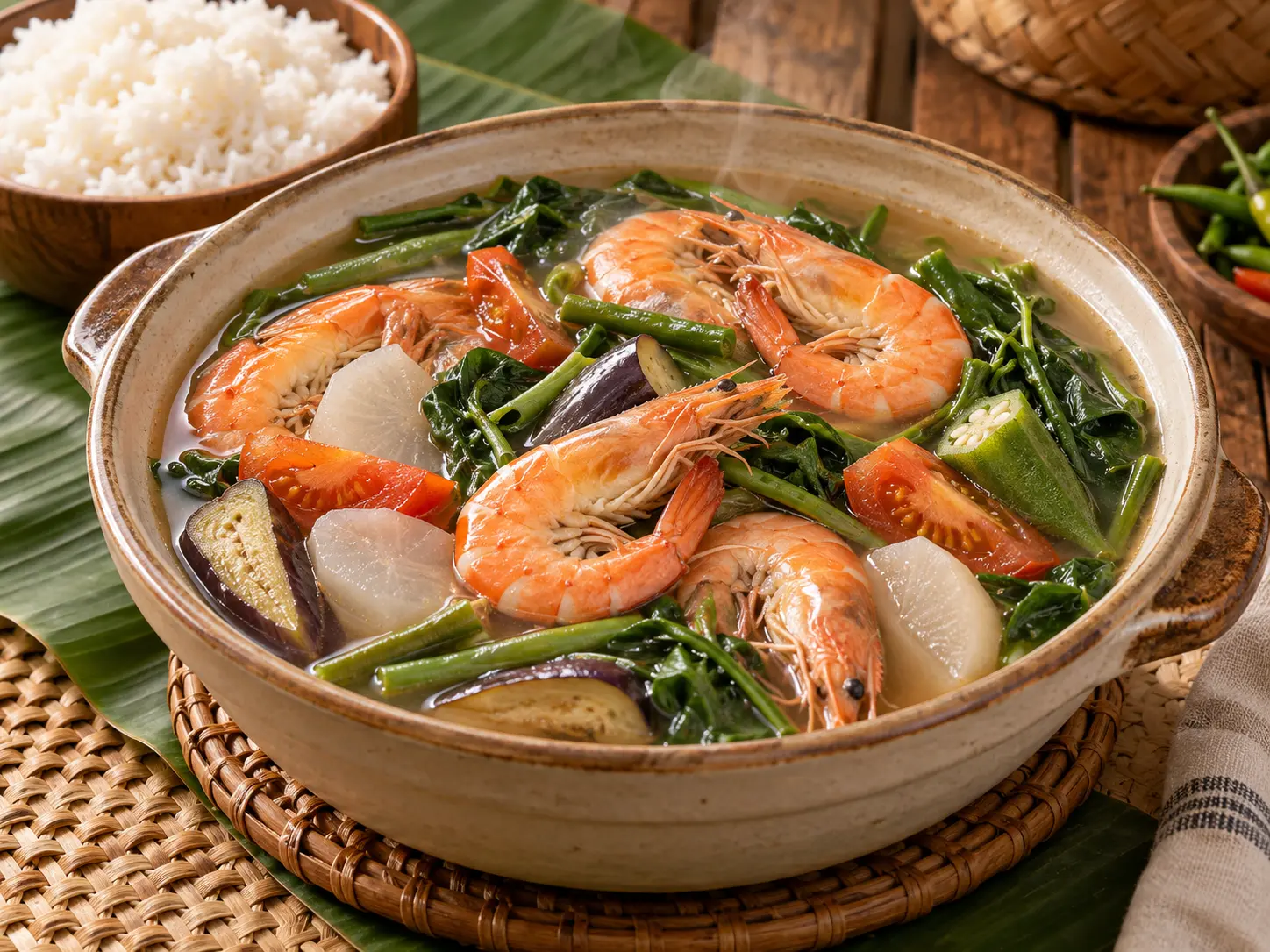
Sinigang na Hipon
Fresh prawns and vegetables in a bright, savoury tamarind broth.
Ingredients
Measure and prepare everything before you begin cooking.
- 750 g large raw shell-on prawns, deveined
- 8 cups water or unsalted seafood stock
- 1 onion, quartered
- 3 ripe tomatoes, quartered
- 200 g daikon radish, sliced into half-moons
- 1 small eggplant, cut into wedges
- 150 g long beans, cut into 5 cm lengths
- 8 okra, trimmed
- 2 cups kangkong or baby spinach
- ⅓ cup tamarind concentrate, or to taste
- 1–2 tbsp fish sauce, or to taste
- 2 long green chillies (optional)
- Freshly ground black pepper
Instructions
- 1
Rinse the prawns under cold water, trim the feelers and devein while keeping the shells on for flavour. Keep them refrigerated while you prepare the broth and vegetables.
- 2
Bring the water or stock, onion and tomatoes to a boil in a large pot. Lower to a steady simmer and cook for 10 minutes, gently crushing the tomatoes into the broth.
- 3
Add the daikon and optional green chillies and simmer for 5 minutes. Add the eggplant, long beans and okra and cook for another 4–5 minutes until almost tender.
- 4
Stir in the tamarind concentrate a little at a time. Add fish sauce and pepper, tasting until the broth is pleasantly sour and savoury rather than harsh or overly salty.
- 5
Add the prawns and simmer gently for 3–5 minutes, just until the shells turn pink, the flesh is opaque and the centres reach 63°C. Avoid boiling them for longer or they will toughen.
- 6
Fold in the kangkong or spinach, turn off the heat and cover for 1 minute. Serve immediately with steamed rice and extra fish sauce at the table.
About Sinigang na Hipon
Sinigang na hipon is a lighter seafood expression of the Philippines’ beloved sour soup. Prawns cook quickly in a tamarind broth filled with tomatoes and vegetables, making this an especially practical version for weeknights.
Ingredient swaps wherever you cook
- Frozen raw shell-on prawns work well; thaw them overnight in the refrigerator.
- Baby spinach or chard is an easy replacement when kangkong is unavailable.
- Use bottled tamarind concentrate gradually because brands vary greatly in strength.
How to know it is ready
- The vegetables should be tender but still hold their shape.
- The broth should taste clearly sour, savoury and balanced—not simply salty.
- Prawns are done when pink, opaque and 63°C at the centre.
Common mistakes and fixes
- Rubbery prawns: add them only after the vegetables are almost tender.
- Flat broth: simmer onion and tomato first, then adjust tamarind and fish sauce separately.
- Overcooked greens: add them after turning off the heat.
Family and regional variations
- Add mussels or firm white fish for a mixed-seafood sinigang.
- Use fresh green tamarind when available and strain the softened pulp into the broth.
- Add taro for a slightly thicker, more substantial soup.
Storage and reheating
For best texture, eat this immediately. Refrigerate leftovers within 2 hours for up to 2 days and reheat gently only until steaming; prolonged boiling toughens the prawns.
What to serve with it
Serve piping hot with steamed rice and a small dish of fish sauce with chilli. Keep extra tamarind at the table for diners who prefer a sharper broth.
Sinigang na Hipon FAQs
Should I remove the prawn shells?
Shell-on prawns give the broth more flavour. Trim the feelers and devein them while leaving the shells intact.
Can I use cooked prawns?
Raw prawns flavour the broth better. If using cooked prawns, add them only during the final minute to warm through.
How sour should sinigang be?
It should be distinctly tangy but still balanced by the sweetness of tomato and the savouriness of fish sauce.
Cooking guidance: Follow current food-safety advice and the instructions for your equipment.