Sinanglay na Tilapia
Whole tilapia stuffed with tomato and aromatics, wrapped in pechay and gently simmered in coconut milk.
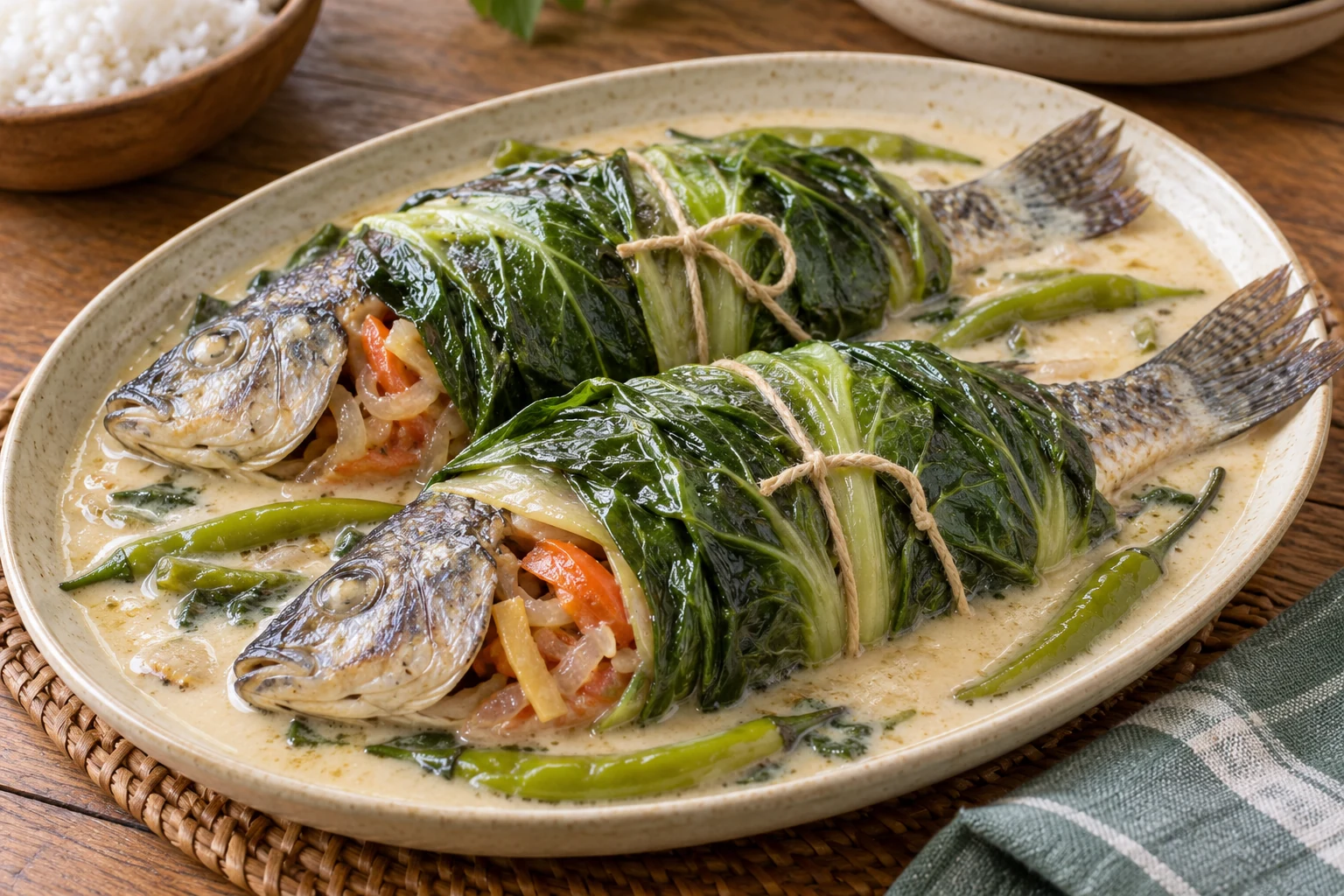
AI-generated serving illustration.
Ingredients
Measure and prepare everything before you begin cooking.
- 2 whole tilapia, about 450–500 g each, scaled, gutted and gills removed by the fishmonger
- 2 medium tomatoes, finely diced
- 1 small onion, finely chopped
- 4 garlic cloves, minced
- 20 g fresh ginger, finely minced
- 300 g large pechay or bok choy leaves, washed
- 400 ml full-fat coconut milk
- 150 ml water, plus more as needed
- 2 long green chillies, slit
- ½ tsp fine salt to start, plus more to taste
- ¼ tsp ground black pepper
- Food-safe kitchen twine, for securing the leaf wraps
Instructions
- 1
Check the prepared fish for remaining scales, gills and entrails; pat dry. Keep fish chilled until assembling. Wash the pechay and trim the thick stem ends. Briefly dip stiff leaves in hot water for 10–15 seconds so they bend, then drain.
- 2
Mix tomatoes, onion, garlic, ginger, half the measured salt and pepper. Divide between the cleaned fish cavities without packing tightly. Season the outside of the fish with the remaining measured salt.
- 3
Wrap each fish body in overlapping pechay leaves, keeping the head and tail visible. Tie loosely with food-safe kitchen twine to hold the leaves and stuffing in place. Do not use plastic string or decorative ribbon.
- 4
Arrange fish in one layer in a wide deep pan. Add coconut milk, 150 ml water and green chillies. Bring to a gentle simmer, cover loosely and cook for about 20–25 minutes. Spoon sauce over the fish occasionally without turning or breaking the parcels.
- 5
Check the thickest flesh is opaque and separates easily from the bones; a food thermometer should read 63°C at the thickest part, away from bone. Larger fish need more time. If the sauce reduces before the fish is cooked, add hot water a little at a time. Keep at a gentle simmer.
- 6
Taste the sauce and adjust salt if needed. Carefully lift the fish, remove all twine, and spoon over the coconut sauce. Serve with rice and warn diners about fish bones. Check portions carefully before serving children.
About Sinanglay na Tilapia
Sinanglay is a Bicolano stuffed-fish dish often wrapped in leafy greens and cooked in coconut milk. Tomato, onion and ginger flavour the filling. Pechay is used here, with kitchen twine as a practical way to hold the wrap together.
Ingredient swaps wherever you cook
- Use a similar-sized cleaned whole fish such as snapper if tilapia is unavailable; adjust the cooking time to its thickness.
- Large bok choy leaves are a practical pechay option. Blanch only until flexible, not soft enough to tear.
- If cooking boneless fillets instead, make smaller leaf parcels and begin checking much earlier; they will not need the whole-fish timing.
How to know it is ready
- The thickest flesh reaches 63°C, is opaque and lifts easily from the bone.
- The sauce is creamy and the leaf wrap holds together without a hard boil.
Common mistakes and fixes
- A narrow pan stacks the fish and causes uneven cooking.
- Turning the fish repeatedly breaks the wraps and releases the stuffing.
Family and regional variations
- Leave the green chillies whole for a gentler flavour.
- Use tied pandan leaves instead of twine only if they are food-safe, clean and long enough to secure the wrap.
Storage and reheating
Refrigerate in a shallow covered container within 2 hours and use within 2 days. Remove bones carefully and reheat once until piping hot throughout, above 75°C. Do not leave coconut sauce standing at room temperature.
What to serve with it
Makes 4 portions with rice. Contains fish; each whole fish can be divided between two diners.
Sinanglay na Tilapia FAQs
Should I fry the fish first?
No. This version cooks the stuffed, leaf-wrapped fish directly in coconut milk.
Must I use whole fish?
Whole fish gives the characteristic presentation. Boneless fillet parcels are a home adaptation and need a shorter cooking time.
Cooking guidance: Follow current food-safety advice and the instructions for your equipment.