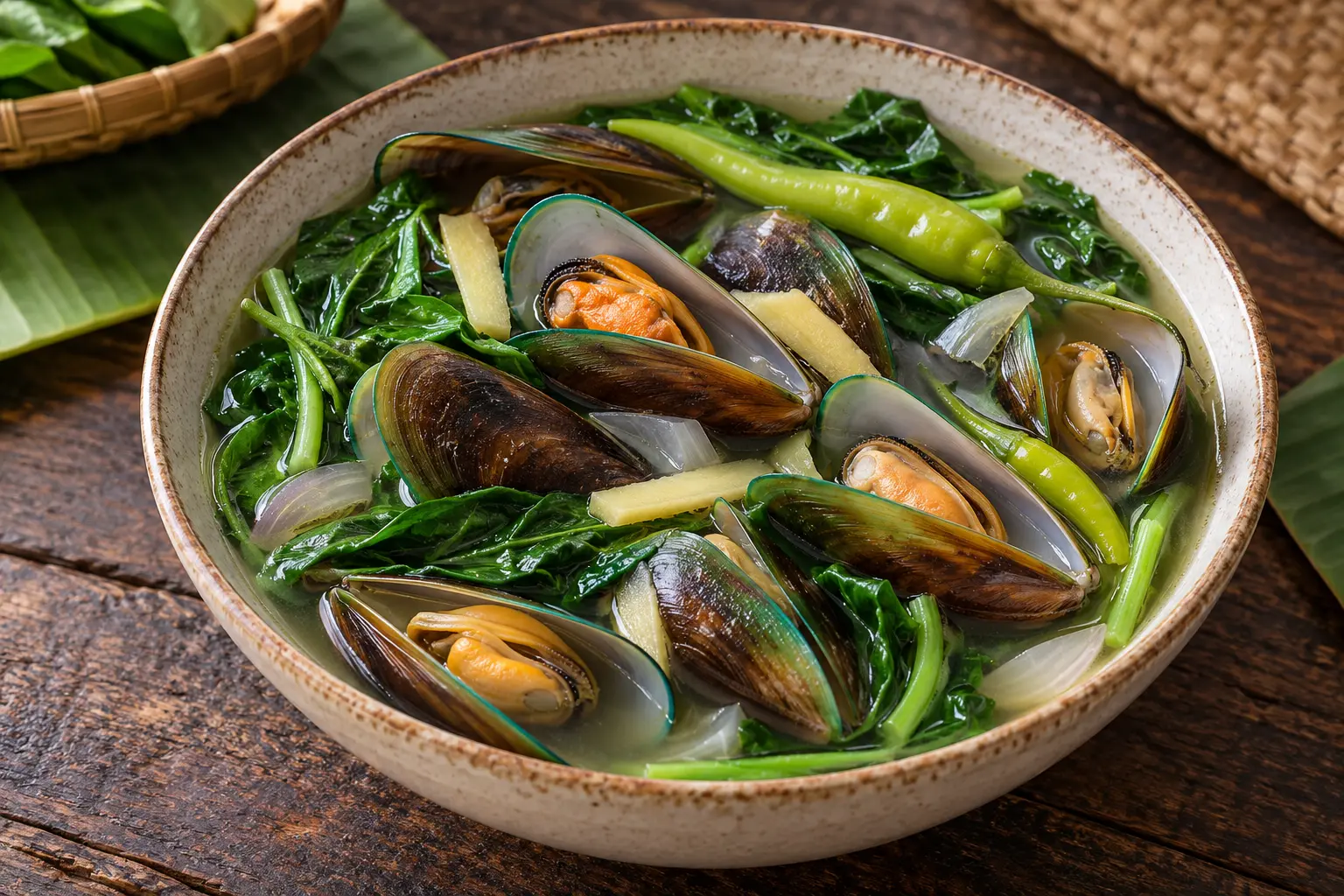
Sinabawang Tahong
Fresh mussels, ginger and leafy greens in a clean, comforting Filipino broth.
Ingredients
Measure and prepare everything before you begin cooking.
- 1 kg live mussels in their shells
- 1 tbsp neutral cooking oil
- 1 medium onion, thinly sliced
- 5 garlic cloves, finely chopped
- 40 g fresh ginger, cut into thin matchsticks
- 2 ripe tomatoes, cut into wedges
- 1.25 litres water
- 1–2 tbsp fish sauce, to taste
- 2 long green chillies
- 150 g spinach, water spinach or chilli leaves
- Freshly ground black pepper, to taste
- Calamansi or lemon wedges, to serve
Instructions
- 1
Rinse the mussels under cold running water. Scrub the shells, pull away any beards and discard cracked mussels. Tap any open shell firmly; discard it if it does not close within a minute.
- 2
Heat the oil in a wide pot over medium heat. Cook the onion for 3 minutes until softened, then add the garlic and ginger and cook for 1 minute without browning.
- 3
Add the tomatoes and cook for 3–4 minutes, pressing them lightly until they begin to release their juices. Pour in the water, bring to a boil, then lower to a lively simmer for 5 minutes.
- 4
Stir in 1 tablespoon fish sauce and the whole green chillies. Add the cleaned mussels, cover immediately and cook for 4–6 minutes, shaking the pot once, until the shells have opened.
- 5
Discard every mussel that remains closed. Fold in the leafy greens and cook uncovered for 1–2 minutes, just until wilted. Taste the broth before adding more fish sauce or pepper.
- 6
Ladle into warm bowls and serve straight away with rice and calamansi or lemon. Do not leave cooked shellfish at room temperature for more than 2 hours.
About Sinabawang Tahong
Sinabawang tahong is a quick Filipino mussel soup in which ginger, tomatoes and leafy greens support rather than hide the shellfish. It is sometimes called tinolang tahong because its clear, aromatic broth follows the familiar tinola style.
Ingredient swaps wherever you cook
- Fresh mussels: use only live, tightly closed shell-on mussels from a trusted seafood seller; frozen cooked mussels need much less cooking and will not flavour the broth as deeply.
- Chilli leaves or water spinach: use baby spinach, chard or bok choy when Filipino greens are unavailable.
- Calamansi: use lemon, lime or a mixture of both.
How to know it is ready
- Live mussels should smell clean and briny, not strongly fishy.
- The broth should simmer before the mussels are added.
- Most shells should open within 4–6 minutes; discard any that stay firmly closed after cooking.
Common mistakes and fixes
- Gritty broth: scrub, debeard and rinse the mussels thoroughly before cooking.
- Rubbery mussels: stop cooking as soon as the shells open.
- Over-salty soup: taste after the mussels release their natural briny liquid and add fish sauce gradually.
Family and regional variations
- Add sayote or green papaya slices and simmer until tender before adding the mussels.
- Use malunggay leaves when available.
- Add a small piece of lemongrass for another fragrant home-style variation.
Storage and reheating
Shellfish is best served immediately. Refrigerate leftovers within 2 hours and use within 1 day. Reheat once to steaming hot and discard any mussel that smells unusual.
What to serve with it
Serve as a hot starter or light main course with steamed rice, calamansi and fish sauce with chilli at the table.
Sinabawang Tahong FAQs
How do I know whether a mussel is alive?
Before cooking, a live mussel should be closed or should close when tapped. Discard cracked shells and mussels that remain open.
Why did some mussels stay closed?
They may not have been alive or may be tightly sealed. For food safety, discard any shell that remains firmly closed after cooking.
Can I use frozen mussels?
Yes if fresh are unavailable, but follow the packet and add pre-cooked mussels near the end so they do not become tough.
Cooking guidance: Follow current food-safety advice and the instructions for your equipment.