Puto Maya
Ginger-scented whole sticky rice with coconut milk and ripe mango in our Cebu-style home version.
Prep and handling: 20 minutes · Soaking: 60 minutes · Cooking: 60–75 minutes · Rest: 5 minutes · Total: about 2 hours 25 minutes–2 hours 40 minutes. Allow additional time if the rice needs longer to soften. The 20 minutes includes draining and handling between steaming stages.
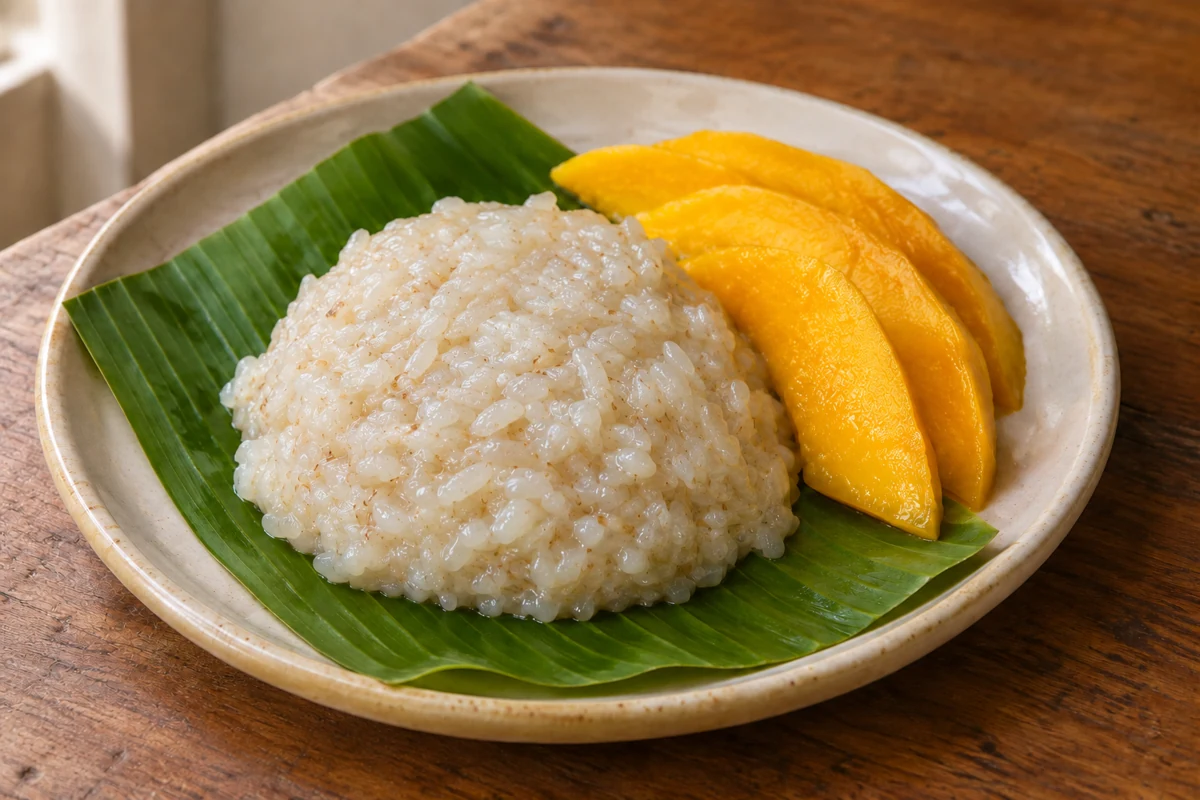
AI-generated serving illustration.
Equipment
You need a steamer at least 24 cm wide, a clean damp food-safe muslin liner, a heatproof mixing bowl and a small saucepan. The rice should sit in a shallow layer, no deeper than about 3 cm. Keep loose cloth away from the flame.
Ingredients
Measure and prepare everything before you begin cooking.
- 300 g dry white glutinous rice, labelled sticky rice, malagkit or sweet rice
- 1 litre cool water for soaking, discarded afterwards
- 250 ml unsweetened full-fat coconut milk, about 17–20% fat
- 40 g white sugar
- 3 g fine salt
- 25 g fresh ginger, peeled and cut into thin slices
- Up to 60 ml boiling water, only if needed during the final steaming
- Water for the steamer reservoir, kept below the rice basket
- 300 g ripe mango flesh, sliced, to serve separately
- Optional: clean food-grade banana leaves for serving
Instructions
- 1
Soak the rice. Rinse the rice in a bowl with several changes of water. Cover with the separate 1 litre soaking water and leave for 60 minutes. Drain in a sieve for 10 minutes. Discard the soaking water.
- 2
Set up the steamer. Put water below the steamer rack and bring it to a steady boil. Line the basket with damp muslin, keeping a clear path for steam around the edges. Spread the drained rice in an even layer no deeper than about 3 cm. Cover and steam for 30–35 minutes. Carefully turn the rice halfway through so the centre and edges cook evenly.
- 3
Warm the coconut mixture. During the first steaming, put coconut milk, sugar, salt and ginger in a small saucepan. Warm gently for about 5 minutes, stirring until the sugar dissolves. Do not boil hard. Remove the ginger slices and discard them.
- 4
Let the rice absorb the coconut milk. Transfer the hot rice to a heatproof bowl using oven gloves. It will still have firm centres. Fold in all the warm coconut mixture and leave for 5 minutes, folding once or twice. The liquid belongs in the rice; do not pour it through the steamer basket.
- 5
Steam until tender. Return the moistened rice and any remaining liquid to the lined basket. Spread evenly, cover and steam for another 25–35 minutes. Check the reservoir and top it up with boiling water when needed, keeping water below the basket.
- 6
Check the middle. Let a few grains cool enough to taste. They should be chewy and fully tender, with no hard or chalky centre. If the rice remains firm and looks dry, sprinkle over 15 ml of the reserved boiling water, fold gently and steam for 5 more minutes. Repeat only as needed, up to the measured 60 ml. If already moist, steam longer without adding water.
- 7
Shape and serve. Rest off the heat for 5 minutes. Divide into 6 portions and gently press into a small damp bowl before turning out, or spoon onto clean banana leaves. Serve warm with the measured mango on the side. The leaves are not eaten.
About Puto Maya
Puto maya brings together whole sticky rice, coconut milk and ginger in a breakfast familiar to many Cebuanos. A few slices of ripe mango make a lovely partner for the gently sweet rice. This home version uses white malagkit and a two-stage steaming method. It is a different preparation from the small flour-based cakes also called puto.
Ingredient swaps wherever you cook
- Thai white sticky rice is a practical choice. Jasmine, basmati, sushi rice and glutinous rice flour do not use this method successfully as direct replacements.
- Frozen mango works as an accompaniment: thaw it in the fridge and drain. It will be softer than fresh ripe mango.
- Banana leaves are optional for serving. A proper steamer liner is still needed; do not replace the muslin with a solid sheet that prevents steam reaching the rice.
- Sikwate is a customary accompaniment, but it is not included in this recipe's ingredients, yield or timing. Serve your usual prepared hot chocolate separately if you like.
How to know it is ready
- Rice grains are chewy and tender through the centre, without a hard or chalky middle.
- The rice holds together gently; it is not sitting in pooled coconut milk.
Common mistakes and fixes
- Hard centres: continue steaming; extra sugar or coconut cream will not correct undercooked grains.
- Wet, heavy rice: check that the basket is above the water and avoid adding reserve water automatically.
- Strong ginger flavour: keep the ginger sliced and remove it as directed rather than leaving grated fibres throughout.
Family and regional variations
- Serve with fresh mango, or separately prepared sikwate. Chocolate is not included in this recipe’s quantities or timing.
Storage and reheating
Divide leftovers into shallow containers and refrigerate promptly, within 2 hours. Use within 2 days. Keep mango separate. Reheat the rice once, covered with a small splash of water, until above 75°C throughout. Cold rice firms up, so check the centre is hot as well as softened. Check coconut milk labels for any declared allergens; no wheat, milk or egg is intentionally added to this version.
What to serve with it
Makes 6 small breakfast or merienda portions. Serve with the separately measured mango; banana leaves are not eaten. Spoon measures: 1 tablespoon = 15 ml; 1 teaspoon = 5 ml.
Puto Maya FAQs
How do I know it is ready?
Rice grains are chewy and tender through the centre, without a hard or chalky middle. The rice holds together gently; it is not sitting in pooled coconut milk.
What should I check when buying ingredients overseas?
Thai white sticky rice is a practical choice. Jasmine, basmati, sushi rice and glutinous rice flour do not use this method successfully as direct replacements. Frozen mango works as an accompaniment: thaw it in the fridge and drain. It will be softer than fresh ripe mango.
Cooking guidance: Follow current food-safety advice and the instructions for your equipment.