
Pinangat na Gabi
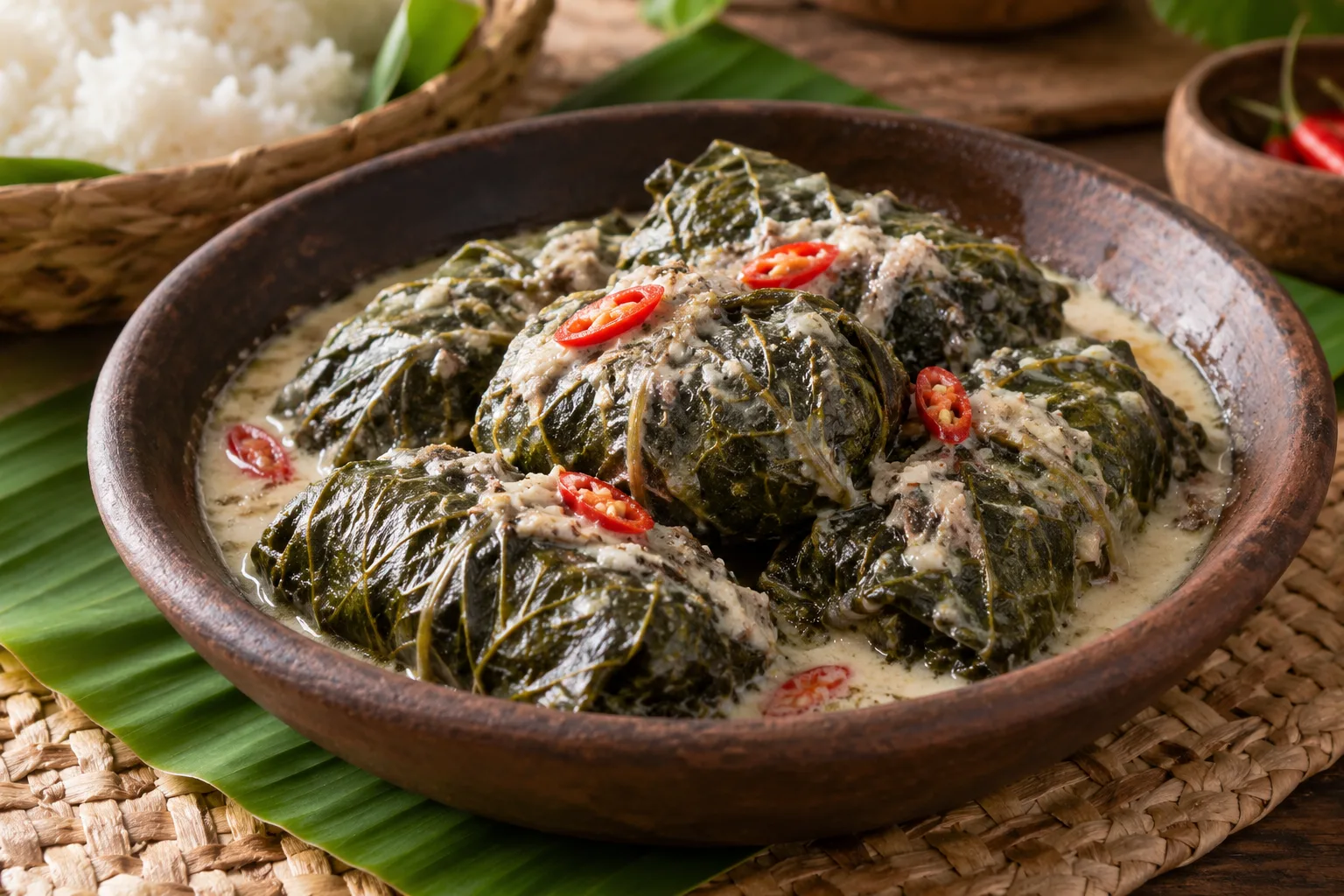
Taro-leaf parcels with seasoned fish, slowly cooked in coconut cream.
Ingredients
Measure and prepare everything before you begin cooking.
- 16 large taro leaves and stems, thoroughly dried
- 400 g firm white fish fillets, finely chopped
- ½ cup grated coconut
- 1 onion, finely chopped
- 4 garlic cloves, minced
- 25 g ginger, finely chopped
- 2 tbsp bagoong alamang
- 800 ml coconut milk
- 200 ml coconut cream
- 4 long green chillies
- ½ tsp black pepper
- Kitchen string or extra taro stems for tying
- 1–2 tbsp neutral cooking oil, as needed
- Fine salt, to taste (use less when the dish contains soy sauce, fish sauce or bagoong)
Instructions
- 1
Wear gloves if your skin is sensitive. Wipe the dried taro leaves clean and remove thick veins without tearing the leaves; do not use raw, wet or damaged leaves.
- 2
Mix fish, grated coconut, half the onion, half the garlic, half the ginger, 1 tablespoon bagoong and pepper. Fry a teaspoonful to check the seasoning.
- 3
Overlap two leaves, place filling in the centre, fold into a secure parcel and tie gently. Repeat without packing the filling too tightly.
- 4
Spread the remaining aromatics in a wide pot. Arrange parcels seam-side down in one snug layer, pour coconut milk around them and add the remaining bagoong.
- 5
Bring to a very gentle simmer, cover and cook over low heat for 45–60 minutes. Do not stir; spoon sauce over the parcels and shake the pot carefully if needed.
- 6
Add chillies and coconut cream. Simmer uncovered for 10–15 minutes until the sauce is thick and the leaves are completely tender. Serve hot with rice.
About Pinangat na Gabi
Pinangat na gabi is a celebrated Bicolano preparation of taro leaves wrapped around a savoury filling and simmered in coconut milk. The careful parcels distinguish it from loose-leaf laing and make it a special dish for a shared table.
New Zealand ingredient swaps
- Use only food-grade taro leaves sold for cooking; dried leaves are often available from Filipino grocers.
- Firm hoki or another mild white fish works well in New Zealand.
- Use desiccated coconut moistened with a little coconut milk when fresh grated coconut is unavailable.
How to know it is ready
- Parcels should stay closed and fit snugly in one layer.
- Cook at a very gentle simmer without stirring.
- Leaves must be completely tender and the coconut sauce visibly thickened.
Common mistakes and fixes
- Broken parcels: overlap two leaves and place them seam-side down.
- Itchy leaves: cook longer and never use unidentified or ornamental taro.
- Dry pot: add warm coconut milk around—not over—the parcels.
Family and regional variations
- Fill with fish, prawns, crab or seasoned pork.
- Add whole chillies for aroma or sliced chillies for more heat.
- Some versions are tied individually; others are arranged as one larger bundle.
Storage and reheating
Refrigerate in their sauce for up to 3 days. Reheat covered over low heat until steaming; avoid repeated stirring that can break the parcels.
What to serve with it
Serve one parcel per person with rice, spooning the reduced coconut sauce around it.
Pinangat na Gabi FAQs
Is pinangat the same as laing?
They share taro and coconut, but pinangat is formed into filled parcels while laing is cooked as loose leaves.
Can I use fresh taro leaves?
Only use leaves correctly identified and sold for food; improper handling or undercooking can irritate.
Do I turn the parcels?
No. Keep them seam-side down and spoon sauce over them.
Our recipe standard: This page has been editorially reviewed for clarity, cultural context and practical home-kitchen guidance. We do not label a recipe as personally kitchen-tested unless that testing has actually been completed. Always follow current food-safety advice and the instructions for your equipment.


