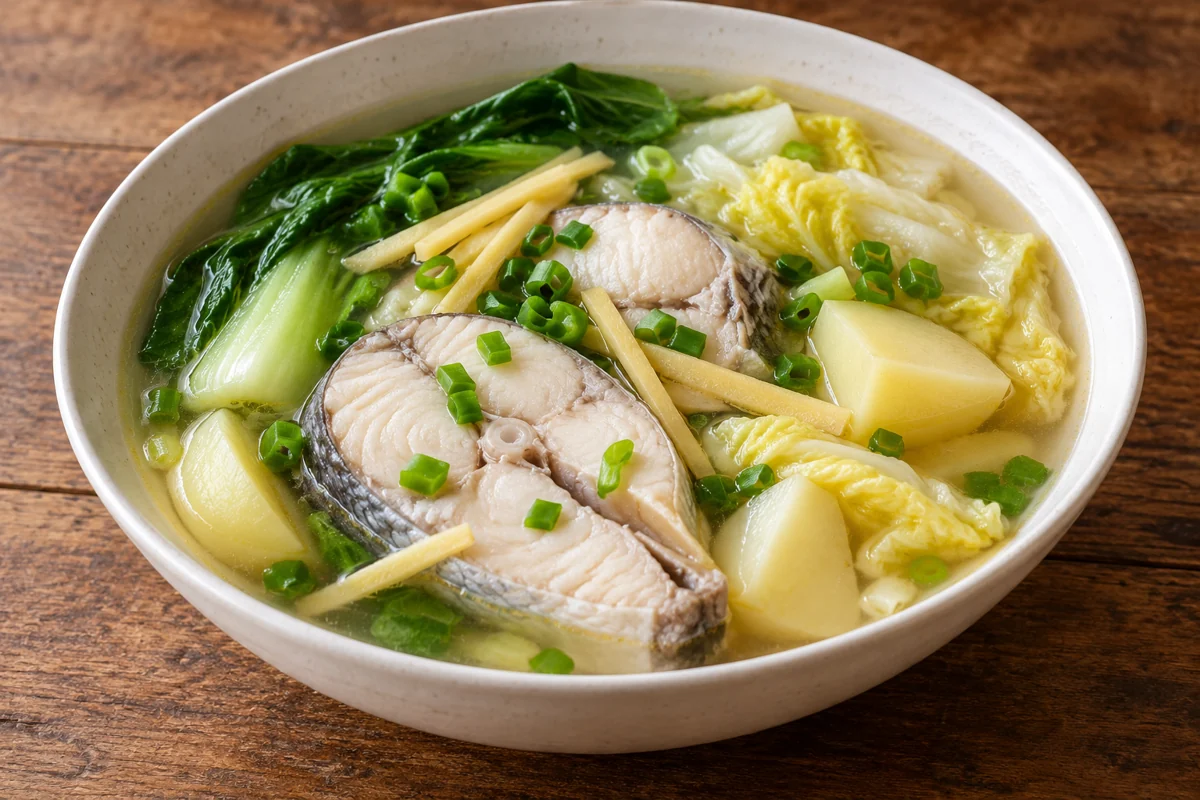
Pesang Isda
Fish, ginger and leafy vegetables in a light Filipino broth.
Ingredients
Measure and prepare everything before you begin cooking.
- 800 g cleaned firm white fish steaks, about 3 cm thick
- 1 tbsp neutral cooking oil
- 1 medium onion, thinly sliced
- 4 garlic cloves, finely chopped
- 40 g fresh ginger, cut into thin strips
- 1.2 litres water or unsalted fish stock
- 250 g potatoes, peeled and cut into 2 cm chunks
- 150 g napa cabbage, cut into broad strips
- 200 g bok choy, stalks and leaves separated
- 2 spring onions, cut into short lengths
- 1–2 tbsp fish sauce, added to taste
- ½ tsp whole black peppercorns
Instructions
- 1
Check the fish for loose scales and bones, then pat dry. Prepare the vegetables on a separate board. Keep the fish chilled while you start the broth; wash hands and utensils after handling it.
- 2
Heat the oil in a wide pot over medium heat. Cook the onion for 3 minutes, then add garlic and ginger and stir for 1 minute until fragrant without browning the garlic.
- 3
Pour in the water or unsalted stock. Add potatoes and peppercorns, bring to a boil, then lower to a gentle simmer for 10–12 minutes, until the potatoes are almost tender.
- 4
Lower the fish steaks carefully into the broth in a single layer. Simmer gently for roughly 8–12 minutes, depending on thickness. Avoid vigorous boiling and stirring, which can break the fish. The thickest flesh must reach 63°C and flake easily.
- 5
When the fish is nearly cooked, add cabbage and bok choy stalks. Simmer for 2–3 minutes, then add the leaves and spring onions for the final minute. Check that both fish and potatoes are fully cooked.
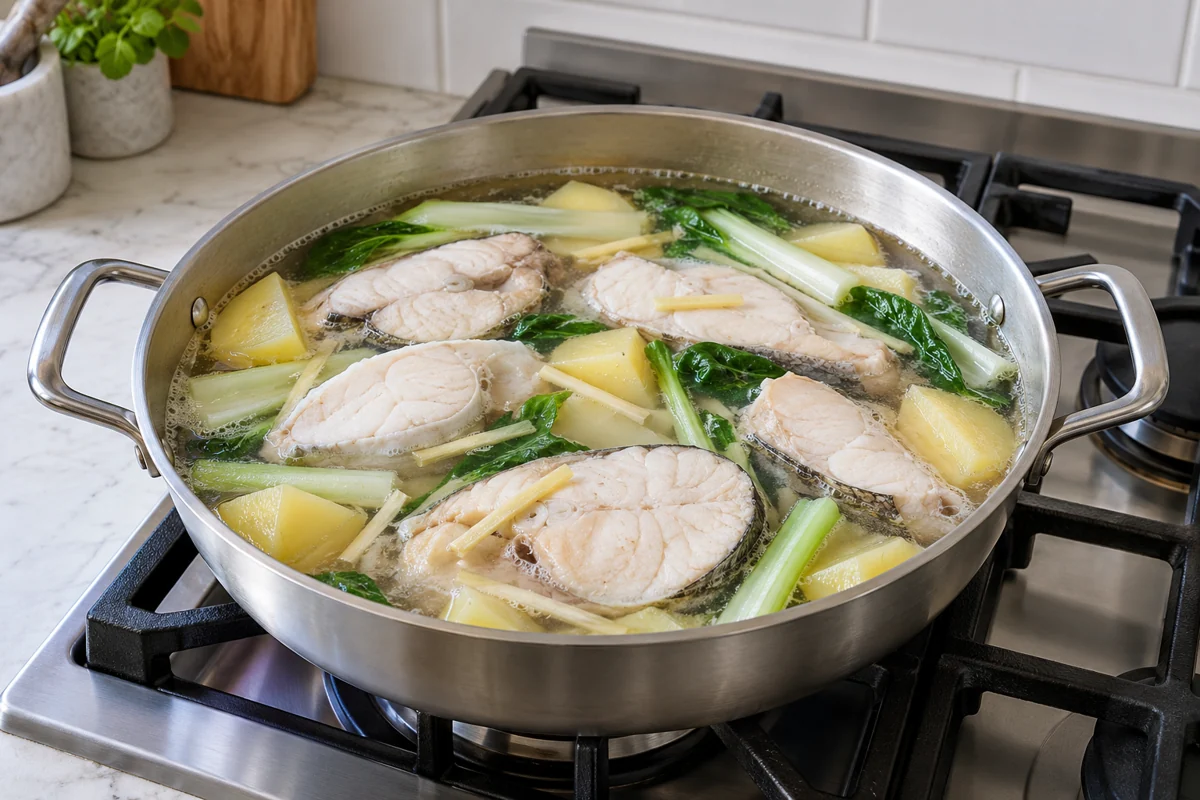
Cooking-stage illustration; follow the timings and doneness checks in the instructions. - 6
Season with 1 tablespoon fish sauce, taste the cooked broth and add more only if needed. Ladle gently into bowls and serve with rice. Remove bones carefully as you eat; boneless fillets are an easier option for children.
About Pesang Isda
Pesa is a comforting Filipino ginger-broth preparation often made with fish and leafy vegetables. This home version poaches the fish gently rather than frying it first, keeping the broth light and the method manageable. Fish choice and vegetable combinations vary by household.
Ingredient swaps wherever you cook
- Dalag or tilapia: firm snapper, cod, haddock or another locally available white fish can work. Choose sustainably sourced fish suited to poaching.
- Pechay: use bok choy; napa cabbage is also sold as Chinese cabbage or wombok.
- Fish steaks: use 650–700 g boneless fillets, shorten cooking time and still check the centre.
How to know it is ready
- Potato chunks should yield to a knife.
- Fish should reach 63°C in the thickest flesh and flake easily.
- Greens should be tender without collapsing into the broth.
Common mistakes and fixes
- Broken fish: use a quiet simmer and ladle gently rather than stirring.
- Weak broth: give the ginger and onion time to soften before adding water.
- Salty soup: begin with unsalted stock and add fish sauce at the end.
Family and regional variations
- For a fried-fish variation, lightly fry the fish separately before finishing it in the broth.
- Omit potatoes for a lighter bowl.
- Serve a separately prepared sautéed miso condiment alongside if that is your family preference.
Storage and reheating
Cool promptly and refrigerate within 2 hours. Use within 2 days and reheat gently until steaming hot throughout. Store leafy greens separately when practical.
What to serve with it
Serve with steamed rice and an optional small dish of fish sauce and calamansi. Check all portions for bones.
Pesang Isda FAQs
Is pesa the same as sinigang?
No. Pesa focuses on ginger and a mild savoury broth; sinigang is defined by its sour broth.
Must I fry the fish first?
No. This version gently poaches it; frying first is another household variation.
Cooking guidance: Follow current food-safety advice and the instructions for your equipment.