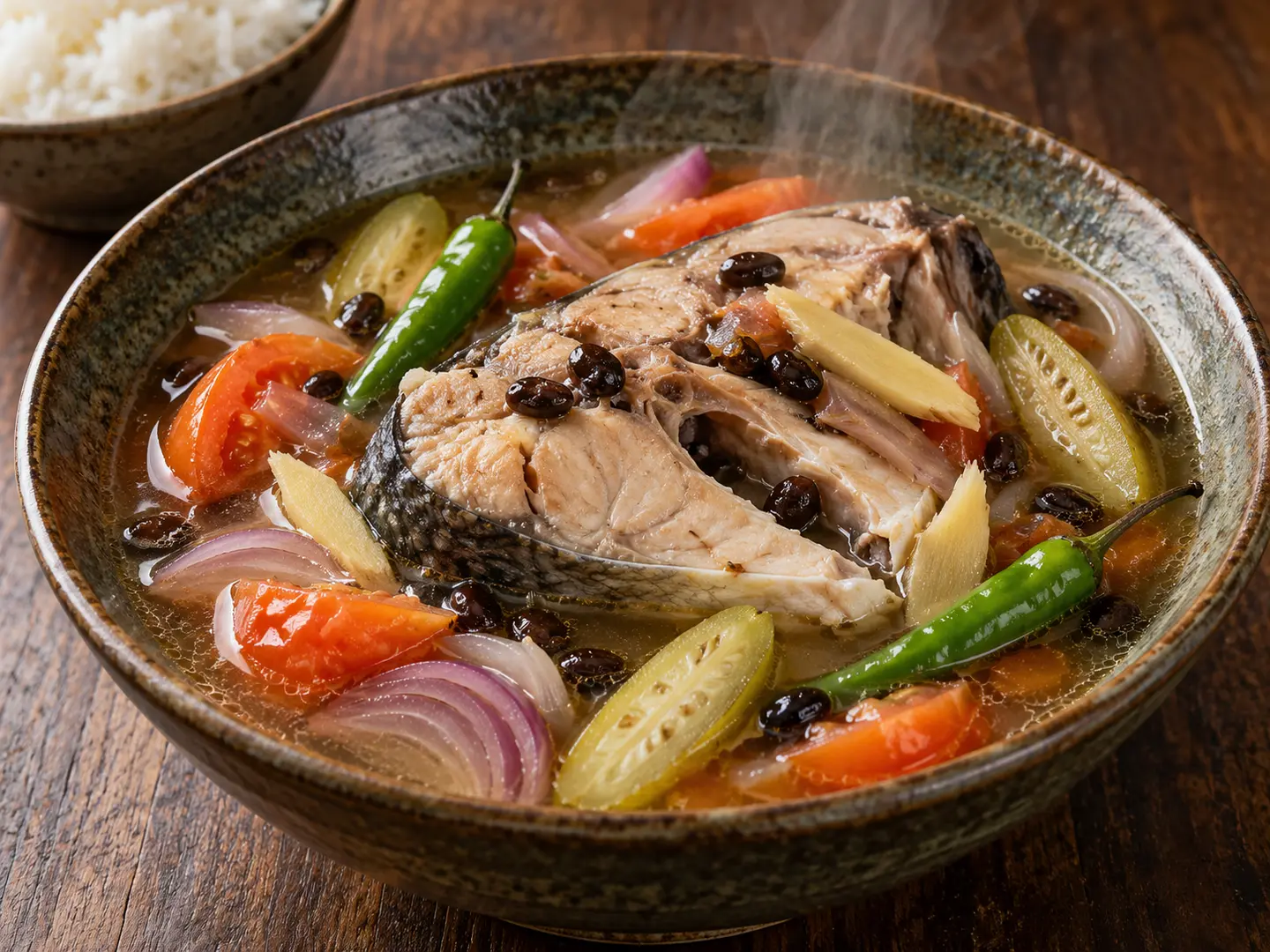
Linarang na Isda
Cebuano fish simmered gently in a sour-spicy tomato broth with ginger, tausi and kamias.
Ingredients
Measure and prepare everything before you begin cooking.
- 1 kg firm bone-in fish steaks or cleaned small whole fish, such as snapper, trevally or grouper
- 1 tbsp neutral cooking oil
- 1 medium red onion, thinly sliced
- 5 garlic cloves, minced
- 35 g fresh ginger, cut into thin matchsticks
- 4 ripe tomatoes, cut into wedges
- 2 tbsp salted fermented black beans (tausi), rinsed, drained and lightly crushed
- 150 g fresh or frozen kamias (bilimbi), halved, or 100 g firm green mango cut into wedges
- 1 litre water
- 2 long green chillies
- 1–2 tbsp fish sauce, to taste
- 3 spring onions, cut into 5 cm lengths
- 1 tbsp tamarind paste, optional and only if more sourness is needed
- Freshly ground black pepper, to taste
Instructions
- 1
Check the fish carefully for remaining scales and bones, then pat it dry. If using a whole fish, score the thickest part twice on each side. Keep chilled while preparing the broth. Rinse the tausi briefly to remove excess surface salt.
- 2
Heat the oil in a wide heavy pot over medium heat. Cook the onion for 3 minutes, then add the garlic and ginger and stir for 1 minute. Add the tomatoes and tausi and cook for 4–5 minutes, pressing some tomato wedges so they release their juices.
- 3
Add the kamias or green mango, water and whole green chillies. Bring to a boil, then reduce to a steady simmer for 12–15 minutes. The fruit should soften and the broth should taste savoury, sour and gently spicy.
- 4
Season with one tablespoon fish sauce. Taste before adding the optional tamarind because kamias and green mango vary greatly in sourness. Add tamarind a teaspoon at a time only if the broth still needs brightness.
- 5
Lower the fish carefully into the simmering broth in a single layer. Spoon some broth over the top, cover loosely and simmer gently for 7–10 minutes, depending on thickness. Avoid vigorous boiling, which can break the fish and cloud the broth.
- 6
Add the spring onions for the final minute. The fish is ready when the thickest flesh is opaque, flakes easily and reaches 63°C; lift one piece carefully to check near the bone. Taste the broth and add more fish sauce or pepper only if needed.
- 7
Ladle the fish and hot sour broth into deep bowls without breaking the portions. Serve immediately with steamed rice. Warn diners about bones, particularly when serving children or older guests.
About Linarang na Isda
Linarang, also called larang or nilarang, is a sour-spicy fish stew closely associated with Cebu and the wider Central Visayas. The Pasil-style clear-broth version uses tomatoes, ginger, chillies, fermented black beans and a sour fruit such as kamias. Coconut-milk versions also exist, so both traditions deserve to be acknowledged rather than treated as errors.
Ingredient swaps wherever you cook
- Fish: use firm bone-in snapper, trevally, grouper or blue cod portions. Bone-in fish gives the broth more character and holds together better.
- Kamias: frozen bilimbi from a Filipino grocer is ideal. Firm green mango or tamarind paste gives a practical sour alternative, but add it gradually.
- Tausi: use salted fermented black beans from a Filipino or Chinese grocer. Rinse them; ordinary canned black beans are not equivalent.
How to know it is ready
- The base should taste sour, savoury and gingery before the fish goes in.
- Keep the broth at a gentle simmer so the fish remains intact and the liquid stays clear.
- Fish is ready when opaque and easily flaked at the thickest part, with a centre temperature of 63°C.
Common mistakes and fixes
- Broken fish: use a wide pot, keep portions in one layer and avoid stirring once the fish is added.
- Over-salty broth: rinse the tausi and delay the final fish-sauce adjustment until the souring fruit has cooked.
- One-note sourness: balance with tomato, ginger and fermented black beans instead of adding more tamarind immediately.
Family and regional variations
- Add 200 ml coconut milk for a richer regional variation, simmering it gently before adding the fish.
- Use pork ribs or eel where culturally and legally appropriate, adjusting cooking time before adding delicate vegetables.
- Add extra whole chillies at the table for diners who want more heat.
Storage and reheating
Cool promptly and refrigerate for up to 2 days. Reheat once over low heat only until steaming so the fish does not disintegrate. Freezing is not recommended because cooked fish and sour fruit lose their texture.
What to serve with it
Serve in deep bowls with steamed rice. Spoon the broth around each fish portion rather than pouring directly over it, and remind diners that bone-in fish may contain fine bones.
Linarang na Isda FAQs
Is linarang the same as sinigang?
No. Both are sour, but linarang is identified by its Cebuano context and its combination of tomatoes, aromatics, chillies and often tausi.
Must linarang contain coconut milk?
No. Coconut-milk versions exist, while many Cebu City and Pasil versions use a clear sour broth.
What fish works best?
Firm bone-in fish that can withstand gentle simmering works best. Ask your fishmonger for a suitable local whole fish or steaks.
Cooking guidance: Follow current food-safety advice and the instructions for your equipment.