Laing
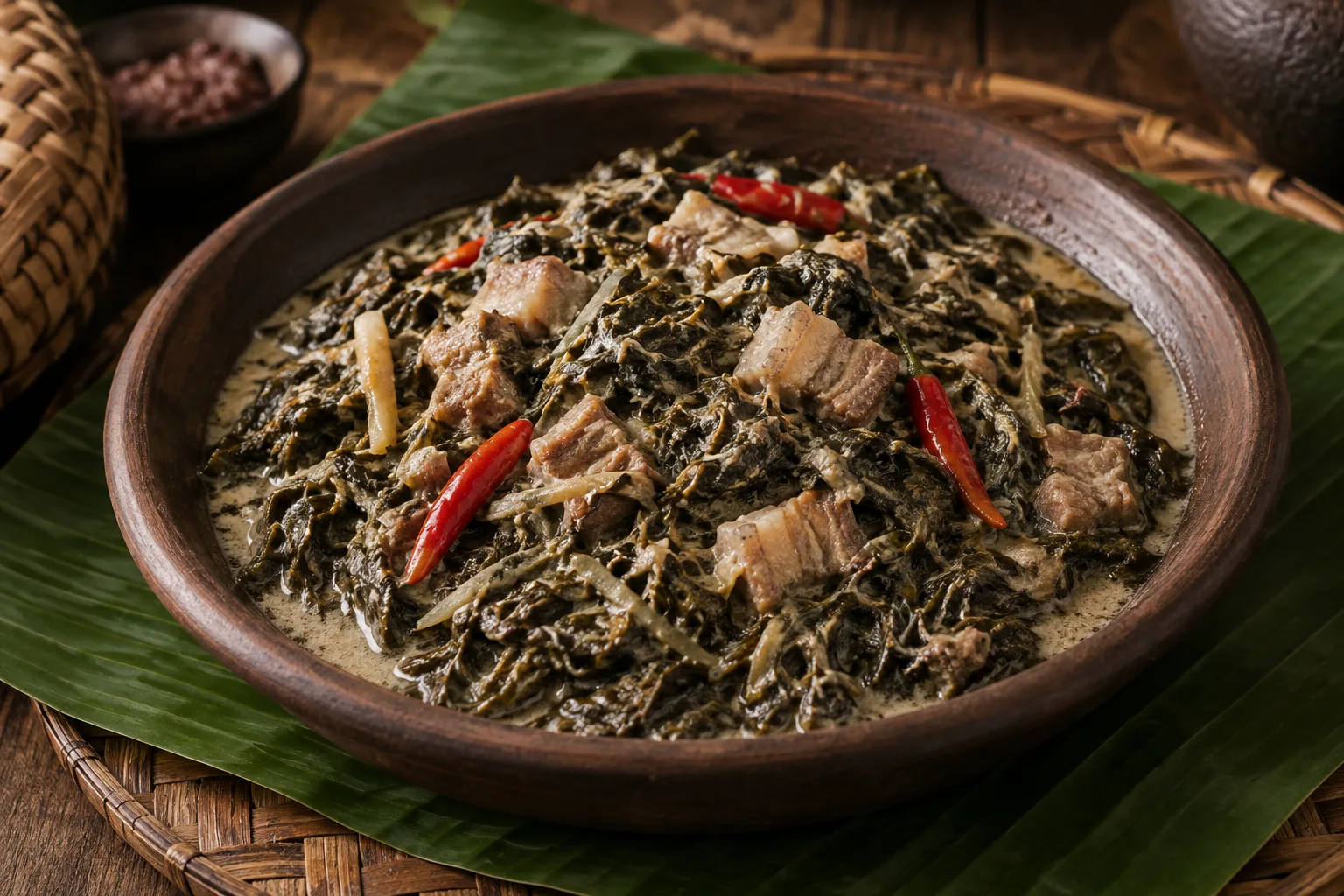
Taro leaves in coconut milk and chilli.
Ingredients
Measure and prepare everything before you begin cooking.
- 120 g dried taro leaves
- 800 ml coconut milk
- ginger
- lemongrass
- chillies
- shrimp paste
- 1–2 tbsp neutral cooking oil, as needed
- Fine salt, to taste (use less when the dish contains soy sauce, fish sauce or bagoong)
- Freshly ground black pepper, to taste
Instructions
- 1
Combine coconut milk, onion, garlic, ginger, lemongrass, shrimp paste and pork in a wide heavy pot. Bring to a gentle simmer over medium heat, then cook for 10 minutes so the pork begins to tenderise.
- 2
Spread the dried taro leaves over the coconut mixture. Press them down lightly but do not stir yet; disturbing dry taro too early can make the dish unpleasantly itchy.
- 3
Cover and simmer over low heat for 15 minutes. Once the leaves have softened, fold them gently into the liquid without crushing them.
- 4
Add the chillies and continue cooking uncovered over low heat for 30–40 minutes, stirring only occasionally, until the leaves are fully tender and the coconut milk is thick and glossy.
- 5
Taste before seasoning. Add fish sauce or salt only a little at a time because the shrimp paste is already salty. Add coconut cream and simmer for 5 minutes without a hard boil.
- 6
Remove the lemongrass. Rest for 5 minutes and serve with hot rice; offer extra sliced chilli separately.
About Laing
Laing is one of Bicol’s defining dishes: dried taro leaves slowly softened in coconut milk with aromatics, bagoong and chilli. Patience matters—the leaves must cook completely, while minimal early stirring helps avoid an itchy sensation.
Ingredient swaps wherever you cook
- Buy packaged dried taro leaves from a Filipino or Asian grocer; do not substitute raw garden leaves.
- Use canned unsweetened coconut milk and coconut cream.
- For a meat-free version, omit pork and check that the fermented seasoning suits your diet.
How to know it is ready
- Do not stir during the first 15 minutes after adding dried leaves.
- The leaves should be completely tender with no dry patches.
- The sauce should be thick and creamy, not watery.
Common mistakes and fixes
- Itchy mouthfeel: the taro may be undercooked; simmer longer without tasting repeatedly.
- Scorched coconut: use low heat and a heavy pot.
- Too salty: add coconut milk before adding any more seasoning.
Family and regional variations
- Add pork belly, dried fish or prawns.
- Make it mild with whole green chillies or fiery with sliced bird’s-eye chilli.
- Finish with extra coconut cream for a richer topping.
Storage and reheating
Refrigerate for up to 3 days or freeze for up to 1 month. Reheat slowly until steaming hot, stirring gently.
What to serve with it
Serve with hot rice and grilled fish or fried meat. The creamy, spicy sauce is intended to be eaten in small spoonfuls with rice.
Laing FAQs
Why use dried taro leaves?
They give laing its characteristic texture and are safer and more predictable than unidentified fresh leaves.
Why should I not stir immediately?
Letting the leaves soften thoroughly before stirring helps them cook evenly and reduces irritation.
Can I make mild laing?
Yes. Use whole long green chillies and omit the smaller hot chillies.
Cooking guidance: Follow current food-safety advice and the instructions for your equipment.