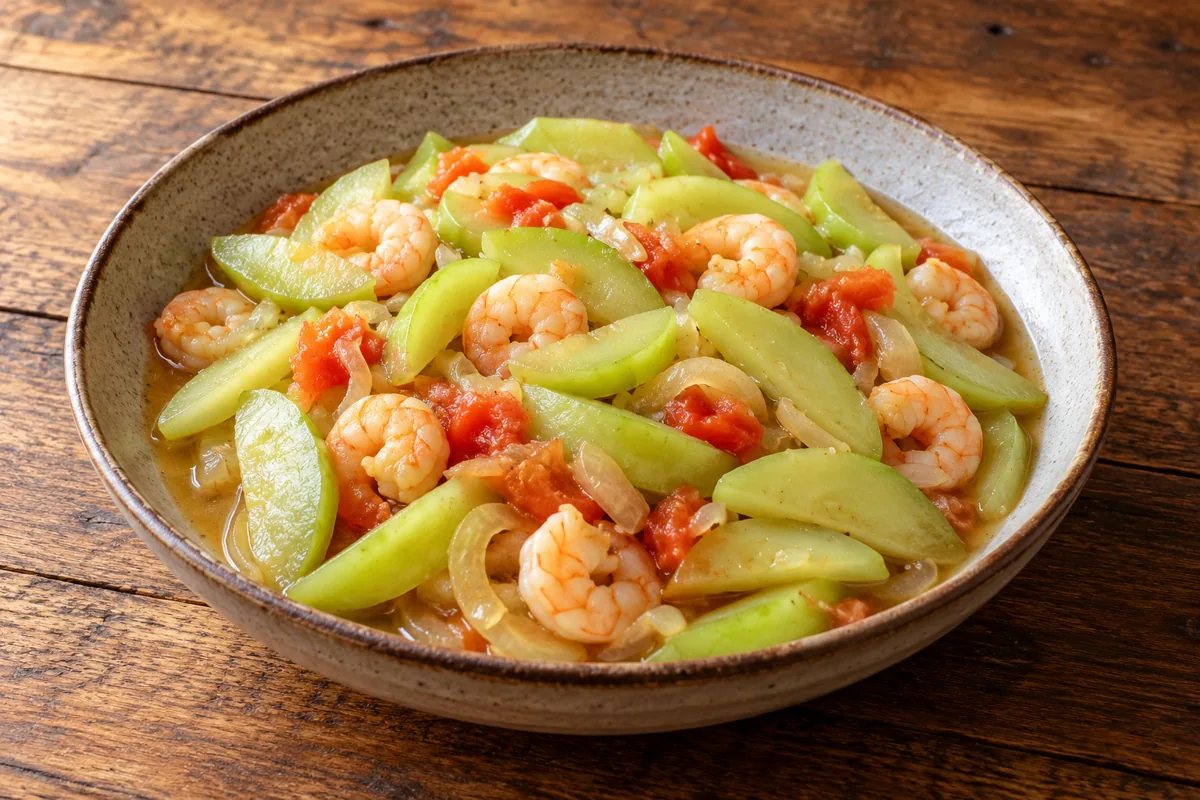
Ginisang Sayote with Shrimp
Tender-crisp chayote sautéed with shrimp, tomato and garlic in a light savoury sauce.
Ingredients
Measure and prepare everything before you begin cooking.
- 700 g sayote (chayote), about 3 medium
- 250 g raw peeled, deveined shrimp, thawed safely if frozen
- 1 tbsp neutral cooking oil
- 1 medium onion, sliced
- 3 garlic cloves, minced
- 200 g ripe tomatoes, chopped
- 150 ml water, plus extra if needed
- 1 tbsp oyster sauce
- ¼ tsp ground black pepper
- Fine salt, only if needed
Instructions
- 1
Peel the sayote, halve it and remove the central seed if firm. Cut into even 5 mm slices. Wearing clean food-safe gloves can help with the sticky sap. Pat the prepared shrimp dry and keep chilled until cooking.
- 2
Heat oil in a wide sauté pan over medium heat. Soften onion for 3 minutes, stir in garlic for 30 seconds, then cook tomatoes for 4–5 minutes until they release juice.
- 3
Add shrimp and cook, turning, for about 2–3 minutes until pink, opaque and cooked through. Remove to a clean plate immediately so they will not toughen while the sayote cooks.
- 4
Add sayote, water, oyster sauce and pepper to the pan. Stir well, cover and simmer for 6–9 minutes, stirring once or twice, until tender with a little bite. Add a tablespoon of water if the pan dries before the slices are ready.
- 5
Return cooked shrimp and any juices to the pan. Toss gently for about 1 minute until hot throughout. Taste and add salt only if needed, because oyster sauce already seasons the dish.
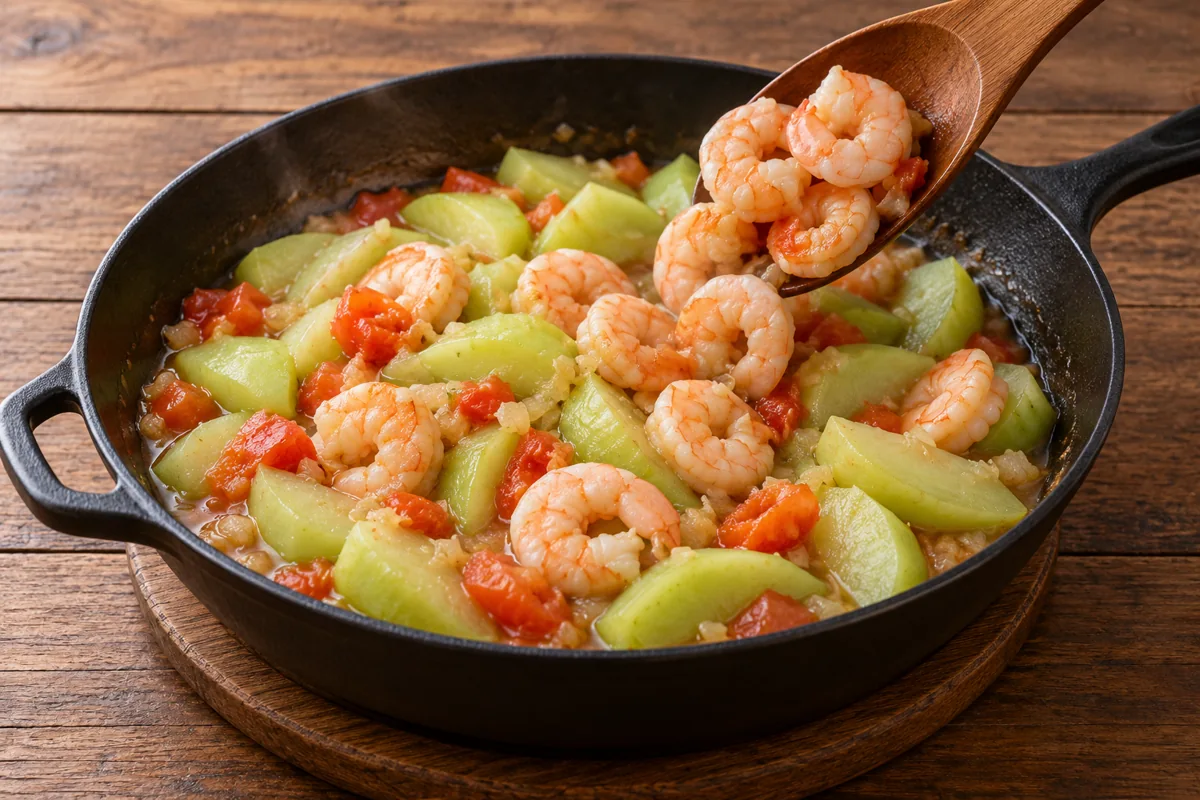
Cooking-stage illustration; warm the shrimp briefly to keep them tender. - 6
Serve promptly with rice. Aim for glossy vegetables in a small amount of sauce rather than a watery soup. Reduce uncovered briefly if needed, removing shrimp first if they would otherwise overcook.
About Ginisang Sayote with Shrimp
Ginisang sayote is an everyday vegetable dish built on onion, garlic and tomato. A modest amount of shrimp adds flavour while the chayote stays at the centre of the meal. Cooking the shrimp separately during the sauté prevents a long simmer from making them tough.
Ingredient swaps wherever you cook
- Sayote is also called chayote, choko or mirliton. Look for firm fruit in local produce markets.
- Courgette or zucchini can replace chayote, but cooks much faster and gives a softer result; reduce water and check after 3–4 minutes.
- Oyster sauce: choose a mushroom-based alternative for a shellfish-free sauce, and omit the shrimp for a vegetable version. Check all labels for allergens.
- Shrimp may be sold as prawns; peel and devein before measuring.
How to know it is ready
- Sayote slices are tender with slight resistance when bitten.
- Shrimp are opaque and hot throughout.
- A small amount of glossy sauce coats the vegetables.
Common mistakes and fixes
- Tough shrimp: remove them while the vegetables simmer.
- Uneven cooking: slice sayote to similar thickness.
- Too much liquid: start with the measured water and add only if needed.
Family and regional variations
- Add thin carrot slices with the sayote.
- Make a vegetable version with mushrooms and mushroom-based sauce.
- Add sliced chilli at the end for gentle heat.
Storage and reheating
Refrigerate leftovers within 2 hours and use within 2 days. Reheat until steaming hot throughout, ideally 75°C. Freezing is possible but the sayote becomes noticeably softer; this dish is best fresh.
What to serve with it
Serves 4–6 alongside rice and another dish, or about 4 as a light main meal. Contains shellfish; oyster sauce may also contain wheat and soy.
Ginisang Sayote with Shrimp FAQs
Do I have to remove the chayote seed?
A tender seed is edible, but remove a firm seed for a consistent sliced texture.
Can I use precooked shrimp?
Yes. Skip the initial shrimp cooking step and add them near the end, heating thoroughly while following the product’s storage directions.
Cooking guidance: Follow current food-safety advice and the instructions for your equipment.