Insarabasab
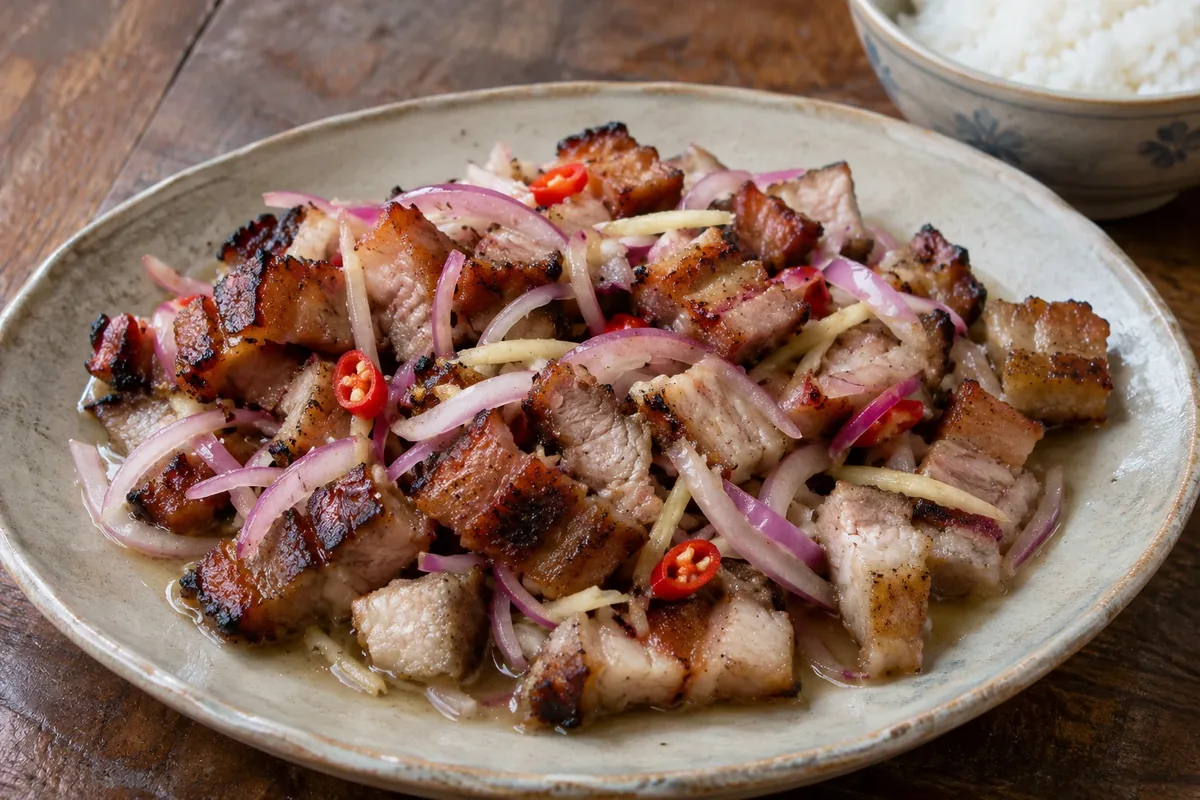
Smoky grilled pork tossed with red onion, ginger, chilli and cane vinegar in an Ilocano-style home recipe.
Total includes 5 minutes of resting. Prepare the dressing while the pork rests; grilling time varies with thickness and equipment.
Ingredients
Measure and prepare everything before you begin cooking.
- 700 g boneless skinless pork belly, cut into 1.5 cm-thick slabs
- 1 tsp fine salt, divided, plus more to taste
- ½ tsp ground black pepper
- 100 g red onion, sliced very thinly
- 15 g fresh ginger, peeled and cut into fine short slivers
- 60 ml cane vinegar or sukang Iloko
- 1 small red chilli, finely sliced, optional
- 1 tsp neutral oil, for the grill pan
Instructions
- 1
Pat the pork dry. Rub with ¾ teaspoon salt and the black pepper. Set aside while you slice the onion, ginger and optional chilli. Use a separate clean board and knife for the vegetables.
- 2
Heat a barbecue with a cooler zone, or an oiled heavy grill pan, over medium-high heat. Grill the pork for about 18–25 minutes total, turning every few minutes. Move it away from flare-ups or lower the heat if the outside darkens too quickly. Check the thickest part reaches 75°C for 30 seconds; allow longer if needed.
- 3
Transfer the cooked pork to a clean board and rest for 5 minutes. While it rests, stir together the vinegar, onion, ginger, optional chilli and remaining ¼ teaspoon salt in a serving bowl.
- 4
Chop the pork into roughly 1 cm pieces, keeping the browned edges. Add it to the vinegar mixture and toss thoroughly. Taste with a clean spoon and add a little salt only if needed.
- 5
Serve straight away while the pork is still warm, with steamed rice. The dressing should lightly coat the meat rather than bury it in a deep pool of vinegar.
About Insarabasab
Insarabasab is an Ilocano preparation of grilled pork dressed with vinegar and aromatics. Households vary the cut, chilli and sourness. Our version uses supermarket pork belly, red onion and fresh ginger, with a grill-pan option for cooks abroad.
Ingredient swaps wherever you cook
- Sukang Iloko: use plain cane vinegar. Apple cider vinegar is a practical alternative with a fruitier flavour; start with 45 ml and add the remaining 15 ml to taste.
- No barbecue: use a heavy grill pan in a well-ventilated kitchen. Cook in batches so the pork browns instead of steams; the smoky flavour will be milder.
- Pork shoulder steaks can replace belly if sliced to the same thickness. They are leaner and may need a different cooking time, so use the temperature check.
How to know it is ready
- The pork has browned edges and reaches 75°C for 30 seconds in the thickest part before chopping.
- The onion and ginger stay crisp, and the finished meat tastes smoky, tangy and lightly salty.
Common mistakes and fixes
- Dark outside but undercooked centre: lower the heat and continue cooking; colour alone does not show doneness.
- A pan crowded with slabs traps steam. Cook in batches, keeping cooked pork on a clean plate.
Family and regional variations
- Add chopped tomato just before serving for a juicy household variation.
- Leave out the chilli for a mild family plate.
Storage and reheating
Refrigerate leftovers in a shallow covered container within 2 hours. Eat within 2 days. Reheat the pork only once until piping hot throughout; the onion will soften. For better make-ahead texture, store grilled pork and dressing separately.
What to serve with it
Serve as ulam with warm rice and a simple cucumber or tomato side.
Insarabasab FAQs
Does the vinegar cook the pork?
No. Grill the pork fully before adding the vinegar dressing. Vinegar supplies flavour and does not replace cooking.
Is this the same as dinakdakan?
They share grilled-pork flavours, but this version uses a light vinegar dressing and has no creamy component.
Cooking guidance: Follow current food-safety advice and the instructions for your equipment.