Humba Bisaya
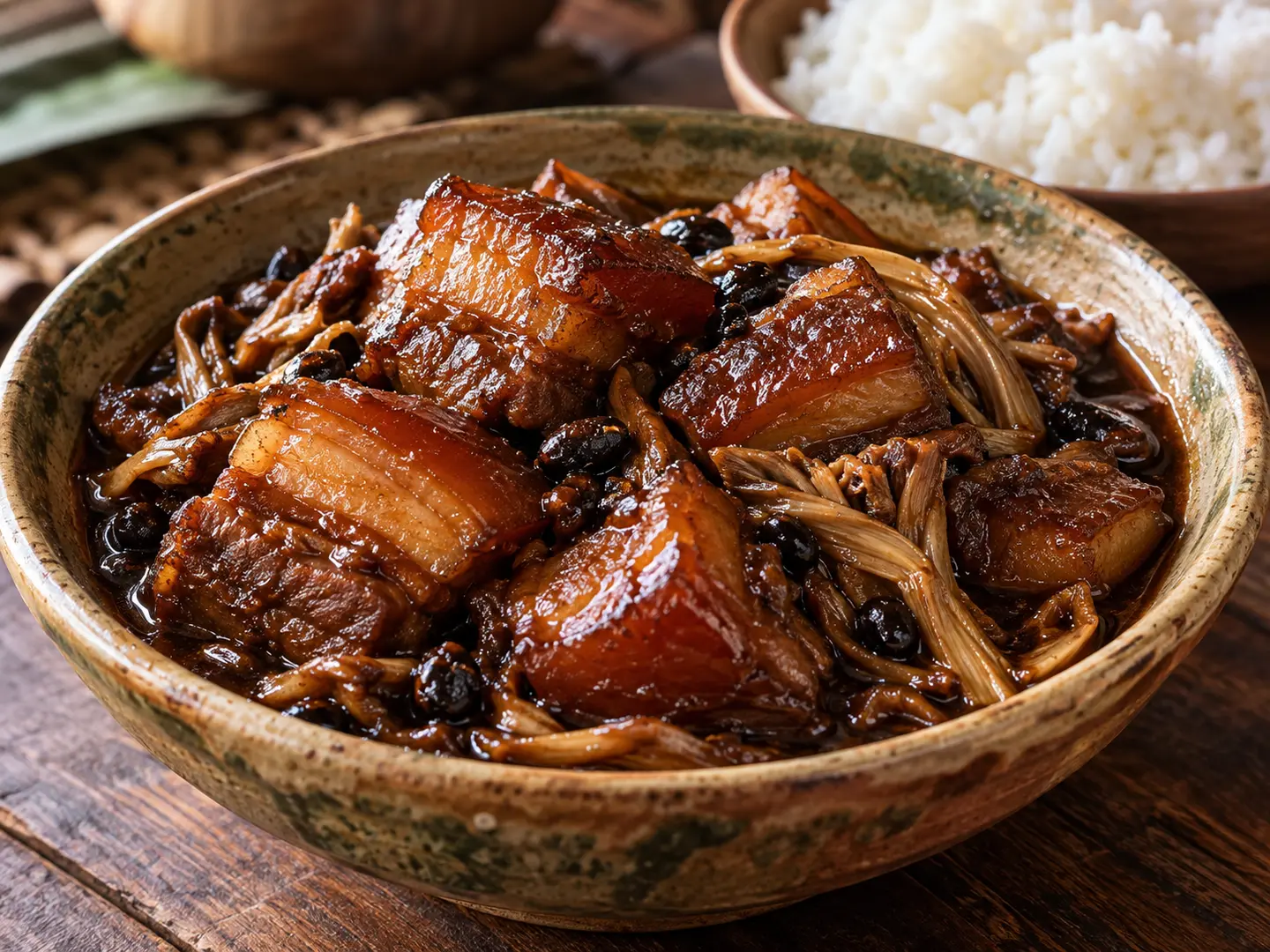
Cebuano pork belly slowly braised with vinegar, muscovado, tausi and banana blossoms.
Ingredients
Measure and prepare everything before you begin cooking.
- 1.2 kg skin-on pork belly, cut into 4 cm pieces
- 1 tbsp neutral cooking oil
- 1 medium onion, finely sliced
- 8 garlic cloves, crushed
- 100 ml Filipino soy sauce
- 80 ml cane vinegar
- 300 ml unsweetened pineapple juice
- 300 ml water, plus more as needed
- 50 g dark muscovado or soft brown sugar
- 3 tbsp salted fermented black beans (tausi), rinsed and drained
- 25 g dried banana blossoms, soaked for 20 minutes and drained
- 2 bay leaves
- 1 tsp whole black peppercorns
- 2 whole star anise
- 250 g pineapple chunks in juice, drained (optional)
- Fine salt, to taste (use less when the dish contains soy sauce, fish sauce or bagoong)
Instructions
- 1
Prepare everything before cooking. Rinse the tausi briefly so it contributes savoury depth without overwhelming salt. Cover the dried banana blossoms with warm water for 20 minutes, drain and squeeze gently. Pat the pork belly dry.
- 2
Heat the oil in a wide heavy pot over medium-high heat. Brown the pork in two or three batches, turning until several sides are golden and some fat has rendered. Transfer each batch to a plate; do not crowd the pot.
- 3
Lower the heat to medium. Pour off excess fat, leaving about two tablespoons. Cook the onion for 3 minutes, then add the garlic for 30 seconds. Return the pork and any resting juices.
- 4
Add the soy sauce, pineapple juice, water, sugar, tausi, bay leaves, peppercorns and star anise. Pour in the vinegar last. Bring to a boil and leave it unstirred for 2 minutes to mellow the raw vinegar aroma, then stir once.
- 5
Lower to a very gentle simmer, cover loosely and cook for 60–75 minutes, turning the pork occasionally. Add a little hot water if the pieces are no longer partly submerged. The pork should become fork-tender while still holding its shape.
- 6
Add the drained banana blossoms and optional pineapple chunks. Simmer uncovered for 15–20 minutes, stirring carefully, until the sauce is dark, glossy and coats the pork. Skim excess surface fat if desired.
- 7
Taste before adding any salt because soy sauce and tausi are already salty. Balance with a splash of vinegar for brightness or a small pinch of sugar only if needed. Remove the bay leaves and star anise, rest for 5 minutes and serve with steamed rice.
About Humba Bisaya
Humba is a sweet-savoury pork braise strongly associated with Cebu and the wider Visayas. Ronda, Cebu even celebrates the dish through its Humba Festival. Modern household versions vary, but slow-cooked pork, vinegar, sugar and fermented black beans give Humba Bisaya its distinctive depth and set it apart from an ordinary sweet adobo.
Ingredient swaps wherever you cook
- Pork belly: use boneless pork shoulder for a leaner result; allow extra simmering time and add a tablespoon of oil for browning.
- Tausi: look for salted fermented black beans at a Filipino or Chinese grocer. Rinse briefly, but do not replace them with canned plain black beans.
- Dried banana blossoms: Asian grocers may sell them as dried banana flowers. If unavailable, omit them rather than using an unrelated vegetable.
- Cane vinegar: use coconut vinegar or unsweetened apple-cider vinegar. Dark muscovado may be replaced with soft brown sugar.
How to know it is ready
- The pork should be evenly browned before braising; this adds depth without relying on extra soy sauce.
- Braise at a quiet simmer. The skin and fat should become yielding while each piece still holds together.
- The sauce is ready when glossy and thick enough to cling to the pork, with a balanced sweet, sour and savoury taste.
Common mistakes and fixes
- Too salty: rinse the tausi, use low-salt soy sauce if necessary and wait until the sauce has reduced before adjusting seasoning.
- Burnt sugar: keep the final reduction at medium-low heat and stir more often once the sauce turns syrupy.
- Tough pork: add hot water, cover and continue simmering gently; do not solve toughness by boiling harder.
Family and regional variations
- Some Cebuano versions include pineapple juice and chunks; others rely on sugar and vinegar without fruit.
- Add peeled hard-boiled eggs during the final 10 minutes so they absorb the sauce.
- For a version closer to older Cebuano preparations, research and test a soy-free braise using sugarcane, vinegar and tausi before presenting it as traditional.
Storage and reheating
Cool promptly and refrigerate in a covered container for up to 3 days, or freeze for up to 2 months. Reheat gently with a splash of water until the pork and sauce are steaming hot throughout.
What to serve with it
Serve with plenty of steamed rice and a simple cucumber, tomato or pickled-papaya side to balance the rich sauce. Humba often tastes even deeper after resting overnight.
Humba Bisaya FAQs
Is humba just sweet pork adobo?
They share vinegar and soy in many modern versions, but humba is usually sweeter, slow-braised and distinguished by ingredients such as tausi and banana blossoms.
Do I have to use pork belly?
Pork belly gives the characteristic soft skin and rich sauce, but pork shoulder is a practical leaner alternative.
Can I omit the pineapple?
Yes. Pineapple is a popular household variation rather than a universal requirement; the recipe still works without the optional chunks.
Cooking guidance: Follow current food-safety advice and the instructions for your equipment.