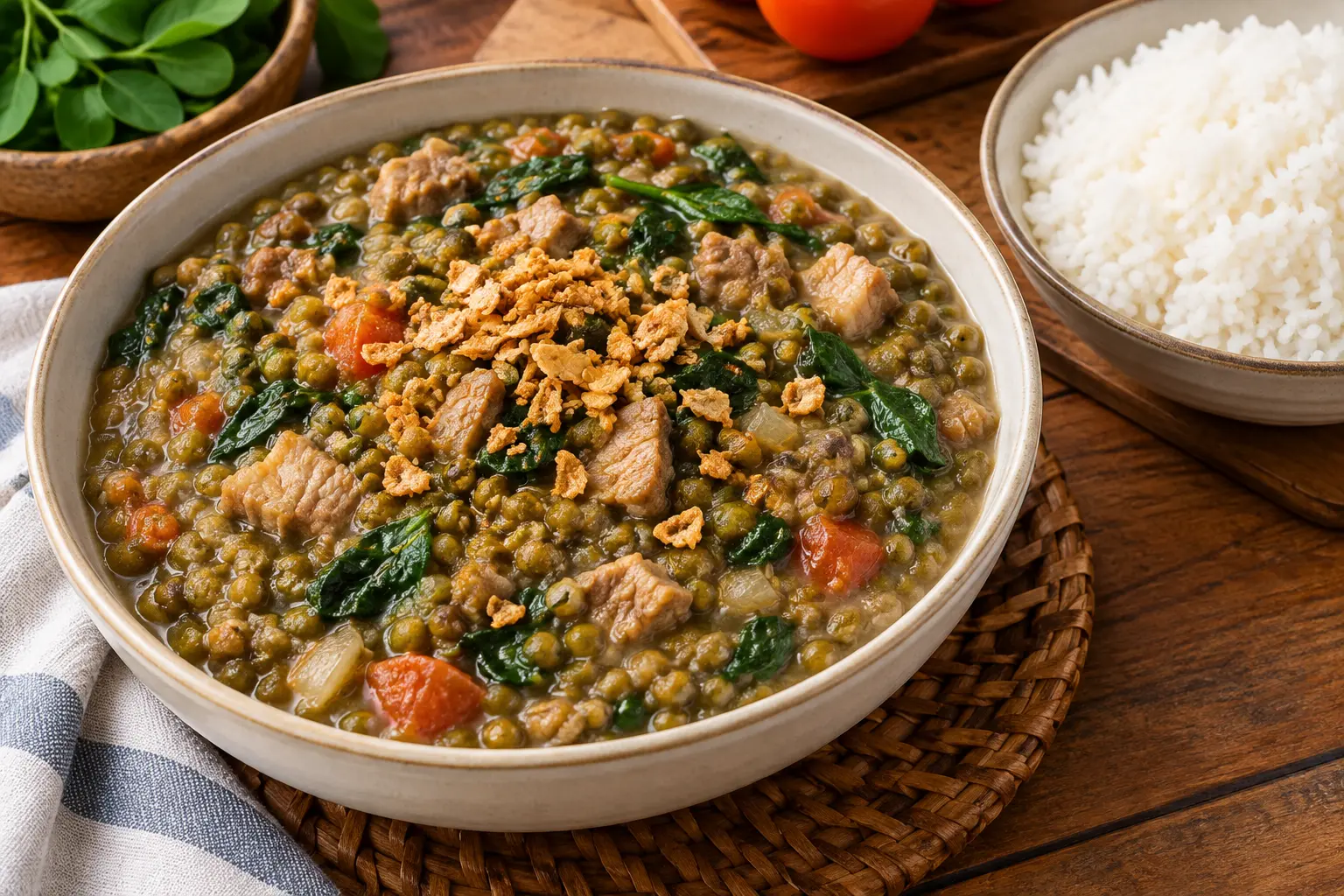
Ginisang Munggo
Comforting mung bean stew with pork, tomatoes and leafy greens.
Ingredients
Measure and prepare everything before you begin cooking.

- 250 g dried mung beans, rinsed
- 300 g pork shoulder or belly, cut into small pieces
- 1 tbsp neutral cooking oil
- 1 onion, finely chopped
- 4 garlic cloves, minced
- 2 ripe tomatoes, chopped
- 6 cups water or unsalted stock, plus more as needed
- 1–2 tbsp fish sauce, to taste
- 3 cups malunggay leaves or baby spinach
- Freshly ground black pepper, to taste
- Crushed chicharon and spring onions, to serve (optional)
Instructions
- 1
Put the mung beans in a saucepan with 4 cups of the water. Bring to a boil, skim any foam, then simmer partly covered for 35–45 minutes until the beans are soft and beginning to split.
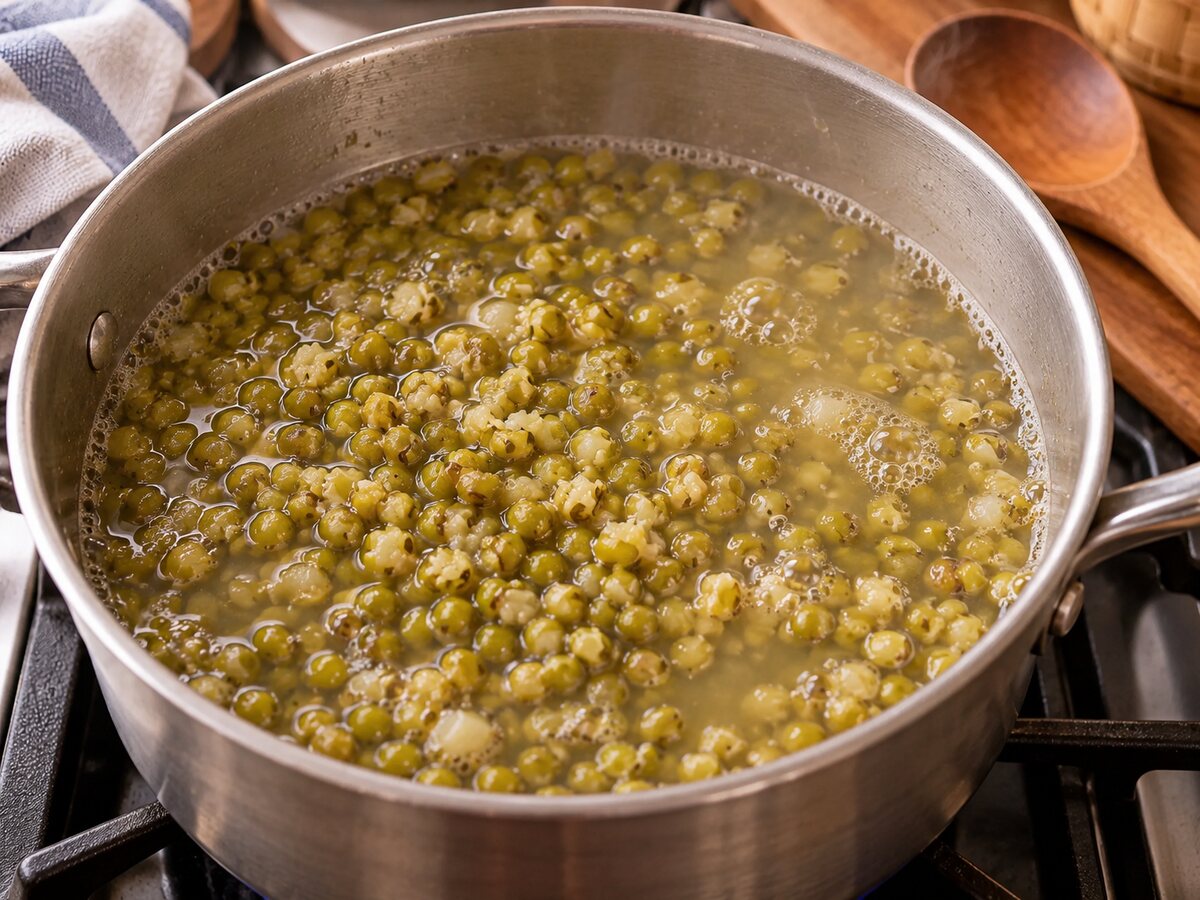
Simmer the beans gently until tender and beginning to split. - 2
Meanwhile, heat the oil in a heavy pot over medium heat. Brown the pork for 6–8 minutes, stirring occasionally, then transfer it to a plate.
- 3
In the same pot, soften the onion for 3 minutes. Add the garlic and tomatoes and cook for 5 minutes, crushing the tomatoes into a thick base.

Build a deeply savoury tomato, garlic and onion base. - 4
Return the pork and add the cooked mung beans with their liquid plus the remaining water or stock. Simmer gently for 15–20 minutes until the pork is tender, adding hot water if the stew becomes too thick.
- 5
Season with fish sauce and black pepper. Fold in the malunggay or spinach and cook just until wilted.

Fold in the greens at the end so they stay fresh and vibrant. - 6
Rest for 5 minutes. Serve with rice and top individual bowls with chicharon and spring onions if using.
About Ginisang Munggo
Ginisang munggo is a practical Filipino comfort dish built from humble mung beans, a tomato-and-garlic base and whatever leafy greens are available. Many families serve it on Fridays, sometimes with fried fish, pork or crisp chicharon.
Ingredient swaps wherever you cook
- Baby spinach is an easy substitute when malunggay leaves are unavailable.
- Pork shoulder is leaner than belly; smoked fish or prawns can replace pork.
- Canned cooked mung beans shorten the process, though their texture is softer.
How to know it is ready
- The beans are ready when soft and beginning to split.
- Keep enough liquid for a spoonable stew because it thickens while resting.
- Add delicate greens only at the end so they stay fresh-tasting.
Common mistakes and fixes
- Hard beans: older beans need more time and water; salt after they soften.
- Scorched base: stir more often as the munggo thickens.
- Over-salty stew: season near the end because pork and toppings may already be salty.
Family and regional variations
- Serve with fried galunggong or another whole fish instead of pork.
- Make it meat-free with mushrooms and a vegetarian savoury seasoning.
- Add cubes of squash for sweetness and colour.
Storage and reheating
Cool and refrigerate within 2 hours for up to 3 days, or freeze for up to 2 months. Reheat until steaming, loosening with water or stock.
What to serve with it
Ladle over rice and add chicharon only at the table so it stays crisp. A squeeze of calamansi or lemon brightens the earthy beans.
Ginisang Munggo FAQs
Do mung beans need soaking?
No. Soaking can shorten cooking slightly, but rinsed mung beans will soften without it.
Why did my stew become very thick?
Cooked mung beans keep absorbing liquid. Stir in hot water or stock until spoonable.
Can I use spinach instead of malunggay?
Yes. Fold baby spinach through just before serving.
Cooking guidance: Follow current food-safety advice and the instructions for your equipment.