Calamares
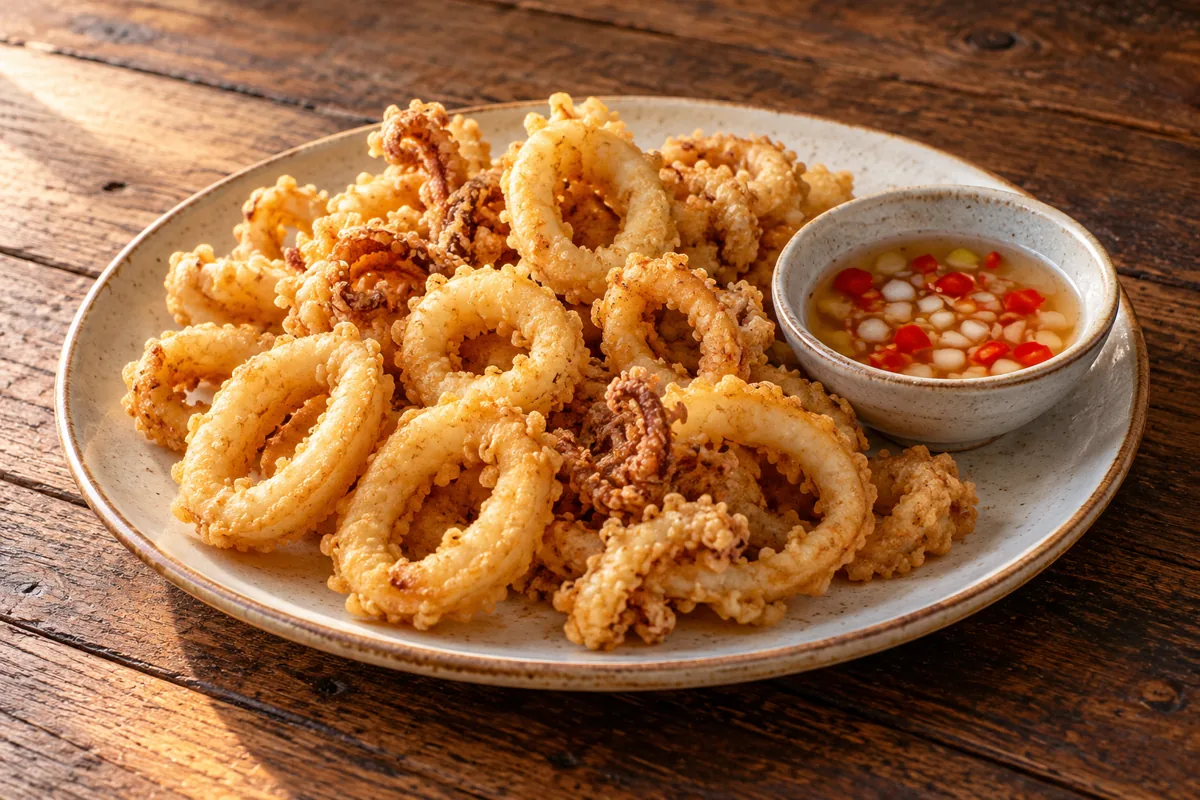
Crisp flour-coated squid rings with a Filipino spiced-vinegar dip.
Ingredients
Measure and prepare everything before you begin cooking.
- 500 g cleaned squid tubes, sliced into 1 cm rings, plus tentacles if desired
- 90 g plain all-purpose flour
- 40 g cornflour (cornstarch)
- ½ tsp fine salt
- ¼ tsp ground black pepper
- ½ tsp garlic powder
- Neutral cooking oil for a 4 cm frying depth
- 80 ml cane vinegar or unsweetened rice vinegar for dip
- 40 ml water for dip
- ½ small red onion, finely diced
- 1 small chilli, sliced, optional
- 1 tsp sugar
- ¼ tsp fine salt for dip
Instructions
- 1
Thaw frozen squid in the refrigerator if needed. Drain and pat it thoroughly dry, keeping it cold while making the dip. Mix vinegar, water, onion, optional chilli, sugar and the dip salt in a clean bowl.
- 2
Combine flour, cornflour, ½ teaspoon salt, pepper and garlic powder in a shallow dish. Place a wire rack over a tray for draining. This street-style version uses a light flour coating, without egg or breadcrumbs.
- 3
Heat the oil in a deep heavy pan to about 180°C, leaving the pan less than half full. Keep water away from the oil. Toss only one small batch of squid in the flour mixture, press lightly and shake off loose flour.
- 4
Lower the coated rings carefully into the oil. Fry for about 2–3 minutes, turning once, until the coating is pale golden and the squid is opaque and cooked through. Use 63°C as a thermometer check where practical; thickness affects time.
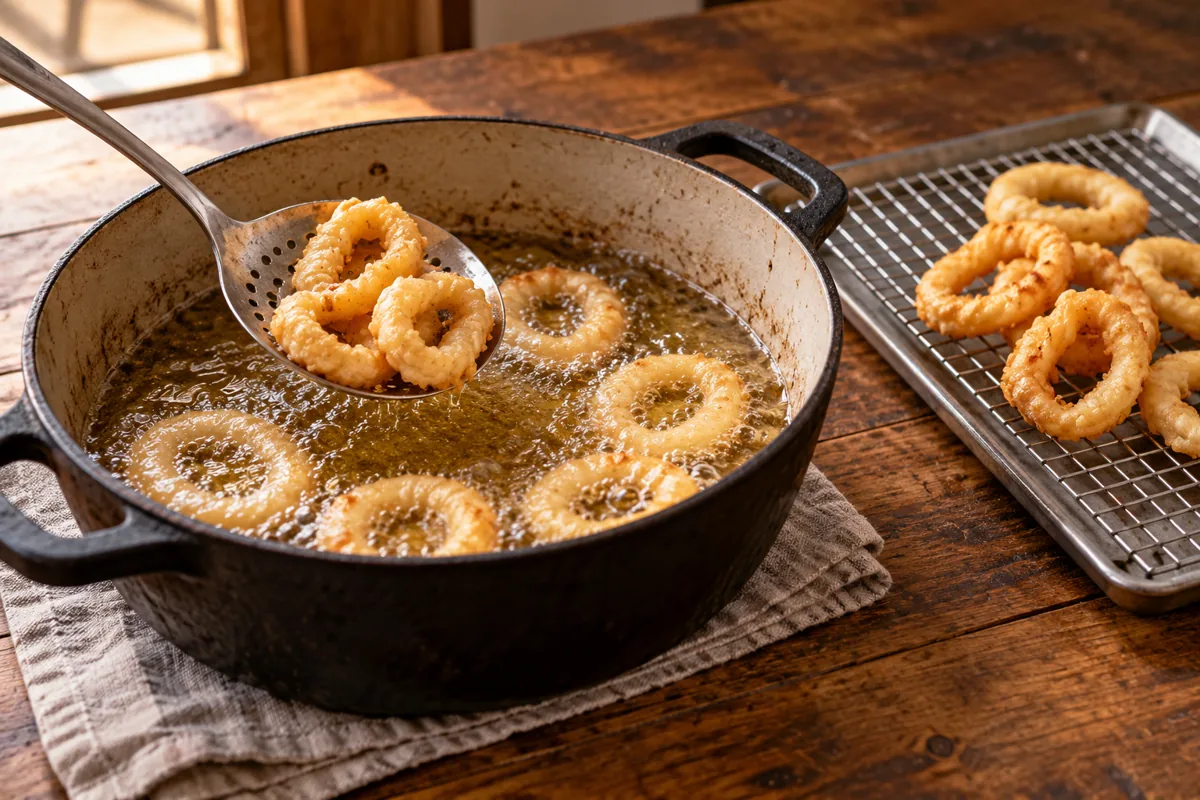
Cooking-stage illustration; coating colour alone does not establish doneness. - 5
Lift onto the rack immediately. Let the oil return to temperature before coating and frying the next batch. Avoid extending frying just to get a dark coating, as squid quickly becomes tough.
- 6
Serve promptly with individual bowls of vinegar dip. The outside should be crisp and the squid tender rather than rubbery. Offer rice or another snack alongside; do not pour dip over the entire plate before serving.
About Calamares
Calamares brings squid rings to the merienda table with a light crisp coating and a sharp dipping sauce. This flour-and-cornflour home version keeps the coating simple and offers spiced vinegar separately so each serving stays crisp.
Ingredient swaps wherever you cook
- Frozen squid rings are convenient: thaw in the refrigerator and drain well.
- Cornflour and cornstarch are different regional names for the same starch here.
- Use unsweetened rice vinegar if Filipino cane vinegar is unavailable; calamansi or lemon can be offered alongside.
How to know it is ready
- Squid flesh is opaque and cooked through.
- Coating is light golden and crisp.
- Each batch sizzles immediately rather than soaking in lukewarm oil.
Common mistakes and fixes
- Rubbery squid: avoid prolonged frying.
- Bare spots: dry rings well and coat immediately before frying.
- Greasy coating: keep batches small and restore oil temperature.
Family and regional variations
- Add a pinch of paprika to the flour for colour.
- Make the vinegar dip mild and offer chilli separately.
- Include cleaned tentacles with the rings, adjusting frying time.
Storage and reheating
Best immediately after cooking. Refrigerate leftovers within 2 hours and use within 2 days. Reheat until steaming hot throughout; the coating will lose some crispness. Keep unused dip chilled and discard used dipping sauce.
What to serve with it
Makes 4–6 snack portions. Contains squid and wheat; check seasonings for other allergens.
Calamares FAQs
Does this recipe need egg?
No. Dry the squid and coat it directly in the flour mixture. Other calamares styles use egg and breadcrumbs, but this one does not.
Can I prepare the coating ahead?
Yes, mix the dry coating ahead. Coat the squid in small batches just before frying to avoid a wet, gummy layer.
Cooking guidance: Follow current food-safety advice and the instructions for your equipment.