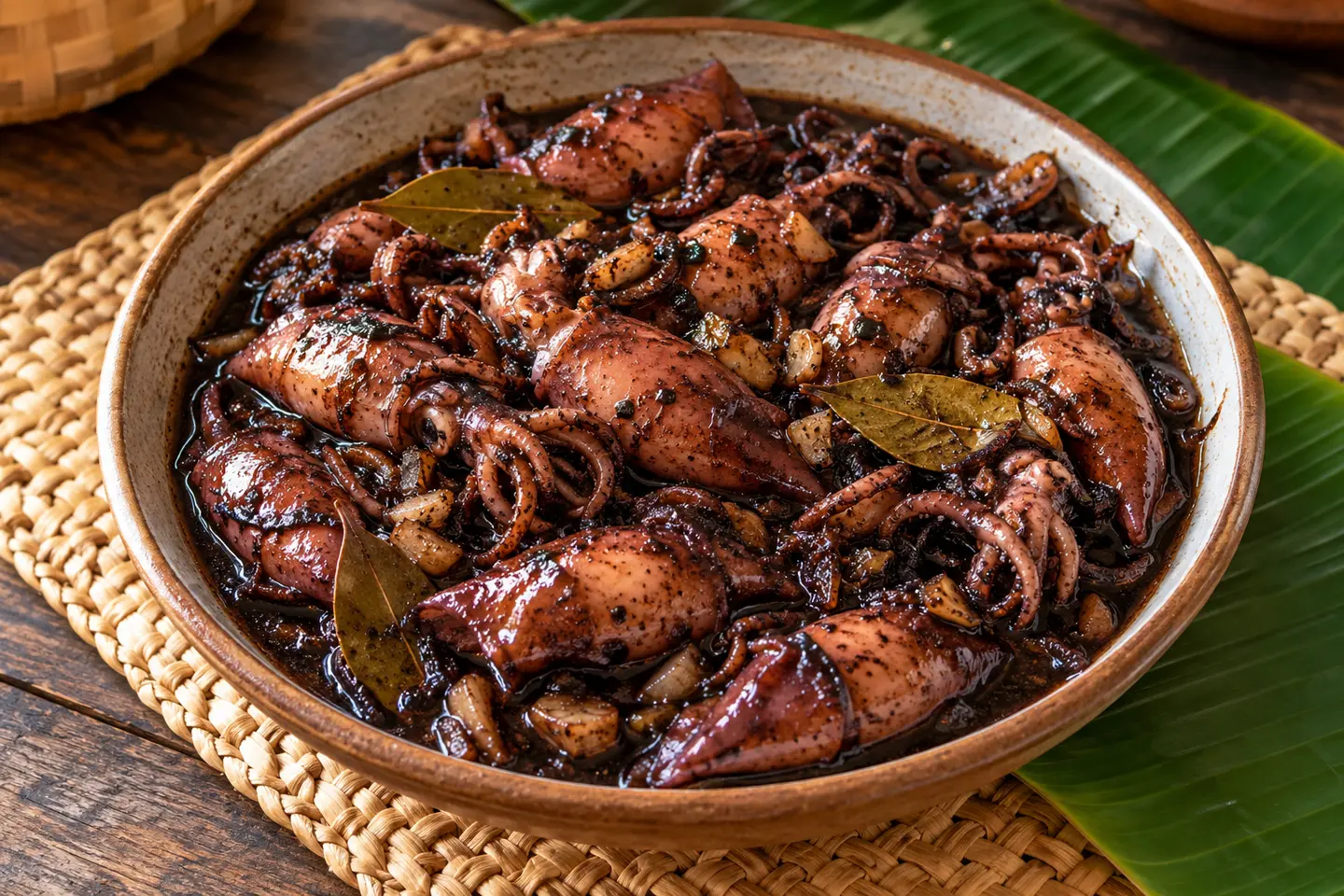
Adobong Pusit
Tender squid cooked quickly in a glossy vinegar, garlic and natural ink sauce.
Ingredients
Measure and prepare everything before you begin cooking.
- 1 kg small whole squid, cleaned with ink sacs reserved
- ⅓ cup cane vinegar
- 3 tbsp soy sauce
- 1 onion, sliced
- 6 garlic cloves, minced
- 2 tomatoes, chopped
- 2 bay leaves
- 1 tsp whole black peppercorns
- 1 long green chilli (optional)
- 1–2 tbsp neutral cooking oil, as needed
- Fine salt, to taste (use less when the dish contains soy sauce, fish sauce or bagoong)
Instructions
- 1
Clean the squid, keeping the bodies and tentacles whole where practical. Place the reserved ink sacs in a small bowl with two tablespoons water and press through a fine sieve. Pat the squid dry.
- 2
Heat one tablespoon oil in a wide pan over medium heat. Cook onion for 3 minutes, add garlic for 30 seconds, then add tomato and cook until softened and pulpy.
- 3
Add vinegar, soy sauce, bay leaves, peppercorns and strained squid ink. Bring to a boil and leave unstirred for 2 minutes so the raw vinegar aroma mellows.
- 4
Add the squid and green chilli. Cook over medium-high heat for only 2–3 minutes, stirring once, until the bodies turn opaque and curl slightly. Lift the squid out immediately.
- 5
Boil the sauce uncovered for 5–8 minutes until glossy and slightly reduced. Return the squid for 30–60 seconds—just long enough to heat through.
- 6
Taste the sauce and balance with a splash of water if too salty or sharp. Remove the bay leaves and serve at once with rice; overcooking makes squid rubbery.
About Adobong Pusit
Adobong pusit brings squid into the Filipino adobo family. The natural ink deepens the vinegar-and-garlic sauce, while very brief cooking keeps the seafood tender rather than rubbery.
Ingredient swaps wherever you cook
- Frozen cleaned squid works; thaw in the refrigerator and drain very well.
- Cane vinegar may be replaced with unsweetened apple-cider vinegar.
- If no ink is available, the dish will be lighter but still flavourful.
How to know it is ready
- Squid turns opaque and curls slightly after only a few minutes.
- Reduce the sauce without the squid to protect its texture.
- The sauce should be glossy and strongly savoury-sour.
Common mistakes and fixes
- Rubbery squid: cook it very briefly, remove it, then reduce the sauce separately.
- Gritty ink: press it through a fine sieve.
- Harsh vinegar: boil it for 2 minutes before stirring.
Family and regional variations
- Add coconut milk for adobong pusit sa gata.
- Include sliced chilli for heat.
- Use cuttlefish, adjusting cooking time to its size.
Storage and reheating
Refrigerate promptly and eat within 2 days. Reheat only until hot to avoid toughening the squid.
What to serve with it
Serve immediately with steamed rice and sliced tomato or cucumber.
Adobong Pusit FAQs
Do I have to use squid ink?
No, but the ink gives the classic dark colour and deep sea flavour.
Why remove the squid before reducing?
Squid becomes tough when held at a simmer; reducing the sauce separately preserves tenderness.
How do I clean squid?
Remove the quill, beak and innards, peel if desired, and rinse quickly under cold water.
Cooking guidance: Follow current food-safety advice and the instructions for your equipment.