Chicken Piyanggang
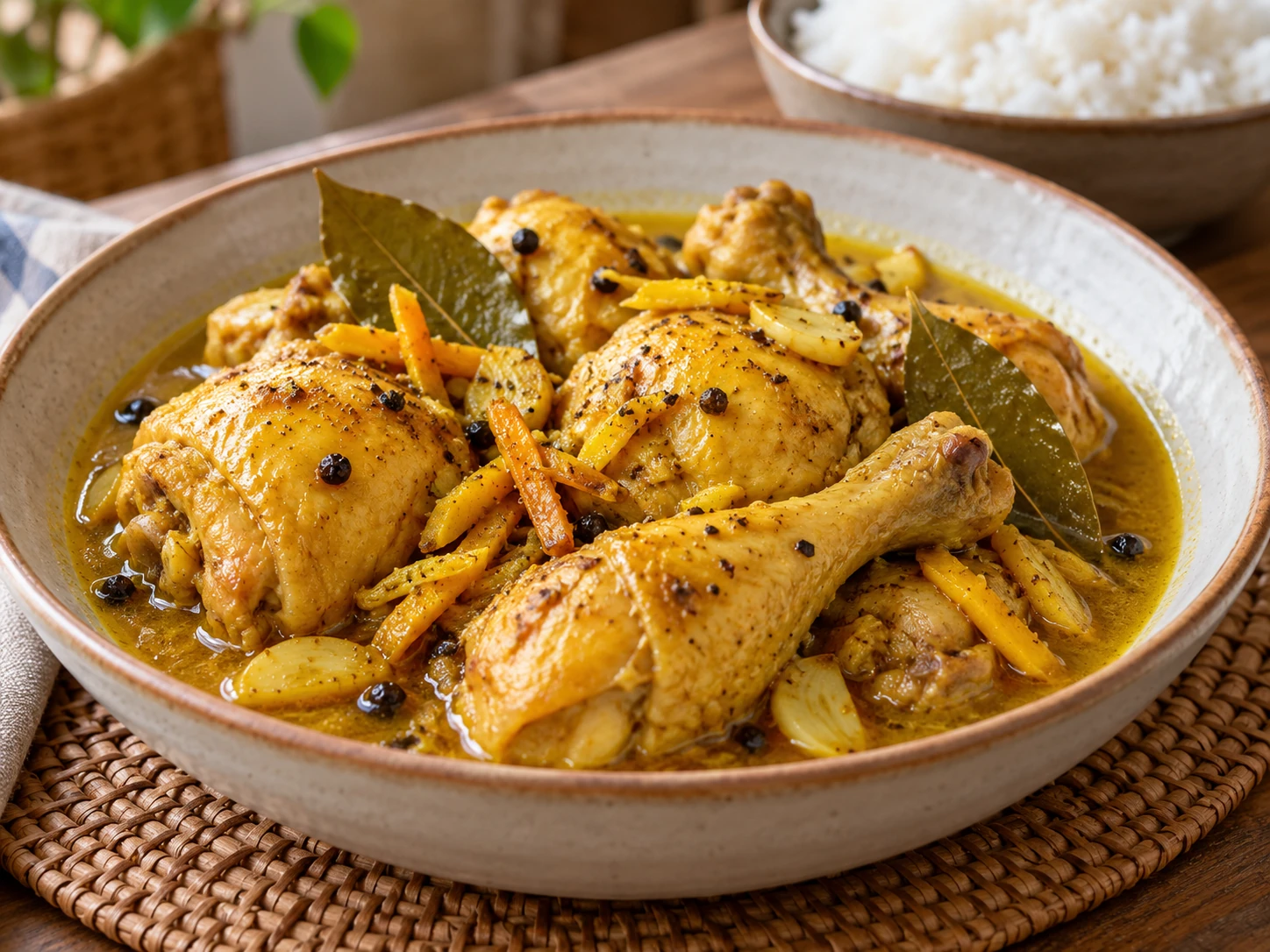
Tausug-inspired chicken with dark smoky coconut paste, creamy gravy and an optional grilled finish.
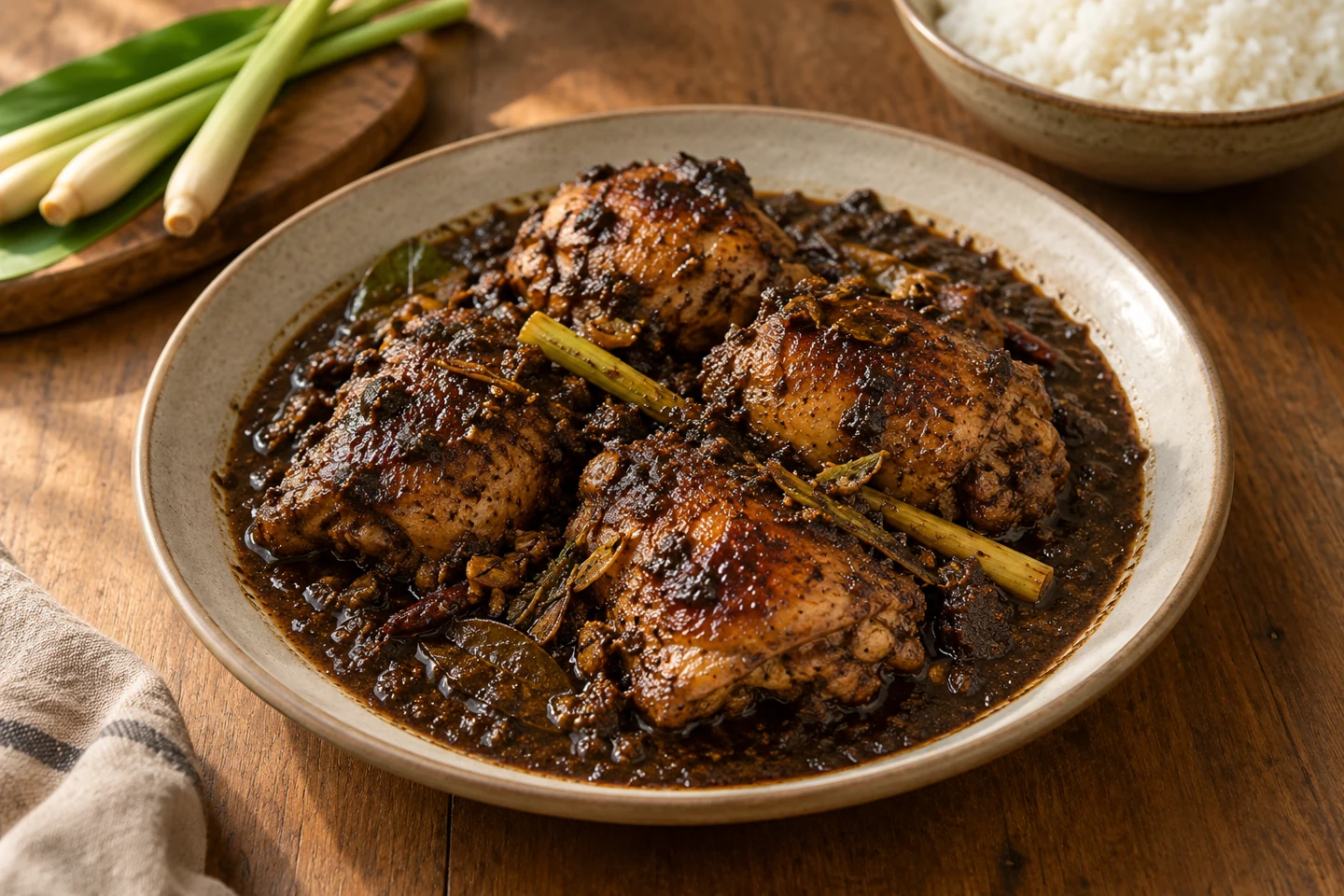
AI-assisted dish illustration.
Ingredients
Measure and prepare everything before you begin cooking.
- 1 kg bone-in chicken thighs or drumsticks
- 80 g unsweetened desiccated coconut for the home-style paste
- 1 lemongrass stalk, tender white centre finely sliced
- 25 g fresh ginger or galangal, chopped
- 1 tsp ground turmeric
- 1 small onion, roughly chopped, for the paste
- 4 garlic cloves for the paste
- 1–2 red chillies, optional
- 2 tbsp coconut or neutral cooking oil, divided
- ½ tsp fine salt, plus extra to taste
- 1 small onion, diced, for braising
- 400 ml full-fat coconut milk
- 150 ml coconut cream
- 150 ml water, plus more if needed
- ¼ tsp ground black pepper
Instructions
- 1
Make the home-style smoky paste: put the coconut in a dry heavy pan over medium heat in a well-ventilated kitchen. Stir constantly for 5–8 minutes until very dark brown with some black-brown flecks. Reduce heat if it smokes heavily. Do not ignite it or turn the entire batch to ash; cool on a plate.
- 2
Blend the cooled coconut with lemongrass, ginger, turmeric, paste onion, garlic, chilli, 1 tablespoon oil and salt. Add 1–2 tablespoons water only if needed to help the blender. This stovetop version substitutes for the traditional fire-charred coconut paste.
- 3
Coat chicken with all the paste in a covered container. Marinate in the refrigerator for 1 hour. Keep raw-chicken utensils separate, and do not taste the uncooked marinade.
- 4
Heat the remaining oil in a wide pot. Soften the diced onion for 3 minutes. Add chicken and all its marinade, coconut milk, coconut cream and 150 ml water. Bring to a gentle simmer.
- 5
Cover loosely and simmer for 30–40 minutes, turning chicken occasionally. Add a little water if the sauce catches. The thickest pieces must reach 74°C without the thermometer touching bone. Uncover near the end to thicken the gravy.
- 6
For an optional grilled finish, lift fully cooked chicken onto a lightly oiled hot grill pan and turn for 1–2 minutes per side. Use clean tongs and a clean plate. Taste the cooked gravy, adjust salt and pepper, and spoon it over the chicken with rice.
About Chicken Piyanggang
Piyanggang, also spelled pyanggang or pianggang, belongs to Tausug cooking. Its characteristic dark coconut paste differentiates it from yellow curries. This version explains an accessible stovetop coconut technique rather than claiming to reproduce every traditional method.
Ingredient swaps wherever you cook
- Use unsweetened coconut; sweetened baking coconut is unsuitable.
- Ginger can replace galangal, with a different aroma.
How to know it is ready
- Coconut is deep black-brown, not ash or a scorched bitter powder.
- Chicken reaches 74°C and the gravy coats a spoon.
Common mistakes and fixes
- Keep stirring the coconut and lower heat when needed.
- Thin catching gravy with water before it burns.
Family and regional variations
- Adjust chilli or pepper to suit the diners; offer extra seasoning separately.
Storage and reheating
Cool in shallow containers and refrigerate within 2 hours. Use within 3 days. Reheat only the portion needed to 74°C throughout; keep rice and cooked meat chilled between meals.
What to serve with it
Makes 4–6 servings. Serve with steamed rice and a fresh vegetable side.
Chicken Piyanggang FAQs
Is this a traditional or adapted recipe?
Piyanggang, also spelled pyanggang or pianggang, belongs to Tausug cooking. Its characteristic dark coconut paste differentiates it from yellow curries. This version explains an accessible stovetop coconut technique rather than claiming to reproduce every traditional method.
Can I cook this outside the Philippines?
Yes. Follow the labelled substitutions above; they offer practical alternatives while explaining where the flavour or texture differs.
Cooking guidance: Follow current food-safety advice and the instructions for your equipment.