Chicken Piaparan
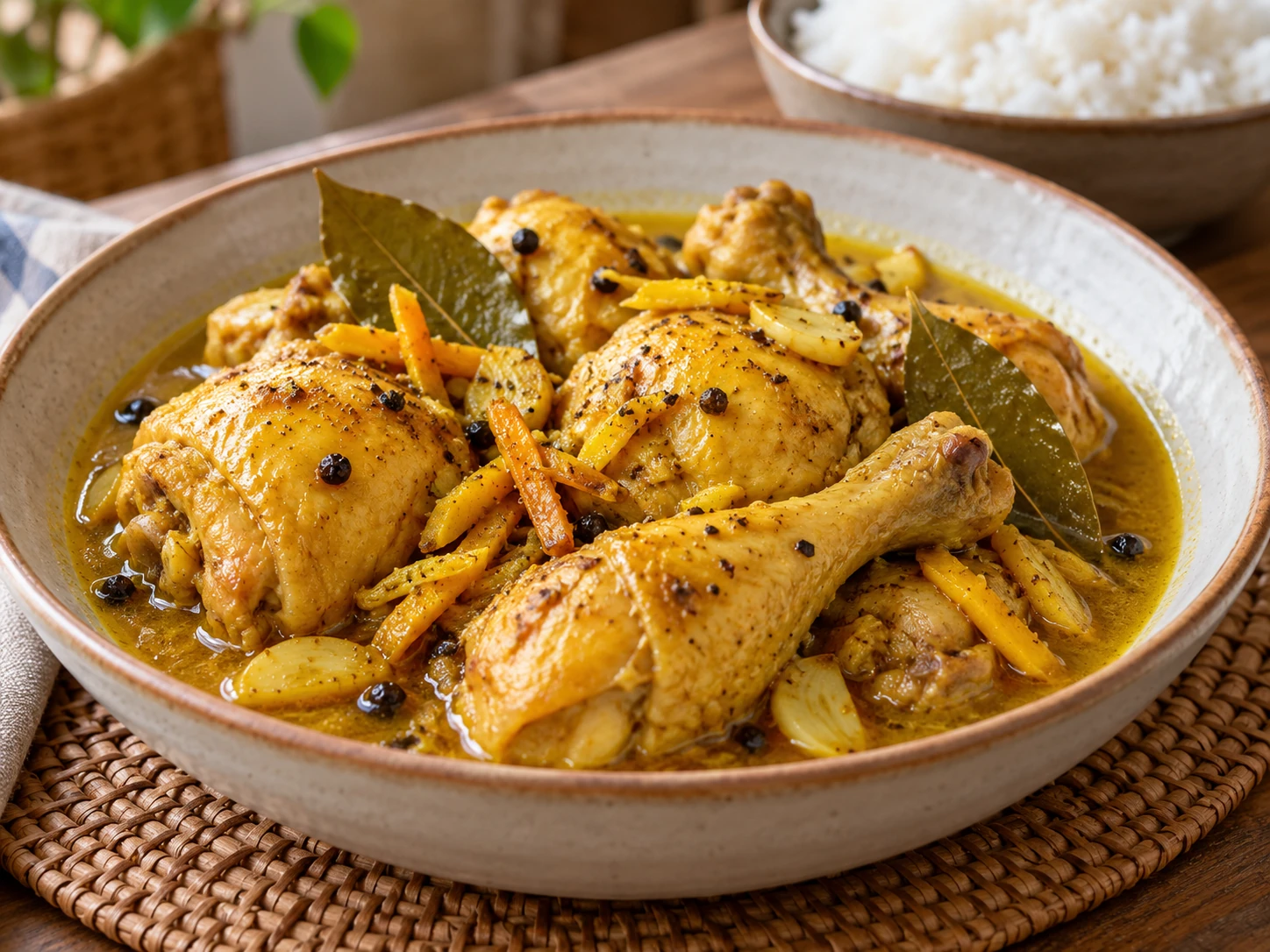
Maranao-inspired chicken with turmeric, coconut milk, palapa and a golden grated-coconut topping.
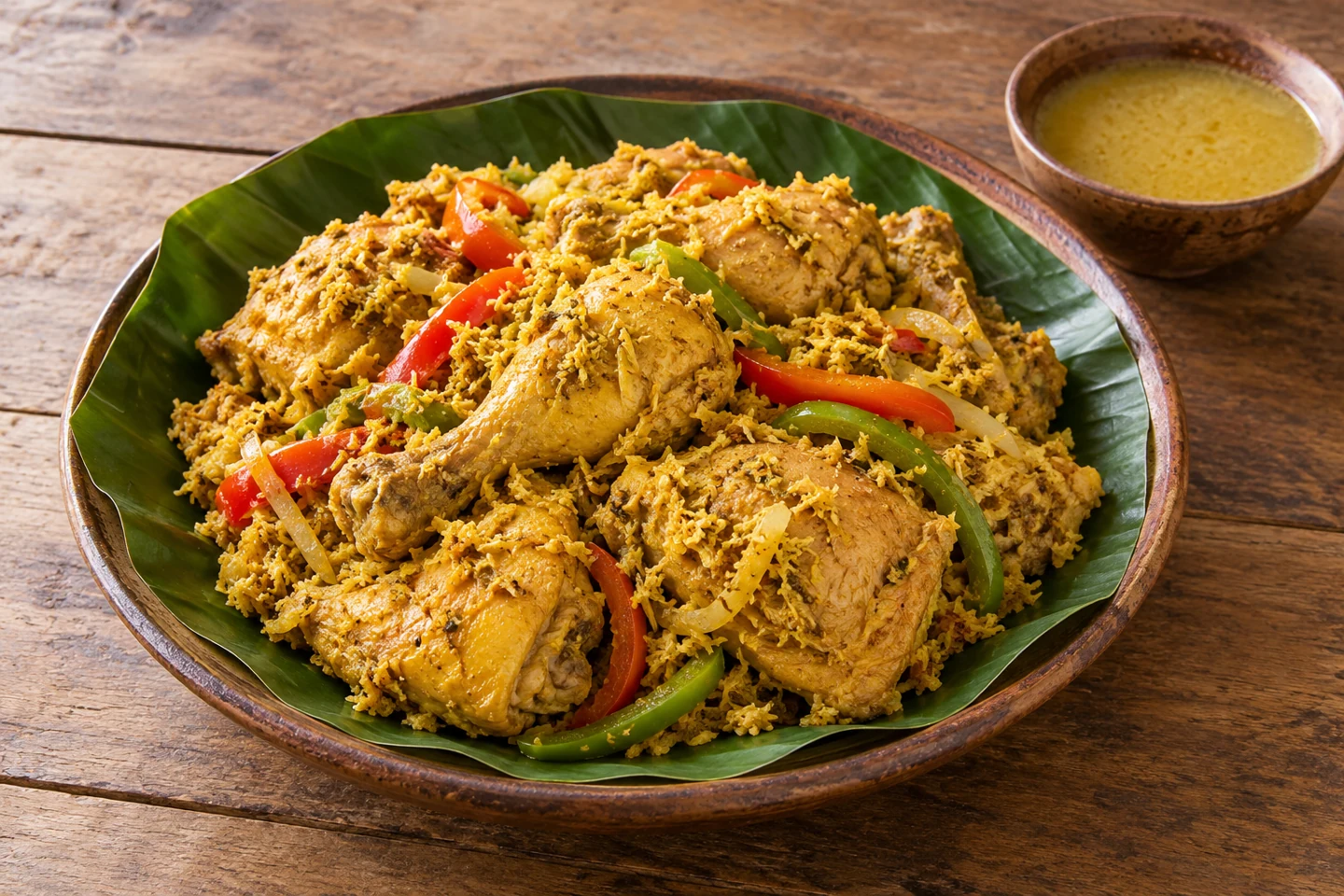
AI-assisted dish illustration.
Ingredients
Measure and prepare everything before you begin cooking.
- 1 kg bone-in chicken pieces
- 150 g fresh or thawed unsweetened grated mature coconut
- 400 ml full-fat coconut milk
- 350 ml water
- 2 tbsp neutral cooking oil, divided
- 1 medium onion, sliced
- 4 garlic cloves, minced
- 30 g fresh ginger, finely chopped
- 2 tbsp prepared palapa, or the clearly labelled substitute below
- 1½ tsp ground turmeric, divided
- ½ tsp fine salt, plus extra to taste
- ¼ tsp ground black pepper
- 1 small red bell pepper, sliced
- 1 small green bell pepper, sliced
- 2 spring onions, sliced
- For substitute palapa: 4 additional spring onions, 20 g additional ginger and 1–2 chillies, finely minced together
Instructions
- 1
Use prepared palapa if available; check its salt and chilli level. For the overseas substitute, mince the additional spring onions, ginger and chillies together. This approximates the aromatics but is not the same as palapa made with sakurab.
- 2
Coat chicken with 1 teaspoon turmeric, salt and half the palapa or substitute. Prepare the coconut and vegetables separately from raw chicken.
- 3
Heat 1 tablespoon oil in a pot. Soften half the onion for 3 minutes, add half the garlic and the 30 g ginger, and stir for 1 minute. Add chicken and water, cover and simmer gently for 20 minutes.
- 4
Add coconut milk and simmer for another 15–20 minutes until the chicken reaches 74°C in its thickest part. Lift cooked chicken to a clean plate. Reserve the hot cooking broth; it will moisten the coconut topping and can be served separately.
- 5
In a wide frying pan, heat the remaining oil. Soften the remaining onion and garlic, add grated coconut, remaining turmeric and remaining palapa. Stir over medium-low heat for 4–5 minutes until aromatic. Add peppers and 100 ml reserved broth; cook for 3–5 minutes until peppers soften.
- 6
Fold the cooked chicken into the coconut mixture and heat for 3 minutes. Add a little more broth if needed; the coconut should cling to the chicken without becoming dry or scorched. Add spring onions, taste and adjust salt and pepper. Serve with rice and the remaining hot broth.
About Chicken Piaparan
Piaparan, also written piyaparan, is associated with Maranao cuisine. Coconut, turmeric and palapa shape its character. Our measured home adaptation includes a separately served broth and clearly distinguishes an overseas aromatic substitute from traditional sakurab-based palapa.
Ingredient swaps wherever you cook
- Use prepared palapa when possible; the spring-onion mixture is an approximation.
- Frozen grated mature coconut works after refrigerator thawing; sweetened coconut does not.
How to know it is ready
- Chicken reaches 74°C.
- The coconut topping is moist, aromatic and golden.
Common mistakes and fixes
- Do not let grated coconut scorch in a dry pan.
- Taste prepared palapa before adding extra salt or chilli.
Family and regional variations
- Adjust chilli or pepper to suit the diners; offer extra seasoning separately.
Storage and reheating
Cool in shallow containers and refrigerate within 2 hours. Use within 3 days. Reheat only the portion needed to 74°C throughout; keep rice and cooked meat chilled between meals.
What to serve with it
Makes 4–6 servings. Serve with steamed rice and a fresh vegetable side.
Chicken Piaparan FAQs
Is this a traditional or adapted recipe?
Piaparan, also written piyaparan, is associated with Maranao cuisine. Coconut, turmeric and palapa shape its character. Our measured home adaptation includes a separately served broth and clearly distinguishes an overseas aromatic substitute from traditional sakurab-based palapa.
Can I cook this outside the Philippines?
Yes. Follow the labelled substitutions above; they offer practical alternatives while explaining where the flavour or texture differs.
Cooking guidance: Follow current food-safety advice and the instructions for your equipment.