
Binutong
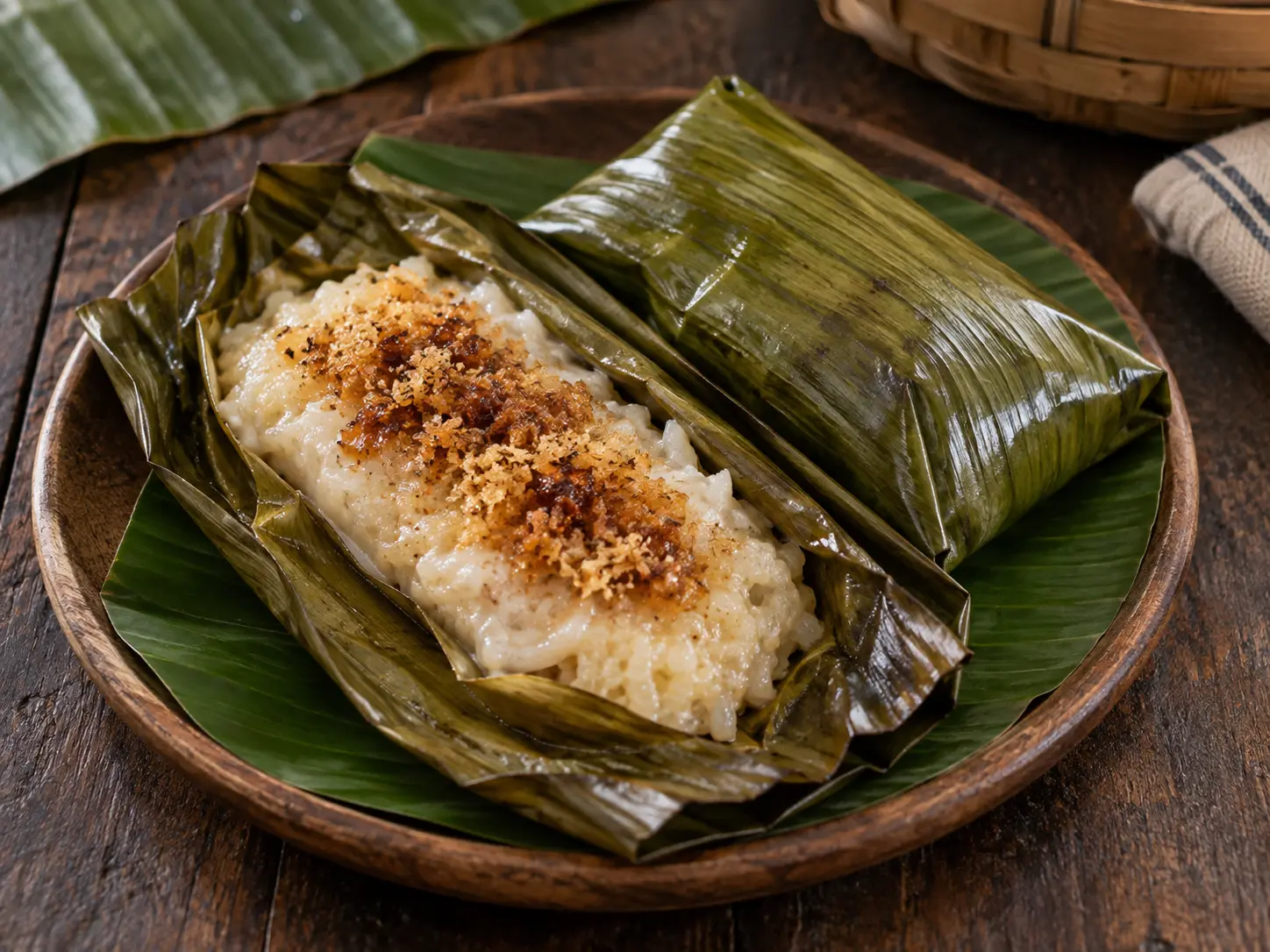
Bicolano coconut sticky rice steamed in fragrant banana-leaf parcels.
Ingredients
Measure and prepare everything before you begin cooking.
- 2 cups glutinous rice, rinsed and soaked for 30 minutes
- 400 ml unsweetened coconut milk
- 100 ml coconut cream
- 3 tbsp white or light brown sugar
- ½ tsp fine salt
- 4 large banana-leaf squares, plus strips for tying
- Latik or dark brown sugar, for serving
Instructions
- 1
Drain the soaked glutinous rice very well. Warm the coconut milk, coconut cream, sugar and salt in a saucepan over low heat, stirring only until the sugar dissolves; do not boil.
- 2
Pass each banana-leaf square briefly over a low flame or lay it in a hot dry pan for a few seconds per side, just until glossy and flexible. Wipe the leaves clean and arrange them in deep bowls to support the parcels.
- 3
Divide the drained rice among the leaves. Spoon the coconut mixture evenly over the rice, allowing space for the grains to expand. Gather the leaf edges into compact parcels and tie securely with banana-leaf strips or kitchen string.
- 4
Stand the parcels seam-side up in a steamer over steadily simmering water. Cover and steam for 55–65 minutes, topping up the steamer with boiling water whenever necessary.
- 5
Open one parcel carefully, keeping your hands away from the steam. The rice should be completely tender, glossy and cohesive with no firm centre. Rewrap and steam another 10 minutes if needed.
- 6
Rest the parcels for 10 minutes so the coconut rice settles. Serve warm in the opened leaves with latik or a light sprinkle of brown sugar.
About Binutong
Binutong is a Bicolano coconut sticky-rice delicacy steamed in banana leaves. It is enjoyed for breakfast or merienda, and every household has its own balance of coconut richness and sweetness.
New Zealand ingredient swaps
- Frozen banana leaves from a Filipino or Asian grocer work well; thaw, wipe and soften them before folding.
- Use glutinous rice, also sold as sweet rice—not jasmine or ordinary long-grain rice.
- Latik is optional; toasted coconut or a little brown sugar also makes a good finish.
How to know it is ready
- The banana leaves should be soft and flexible before wrapping.
- The parcels should stay securely tied while steaming.
- The rice is ready when glossy and cohesive with no firm centre.
Common mistakes and fixes
- Split leaves: soften them longer and use a double layer over any tear.
- Dry rice: keep enough coconut liquid in each parcel and maintain steady steam.
- Hard grains: top up the steamer with hot water and continue until fully tender.
Family and regional variations
- Use less sugar and serve with dried fish for a savoury breakfast.
- Top the sweet version with latik or toasted coconut.
- Make smaller individual parcels for parties and lunchboxes.
Storage and reheating
Refrigerate within 2 hours for up to 3 days. Re-steam or microwave covered until hot. Well-wrapped parcels can be frozen for up to 1 month.
What to serve with it
Open the leaves while warm and finish with latik or brown sugar. Serve with coffee, hot chocolate or dried fish.
Binutong FAQs
Can I use frozen banana leaves?
Yes. Thaw, wipe and briefly warm them until flexible.
Why soak the rice?
Soaking helps the grains hydrate evenly so they steam to a tender centre.
Can I make binutong ahead?
Yes. Chill the parcels promptly, then re-steam until hot before serving.
Our recipe standard: This page has been editorially reviewed for clarity, cultural context and practical home-kitchen guidance. We do not label a recipe as personally kitchen-tested unless that testing has actually been completed. Always follow current food-safety advice and the instructions for your equipment.


