Beef Mami
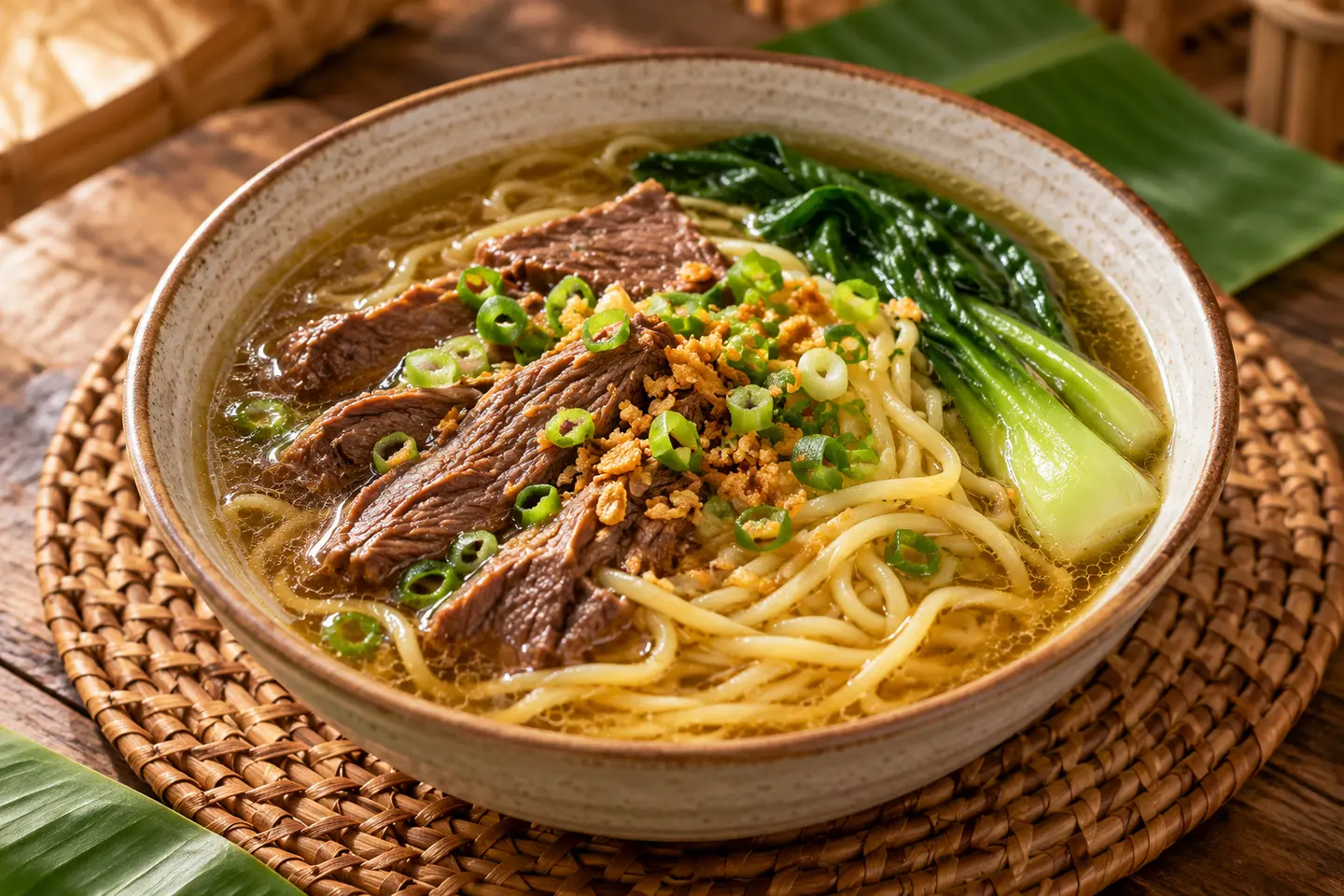
Tender braised beef, fresh noodles and greens in a clear, deeply savoury broth.
Ingredients
Measure and prepare everything before you begin cooking.
- 900 g beef brisket or chuck, cut into large pieces
- 2 litres water
- 1 onion, halved
- 30 g ginger, sliced
- 4 garlic cloves, crushed
- 2 star anise
- 2 tbsp soy sauce
- 1 tbsp fish sauce
- 500 g fresh wheat or egg noodles
- 2 bunches bok choy, halved
- 3 spring onions, sliced
- 4 tbsp toasted garlic
- Freshly ground black pepper, to taste
Instructions
- 1
Put the beef in a large pot, cover with cold water and bring to a boil for 5 minutes. Drain, rinse the beef and wash the pot; this first blanch keeps the final broth cleaner.
- 2
Return the beef to the clean pot with 2 litres fresh water, onion, ginger, garlic and star anise. Bring just to a simmer, skim the surface and cook partly covered for 1½–2 hours, until the beef is fork-tender.
- 3
Lift out the beef. Strain the broth, discard the aromatics and return 1.5 litres broth to the pot. Stir in soy sauce and fish sauce, taste, and keep at a gentle simmer.
- 4
When cool enough to handle, slice the beef across the grain. Moisten it with a ladle of broth so it stays succulent while the noodles cook.
- 5
Cook the noodles according to their packet in a separate pot, drain well and divide among warm bowls. Blanch the bok choy in the mami broth for 1–2 minutes.
- 6
Arrange beef and bok choy over the noodles. Ladle over the hot broth and garnish with spring onion, toasted garlic and black pepper.
About Beef Mami
Beef mami is a Filipino-Chinese noodle soup long associated with Manila's eateries. Tender beef, springy noodles and a clear aromatic broth make it a complete, restorative bowl.
Ingredient swaps wherever you cook
- Fresh hokkien or thin egg noodles work when Filipino mami noodles are unavailable.
- Use beef chuck if brisket is unavailable.
- Bok choy may be replaced with choy sum or spinach.
How to know it is ready
- The beef should yield easily to a fork before slicing.
- Keep the broth at a quiet simmer for a cleaner result.
- Cook noodles separately so excess starch does not cloud the broth.
Common mistakes and fixes
- Cloudy broth: blanch the beef and avoid a rolling boil.
- Tough slices: cook longer and slice across the grain.
- Over-salty bowls: season the strained broth, not the braising pot.
Family and regional variations
- Add a halved boiled egg.
- Use shredded chicken for chicken mami.
- Offer chilli-garlic oil for heat.
Storage and reheating
Keep broth, beef and noodles separately for up to 3 days. Reheat the broth and beef to steaming hot, then assemble with freshly warmed noodles.
What to serve with it
Top with spring onion and toasted garlic; serve calamansi or lemon and chilli oil alongside.
Beef Mami FAQs
Why blanch the beef first?
It removes surface impurities and helps produce a cleaner broth.
Can I pressure-cook the beef?
Yes. Follow your cooker's guidance, then strain and season the broth after pressure release.
Which noodles are best?
Fresh wheat or egg noodles give the springy texture associated with mami.
Cooking guidance: Follow current food-safety advice and the instructions for your equipment.